 Города и дороги
Description
A town in south-eastern Turkey and the base for climbing Mount Nemrut with its giant stone heads of the Commagene gods. The Roman Cendere bridge and the Arsameia sanctuaries are reached from here too.
Wiki
Adiyaman is a town in south-eastern Turkey, capital of the province of the same name, with around three hundred thousand inhabitants. In itself it is unremarkable: wide streets, new blocks, shopping rows. People come for what lies around it, above all for Mount Nemrut with the stone heads of the gods of the Commagene kingdom. The province stretches along the Euphrates, dammed by the Atatürk reservoir, and some ancient sites now stand on the shores of an enormous lake.
Why come and what to actually see
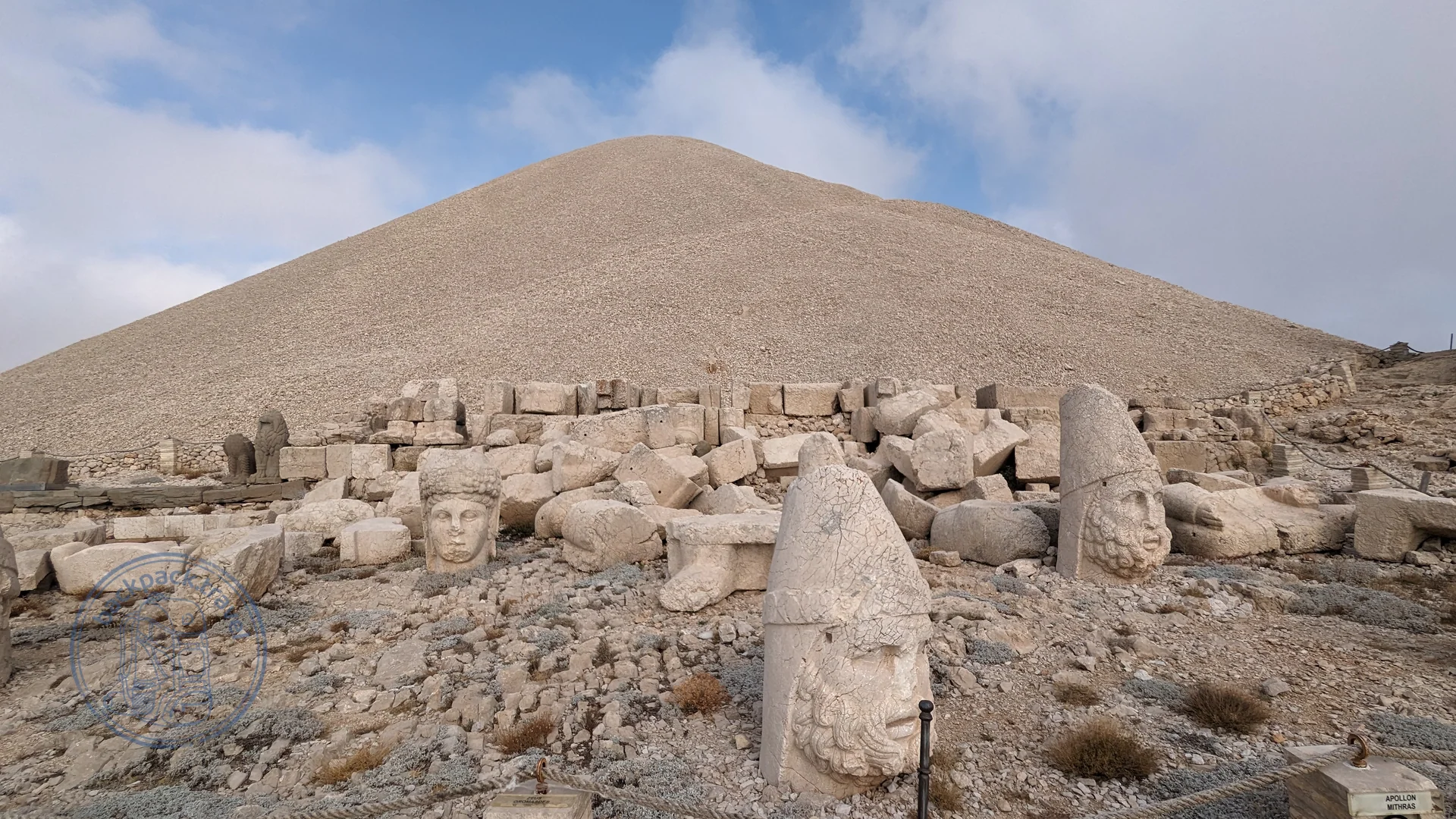
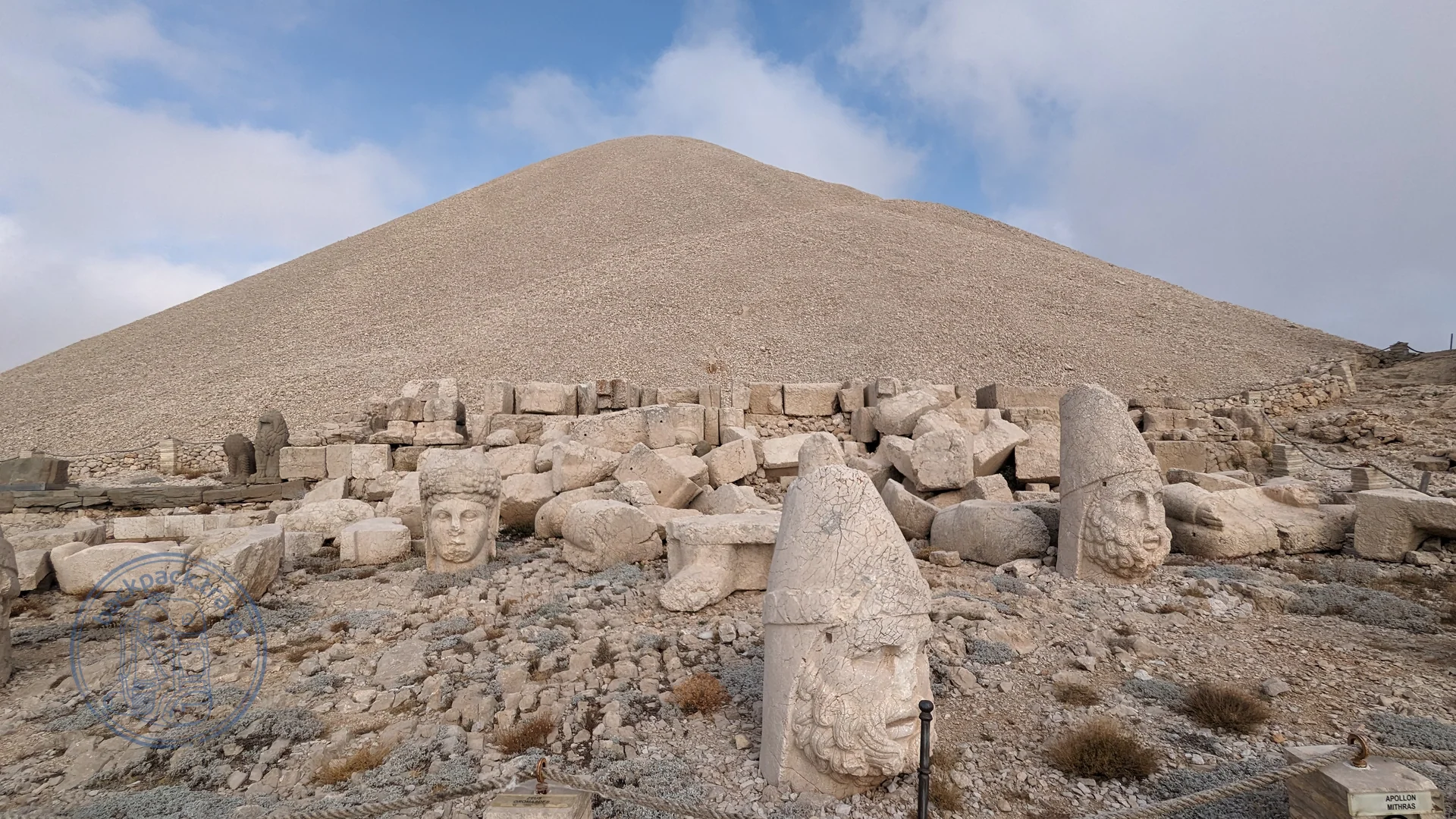
Mount Nemrut is a 2,134-metre summit where, in the first century BC, King Antiochus I of Commagene built himself a tomb and sanctuary. A tumulus of loose gravel almost fifty metres high covers a burial chamber that has still not been found. On the eastern and western terraces flanking it stood colossal seated statues of gods with blended Greek and Persian names: Zeus-Oromasdes, Apollo-Mithras, Heracles-Artagnes. Earthquakes toppled the heads from the bodies, and they now stand on the ground at the foot of their torsos — the image that made Nemrut famous. The site is on the UNESCO World Heritage list.
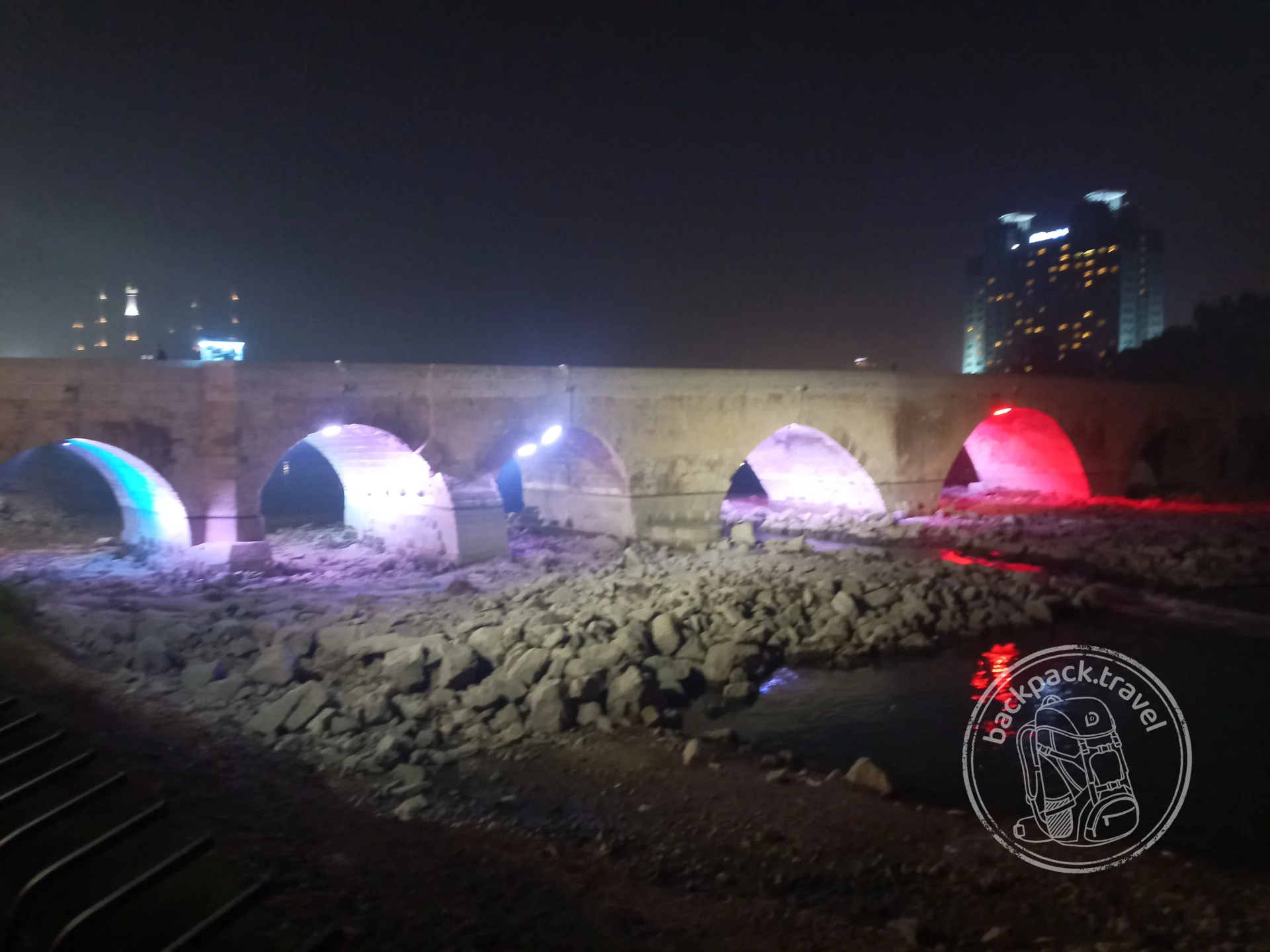
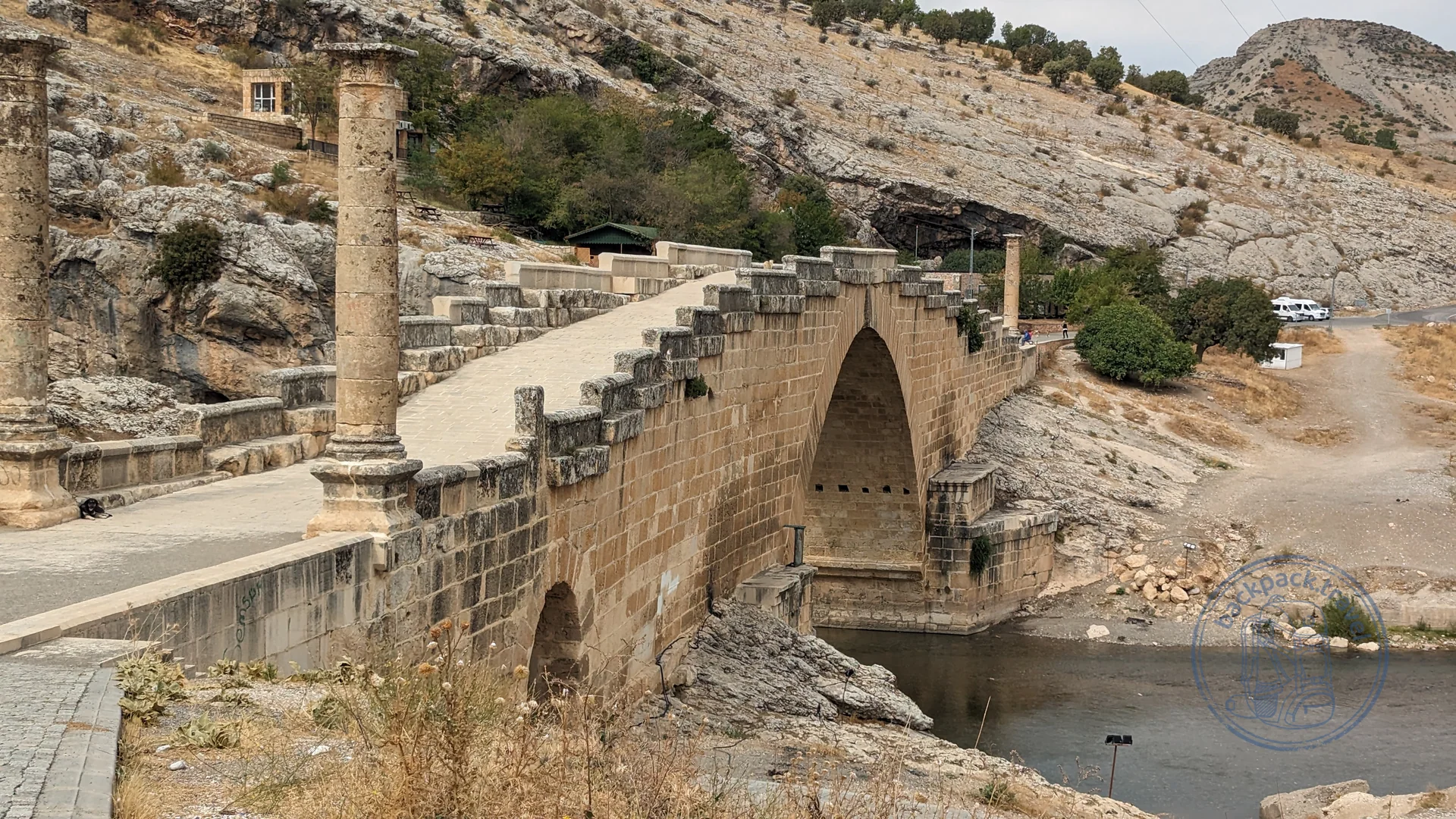
On the way up stands the Roman bridge of Cendere, built around AD 200 by soldiers of the Sixteenth Legion in honour of Septimius Severus. A single arch spans almost thirty-four metres, laid dry without mortar; three of the four columns at its ends survive — the fourth was pulled down after Caracalla ordered his murdered brother's name erased.
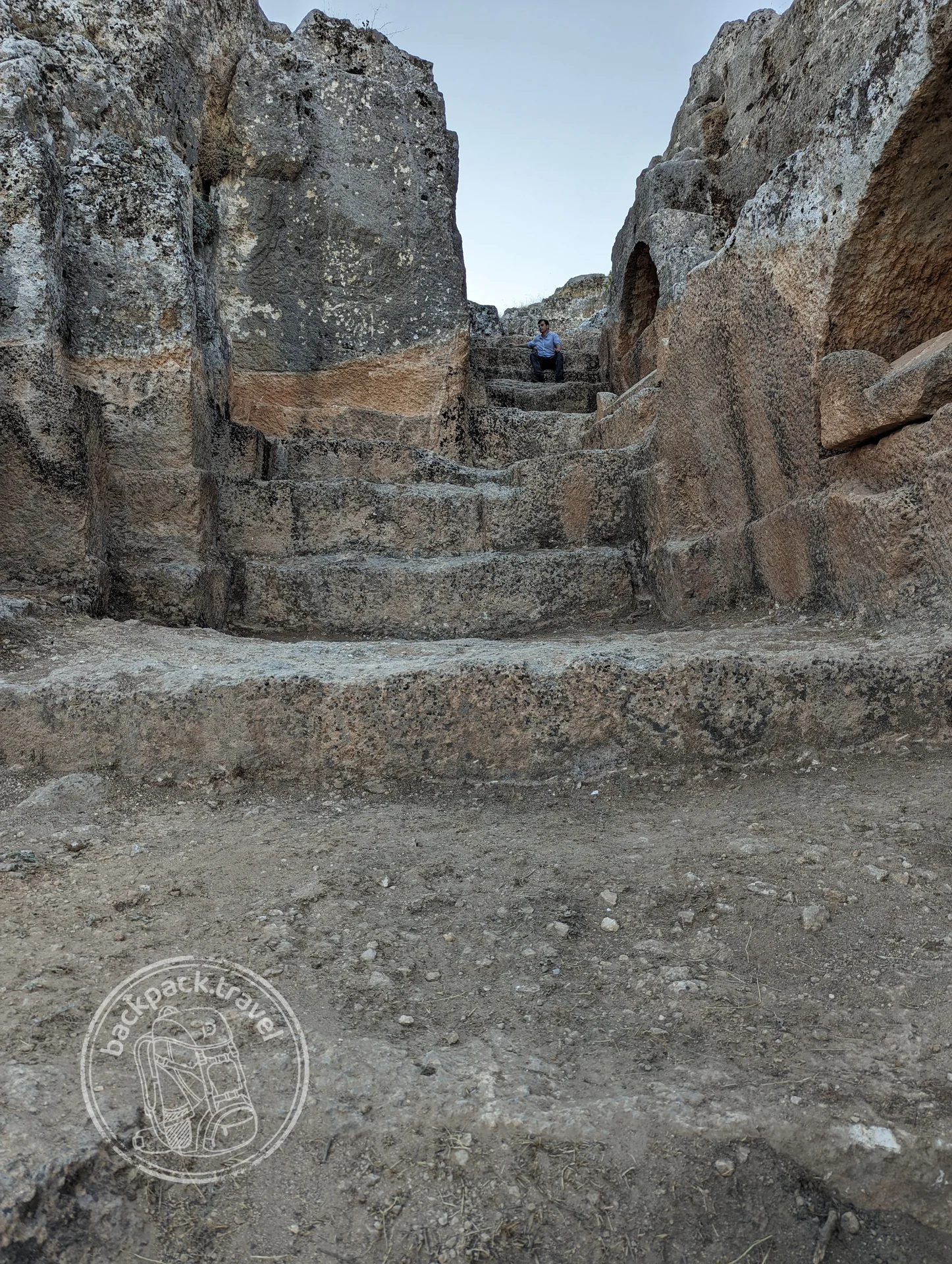
Arsameia on the Nymphaios was the Commagene kings' summer residence on a slope above the river: a relief showing Mithridates shaking hands with Heracles survives there, along with a long Greek inscription, and a tunnel runs down into the rock beside it. The Karakus tumulus, ringed by columns topped with an eagle and a lion, was the necropolis of the same dynasty's women.
Adiyaman itself has a small archaeological museum holding finds from settlements now under the reservoir.
Getting there and getting around
Adiyaman has its own airport with flights from Istanbul and Ankara, twenty kilometres from town. Coaches come from Gaziantep in two and a half hours, from Sanliurfa in three, from Malatya in three. Direct services from Istanbul take about sixteen hours and make little sense.
Nemrut cannot be reached without a car: there is no public transport up the mountain. The standard option is a tour from Adiyaman or from the town of Kahta forty kilometres away: a minibus collects you from your hotel, stops at the Cendere bridge and Arsameia, and climbs to the summit for sunset or sunrise. Driving yourself, you can get almost to the top, with the last three hundred metres on foot.
Where to stay
Adiyaman itself has several mid-range town hotels. Kahta, closer to the mountain, has a smaller choice, but most tours start there. A separate category is the pensions right at the foot of Nemrut, in the villages of Karadut and Narince: conditions are simple, but the summit is twenty minutes away and you can catch both sunset and sunrise without a night drive.
There are enough beds in summer, but the pensions near the mountain are few and go early in high season.
Day trips
Sanliurfa with Göbekli Tepe — the oldest known sanctuary, eleven thousand years old — is a hundred and eighty kilometres away, about three hours. This is the obvious pairing: many people do Nemrut and Göbekli Tepe as one trip.
Gaziantep with the Zeugma mosaic museum is two hundred kilometres west. Malatya with its apricot orchards and the ruins of Old Malatya is two hundred kilometres north. The Atatürk Dam, the second largest in Turkey, lies sixty kilometres away, and the road to it opens out over the reservoir.
When to come
Mid-April to the end of October. The summit road is closed by snow in winter, usually from November through March, and during those months you cannot go up at all.
The best months are May, June and September. Days in the valley are hot, up to thirty-five degrees in summer, but the temperature at the top drops by ten to fifteen degrees, and at sunrise it can be near freezing even in July: a warm jacket is essential regardless of what the thermometer says below. The wind on the terraces never stops. Most people come for sunrise — the east lights up first, and the heads on the eastern terrace catch the sun before anything else.
Food and money
The cooking is south-eastern, close to that of Gaziantep: grilled kebab, lahmacun, çiğ köfte, and plenty of hot pepper. The province is known for apricots and pistachios, which also go into its sweets. The pensions near the mountain serve home cooking from a set menu.
Cards work in town and at petrol stations, but the villages near the mountain and some site entrances want cash. There are ATMs in Adiyaman and Kahta, none at the foot of Nemrut.
Practical notes
Admission to the mountain is charged, and a combined ticket covers the Commagene sites. There is no café or shelter at the summit beyond a small pavilion by the car park, and mobile coverage is patchy.
The region is more conservative than the tourist coast: women should dress modestly, though a headscarf is not required. The road up is narrow, with switchbacks and no barrier on some bends — driving it yourself after dark is not advisable. The province was badly hit by the earthquake of February 2023 and parts of the town are still being rebuilt; the Commagene monuments were undamaged, but it is worth confirming the condition of a specific hotel when booking.
Updated