Description
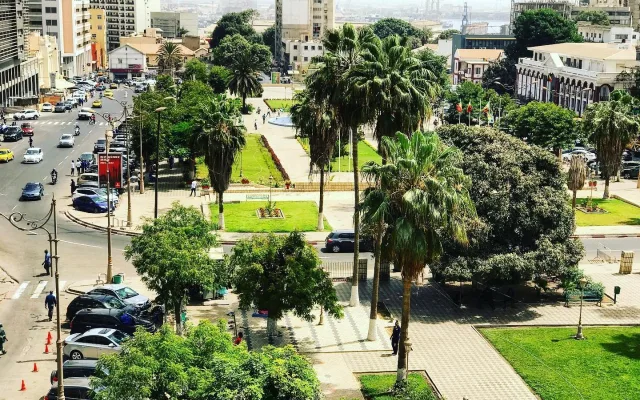
The westernmost point of Africa — UNESCO-listed Gorée Island, the Sandaga market, live music and Atlantic beaches.
Wiki
Dakar is the capital of Senegal and the westernmost major city in Africa, spread across the Cap-Vert peninsula above the Atlantic. With around three million people in the metropolitan area, it is the political, economic and cultural centre of francophone West Africa, known for mbalax music, vigorous street life and its closeness to the historic island of Gorée.
History and character
The settlement grew out of the fishing villages of the Lebou people; in the 19th century the French turned it into a port and an administrative hub of the colony, and from 1902 into the capital of French West Africa. After independence in 1960, Dakar became the showcase of the young state under its first president, Léopold Sédar Senghor — poet and theorist of négritude. The urban fabric combines the colonial architecture of the centre (the Plateau district) with business towers, dense residential quarters and sprawling outskirts. This is where the legendary Paris–Dakar rally finished for decades, and where the race took its name.
Main sights
- Gorée Island (Île de Gorée) — a UNESCO World Heritage Site, about 20 minutes by ferry from the port. Here stands the House of Slaves (Maison des Esclaves) with its famous Door of No Return, a symbol of the transatlantic slave trade. The island has no cars, and offers pastel houses, narrow lanes and a fort.
- The African Renaissance Monument — a bronze statue 49 metres high, unveiled in 2010 on the Ouakam hill; there is a viewing platform inside, looking out over the ocean and the city.
- Lake Retba (the Pink Lake) — a salt lake whose water takes a pinkish cast from Dunaliella algae; the colour is strongest in the dry season. It long served as the rally finish, and artisanal salt is still gathered around its shores.
- The Medina — the historic core, with markets selling textiles, traditional boubou robes, and work in wood and leather.
- Sandaga market — one of the city's largest trading hubs, a concentration of fabric, spices and craft goods.
- The Great Mosque of Dakar and the Mosque of the Divinity (Mosquée de la Divinité) in Ouakam bay are important religious landmarks.
- The Théodore Monod Museum (IFAN) — a rich ethnographic collection of masks, sculpture and cultural objects from across the region.
- Yoff beach — a fishing shore of brightly painted pirogues, where the night's catch is sorted in the mornings.
Culture and music
Dakar is one of the continent's leading artistic centres. Every two years it hosts Dak'Art, the contemporary art biennale, and the famous jazz festival takes place not far away in Saint-Louis. The local scene gave the world the stars of mbalax and sabar; in the evenings clubs and street venues fill with drumming and live performance. The coexistence of Sufi Islam, Lebou tradition and French inheritance makes for a distinctive, many-layered atmosphere.
Food
Senegalese cooking is among the most expressive in the region. Do try thiéboudienne (rice with fish and vegetables, the national dish), yassa (chicken or fish in a lemon and onion sauce) and mafé (meat in a peanut sauce). Bissap, an infusion of hibiscus, is the popular drink. A simple lunch in a street eating house (a maquis) costs less than dinner in a restaurant; strong spiced touba coffee is sold everywhere.
Getting there and getting around
Blaise Diagne International Airport (DSS) lies about 50 km from the centre, served by Air France, Brussels Airlines, Turkish Airlines, Ethiopian Airlines and others. Around the city people use taxis, where the fare is agreed in advance, and the colourful painted minibuses known as cars rapides and ndiaga ndiaye. A TER express rail line now connects the capital with its suburbs.
How long to allow
Three days works well. Give the first to the centre: the Plateau, the waterfront, the Renaissance Monument and the mosques. Devote the second to Gorée Island, the House of Slaves and a walk through its lanes. The third suits the surroundings — Lake Retba, the beaches at Yoff and Ngor, or shopping at the Sandaga and Medina markets. The best time to visit is the cool, dry season from November to February.