 Города и дороги
Description
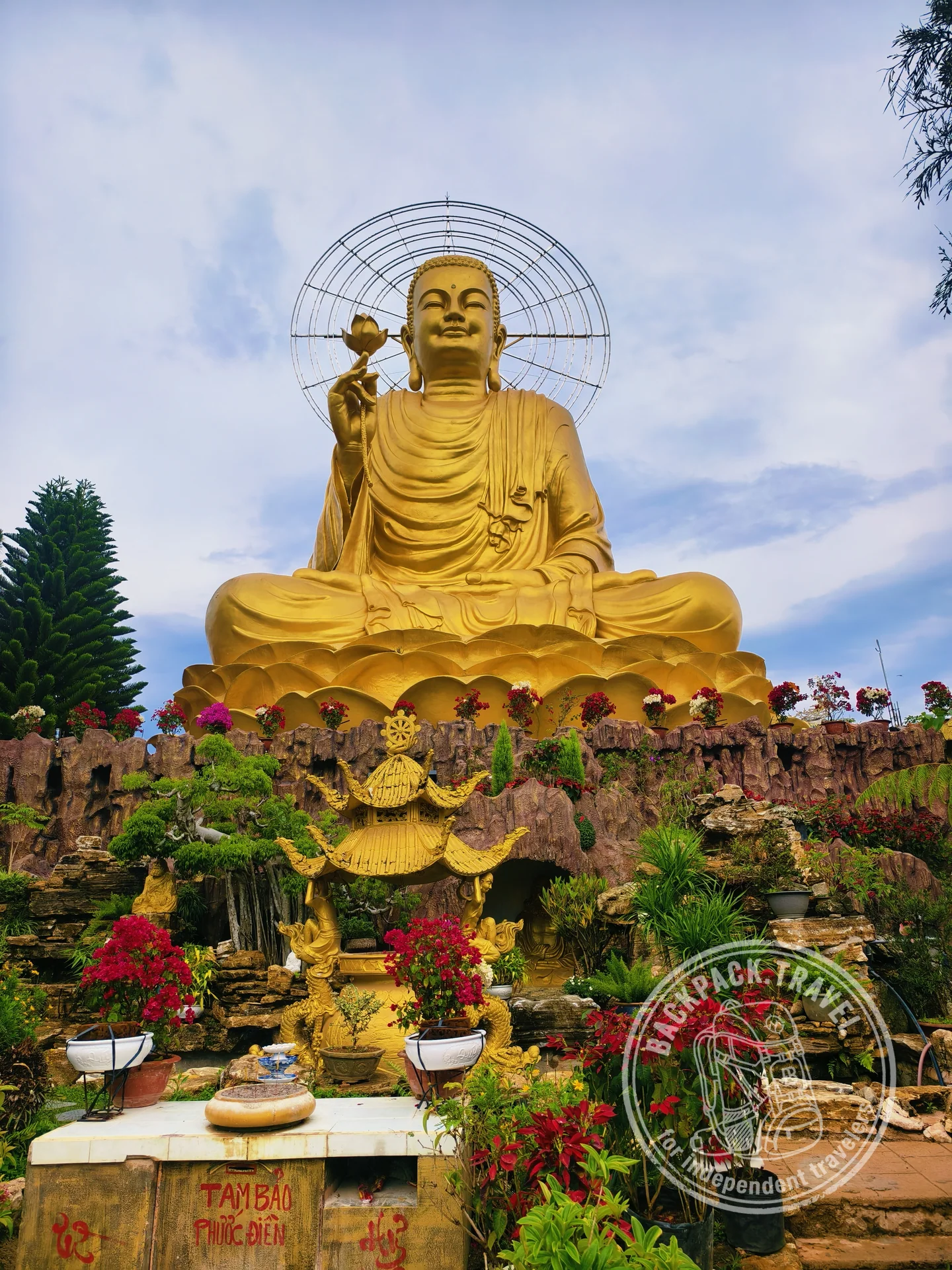
A mountain resort a kilometre and a half up, where the French went to escape the heat of the delta. A cool climate, pine trees, a lake in the centre and architectural attractions such as the Crazy House.
Wiki
Da Lat sits on a plateau about a kilometre and a half above sea level, and that is its defining feature: while the rest of Vietnam is at thirty-five degrees and humid, here it is twenty and in the evening you want a jacket. The French founded a resort here precisely for the climate. From that era there remain the villas, the art deco railway station and the street plan, and the Vietnamese have laid their own layer over the top: greenhouses, coffee plantations, wedding photo shoots and attractions of varying degrees of seriousness.
What to see
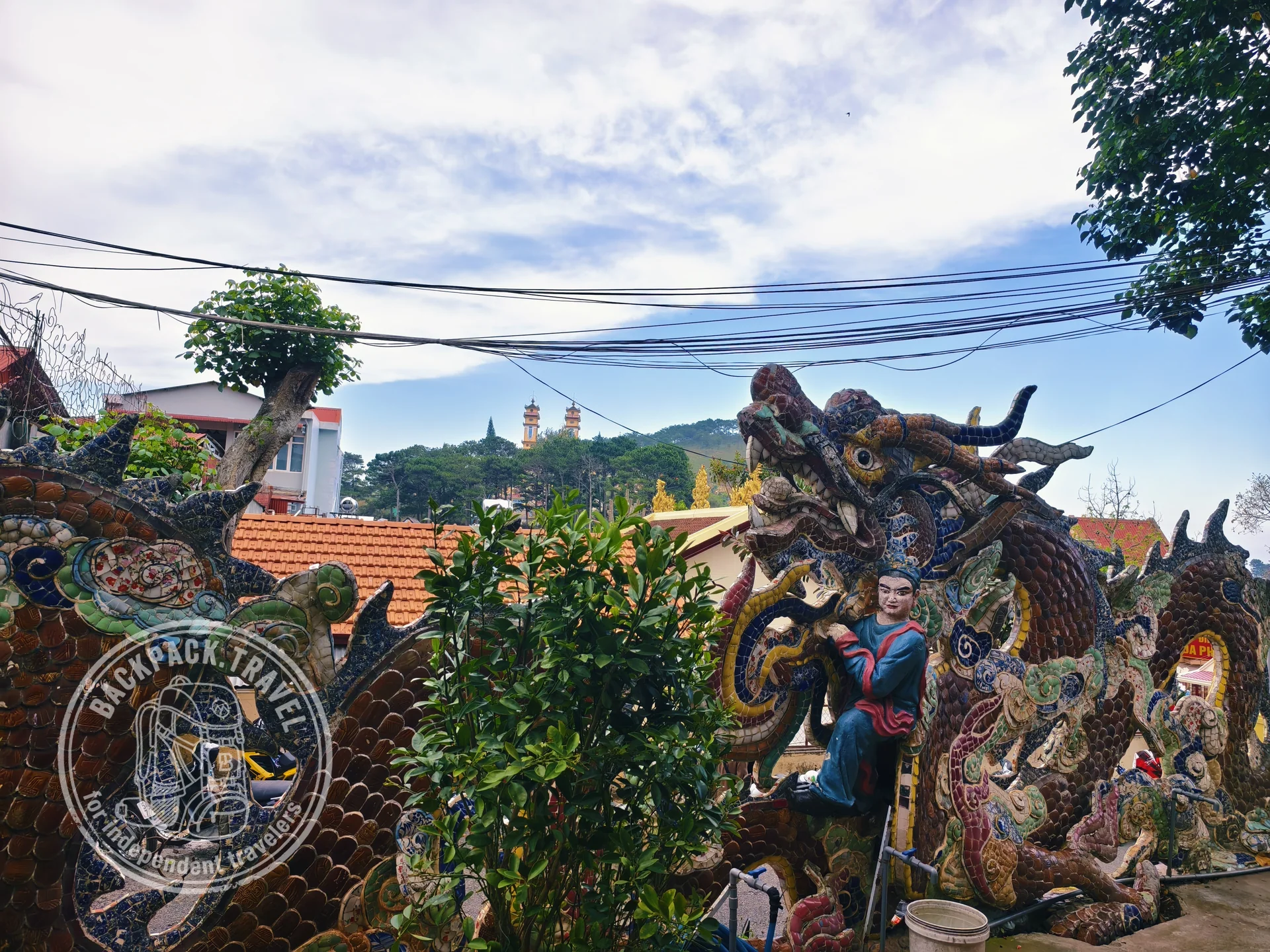
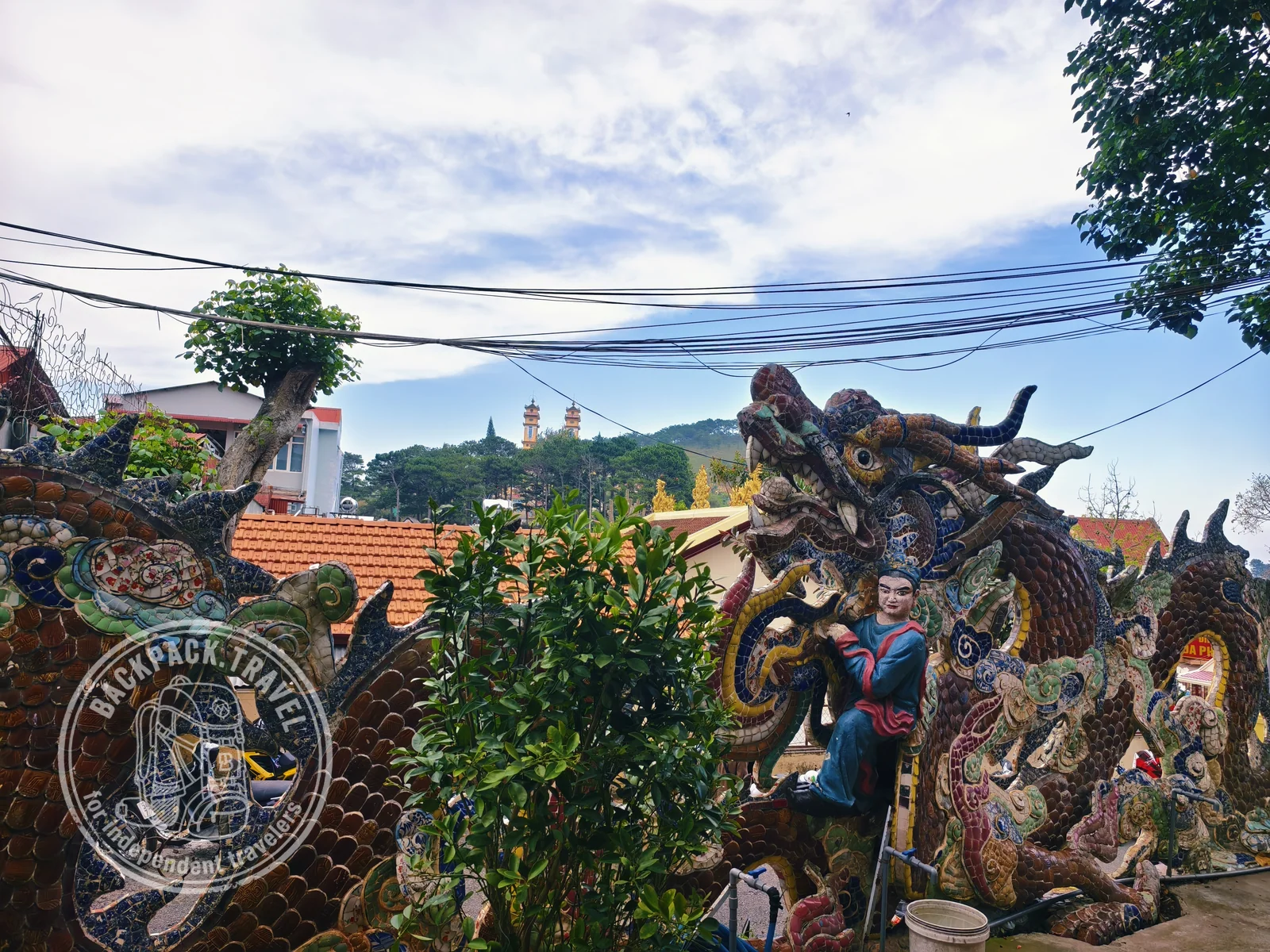
- Linh Phuoc Pagoda in the village of Trai Mat, about eight kilometres from the centre, is the most spectacular sight in the city. It was built in the late 1940s and early 1950s and covered all over in mosaic of broken glass, porcelain and bottle shards: dragons, columns, walls. There is also a seven-tiered bell tower of about 37 metres and a bell considered the largest in central Vietnam. Downstairs are halls with scenes of the Buddhist hell, which is worth bearing in mind if you have children with you.
- Da Lat railway station, built in 1932–1938 to a design by French architects, is one of the most beautiful in Vietnam. A tourist train runs from here to Trai Mat: seven kilometres, about half an hour each way, and the pleasantest way of reaching Linh Phuoc.
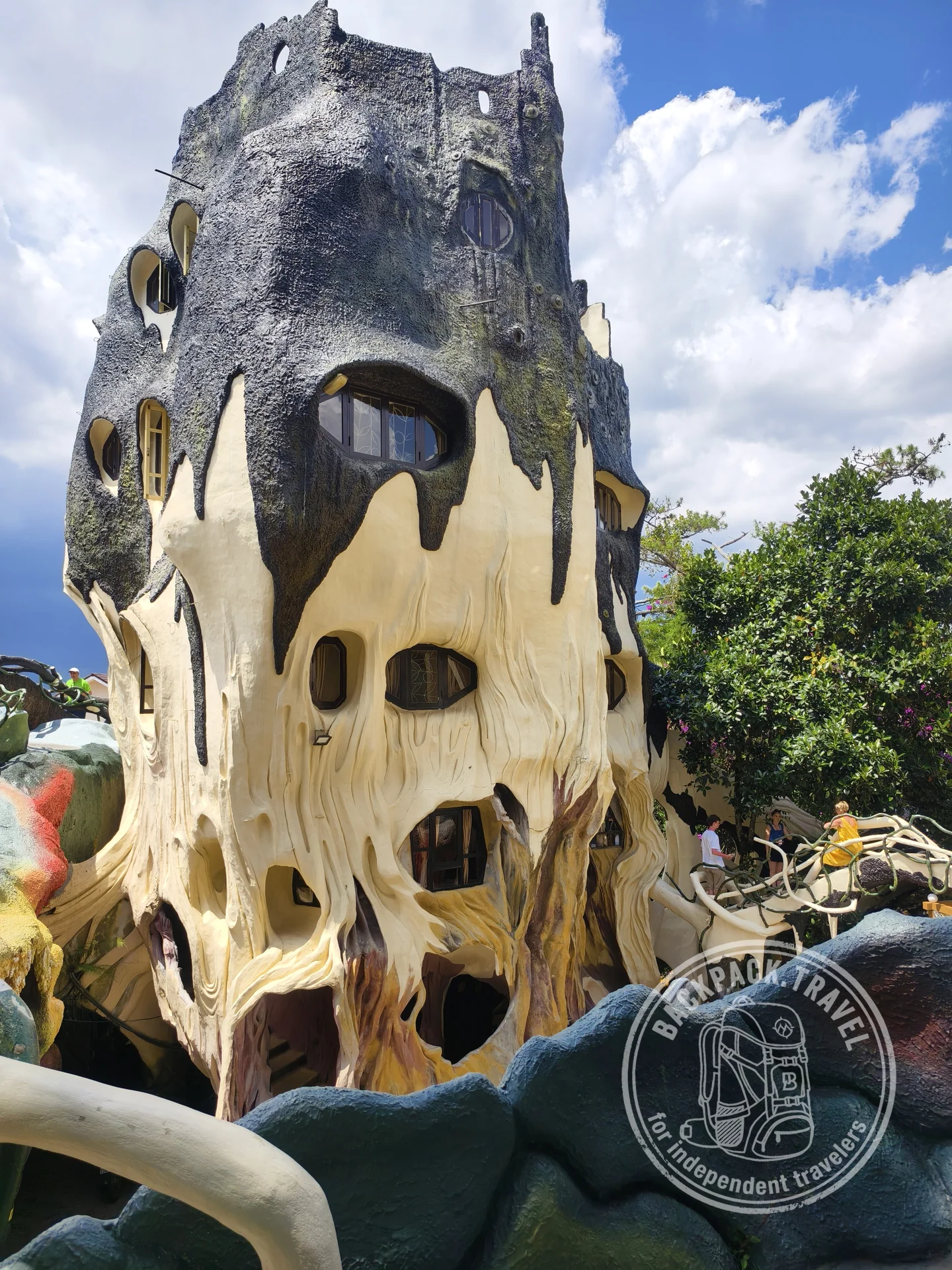
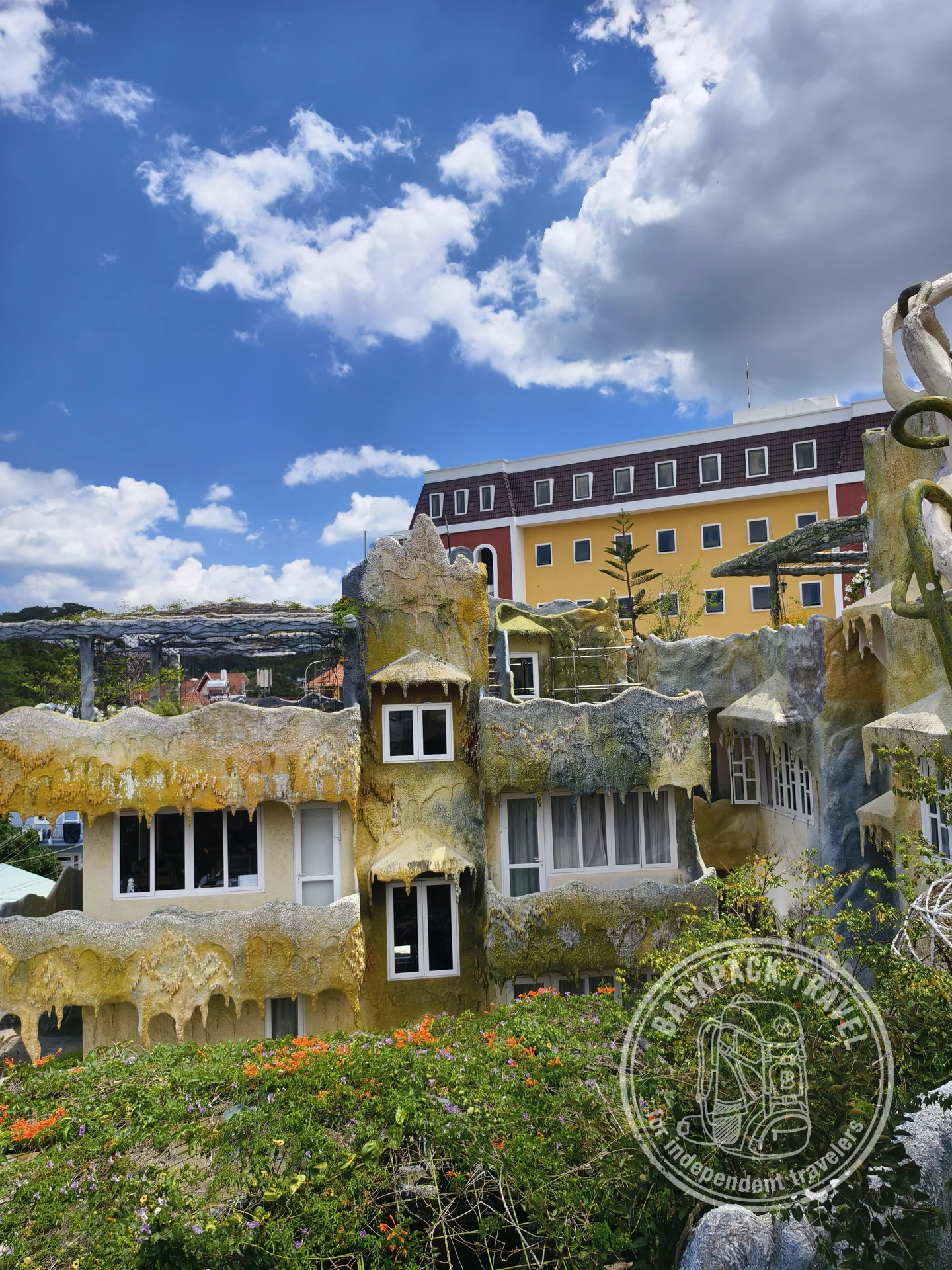
- The Crazy House (the Hang Nga guesthouse) is a concrete labyrinth of tree trunks, burrows and staircases without railings, which the architect Dang Viet Nga has been building since 1990. It is crowded during the day; the place divides opinion, but there is nothing else like it anywhere.
- The Truc Lam monastery above Tuyen Lam lake is a working Zen monastery with gardens. A short cable car runs up to it from Robin Hill, with a view over the pine-covered slopes.
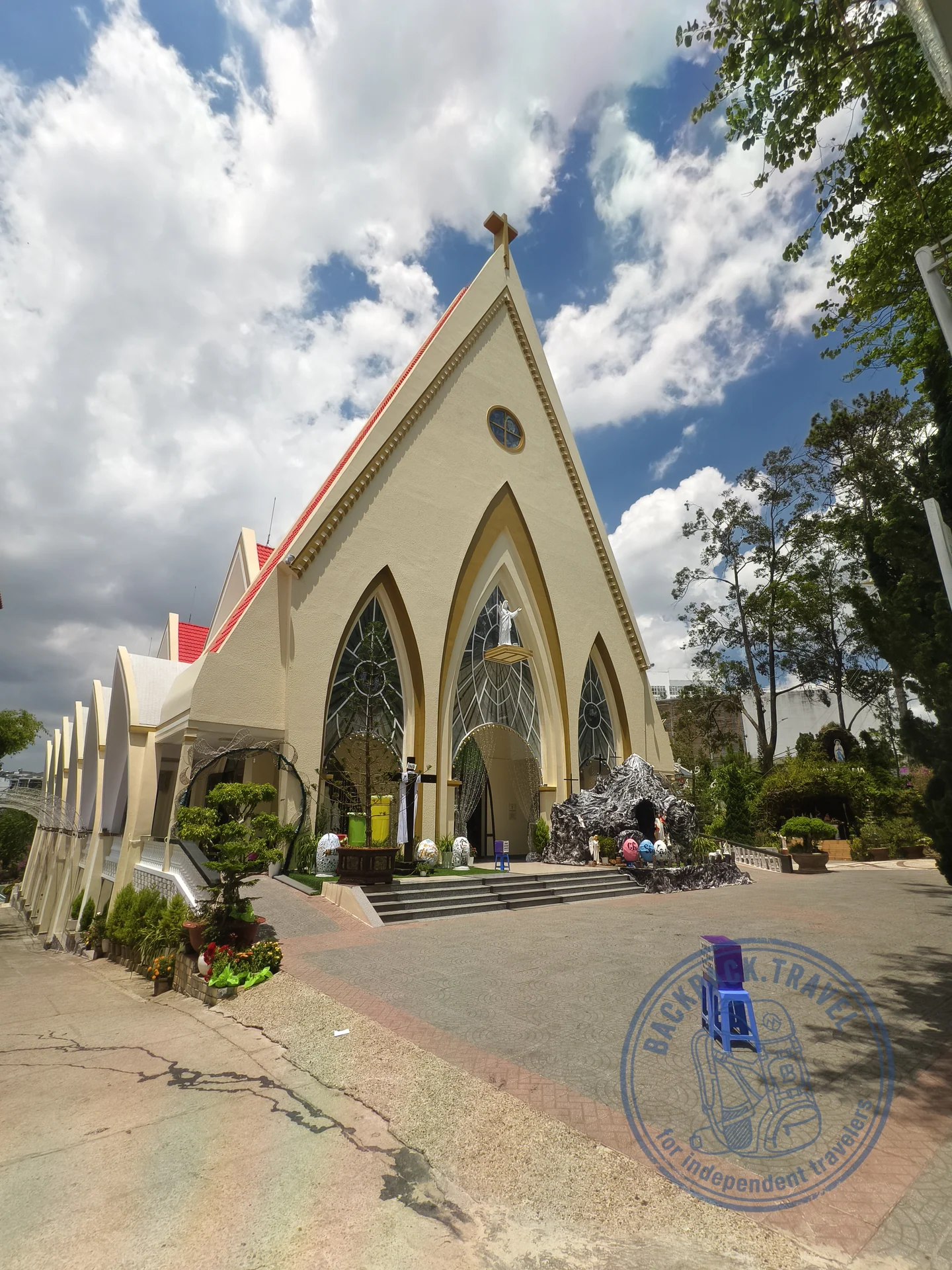
- The colonial layer: Xuan Huong lake with its embankments in the centre, the cathedral with a rooster on the spire, the pink church of Domaine de Marie and the Bao Dai palace, the summer residence of the last emperor, with its interiors still in place.
- Waterfalls: Datanla is the closest to the city, while Elephant and Pongour are bigger and further out. Datanla has rope descents and canyoning; it is a commercial business with real risks, and choosing the operator deserves to be taken seriously.
- Lang Biang is a mountain north of the city, climbed by jeep or on foot. In clear weather you can see the whole plateau from the top.
One layer is worth filtering out: the Valley of Love and the parks with photo spots are made for Vietnamese tourists.
Food and what to bring back
Da Lat is an agricultural region, and that is the most delicious part of it. Strawberries, artichokes, avocados, flowers and coffee are grown here, including arabica, which is rare in Vietnam. The night market sells hot soya milk and banh trang nuong, the local "Vietnamese pizza". Among edible souvenirs the ones that make sense are coffee, artichoke tea and dried fruit.
Getting there and when to go
The nearest airport is Lien Khuong, about 30 kilometres away, with flights from Ho Chi Minh City, Hanoi and Da Nang. The overland option is the sleeper buses: some six to eight hours from Ho Chi Minh City and about four or five from Nha Trang and Mui Ne, and the road up from the coast runs over a mountain pass and is beautiful in itself.
The temperature here is even all year round and the seasons differ mainly in rainfall: from November or December through March it is dry, and from May to October it rains, usually in the afternoon. At night it can fall to ten degrees, so warm clothes are needed in any season, and hotels usually have no heating.
How much time to allow
In one day, at a gallop, you will manage Linh Phuoc with the train, the Crazy House and the lake. Two or three days is the ideal, adding the monastery with its cable car, a waterfall, a coffee farm and an evening at the market. Four or five days are needed for trekking up Lang Biang, for canyoning or for trips around the plantations.
Da Lat is convenient to place between the coast and the south: the chain of Nha Trang or Mui Ne to Da Lat to Ho Chi Minh City involves no doubling back.
Who will not enjoy it
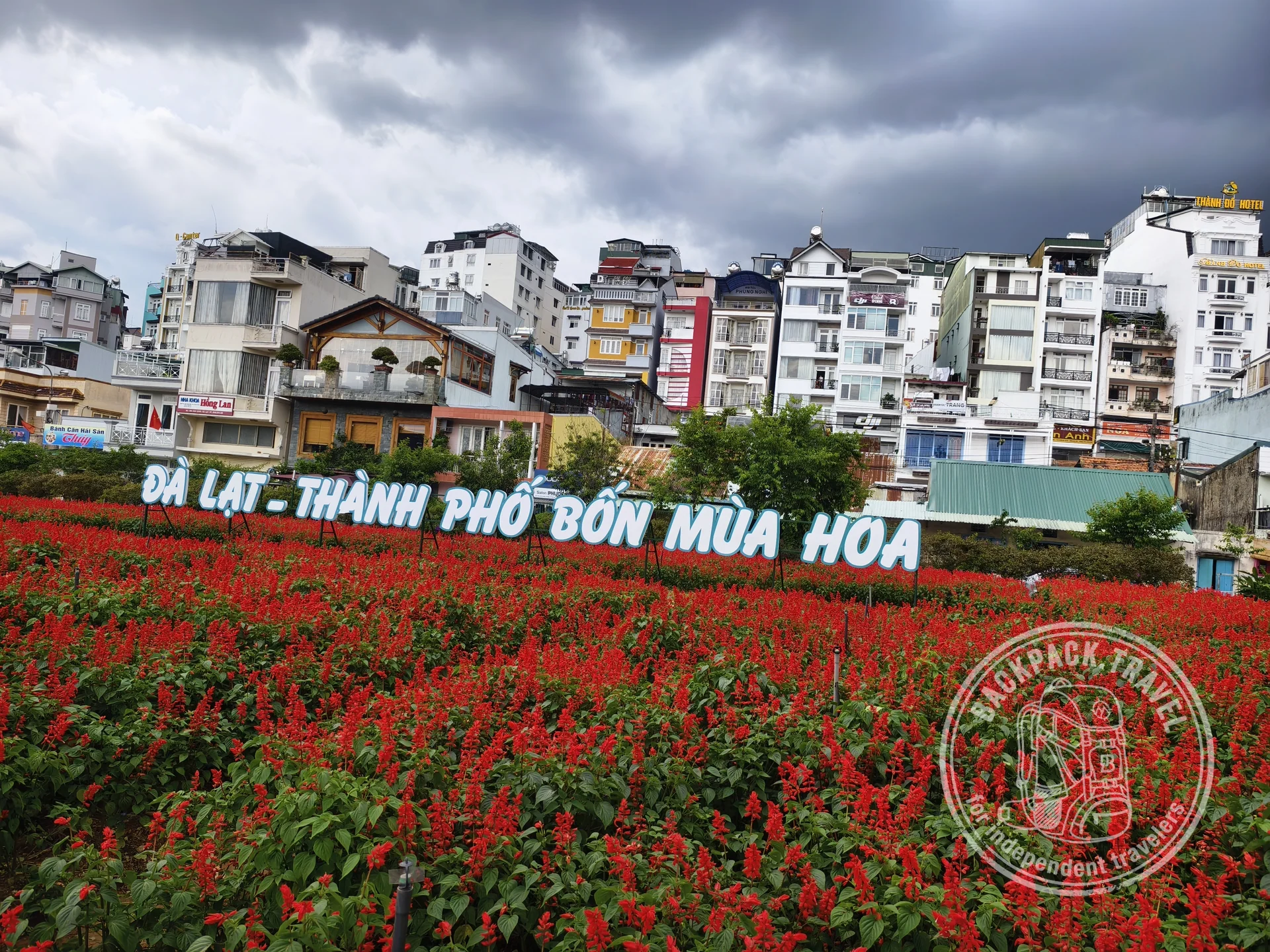
Da Lat is not about architecture and not about antiquity: there are few colonial buildings, they are scattered, and the centre is built up densely and without charm. Many people come for a "Vietnamese Paris" and get an ordinary noisy Vietnamese city of motorbikes and building sites, where the French trace has to be hunted for. A significant share of the attractions is frankly kitsch. And there is no sea here: if your route is built around a beach, two days in the cool mountains will fall out of the rhythm.