 Города и дороги
Description
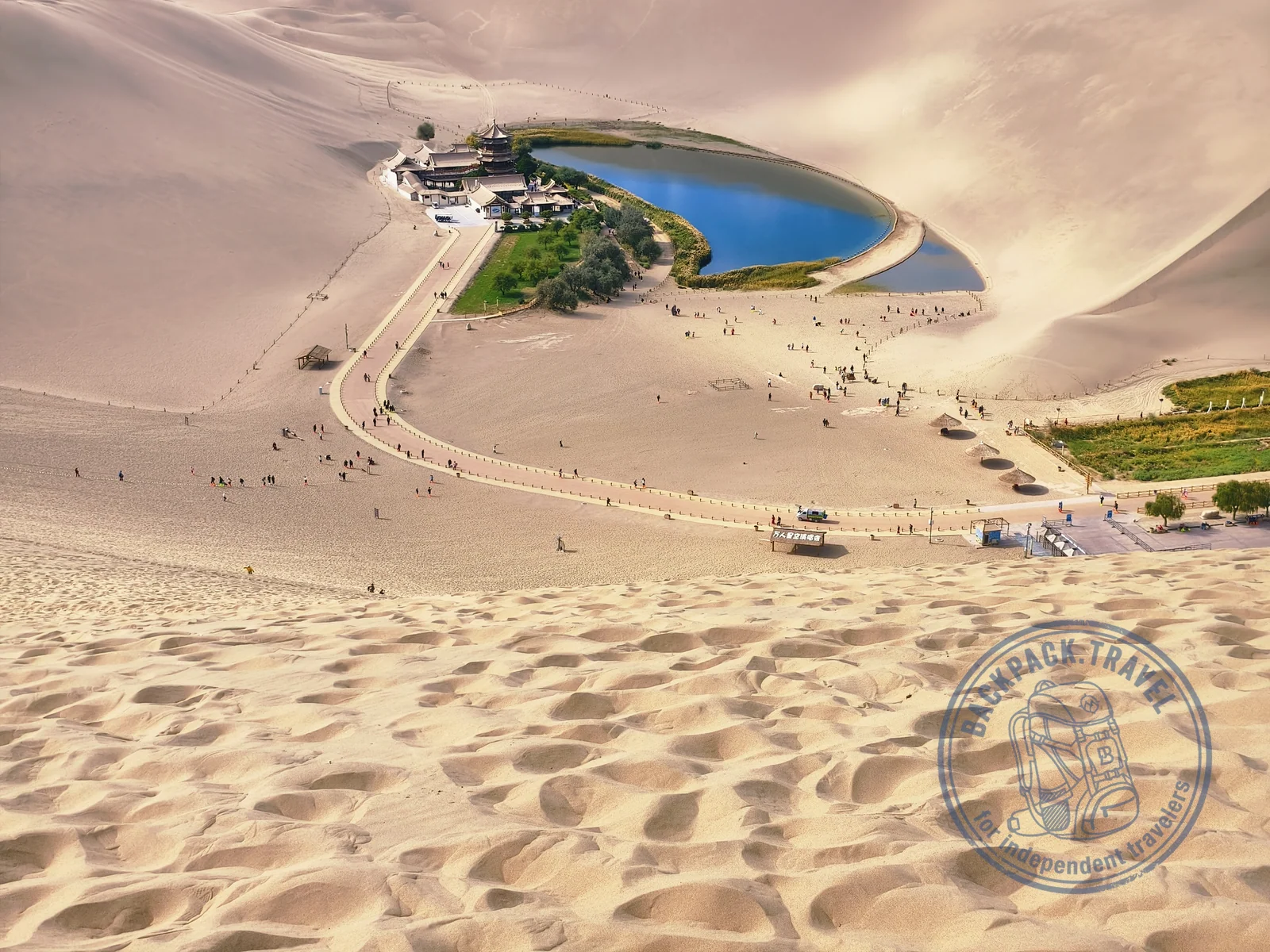
An oasis where the Gobi and the Taklamakan meet and a key point on the Silk Road. The Mingsha Sand Dunes with Crescent Lake below them, the Mogao Caves with their Buddhist frescoes and the Shazhou night market.
Wiki
Dunhuang is an oasis on the western edge of Gansu, between the Gobi and the Taklamakan. A commandery was founded here under the Han empire shortly after 104 BC, and for almost two thousand years this was the last Chinese station before the road out into the Western Regions. Of all the cities on the Silk Road route, Dunhuang has the most to offer: it has a cave monastery of world importance and sand dunes right on the edge of town.
What to see
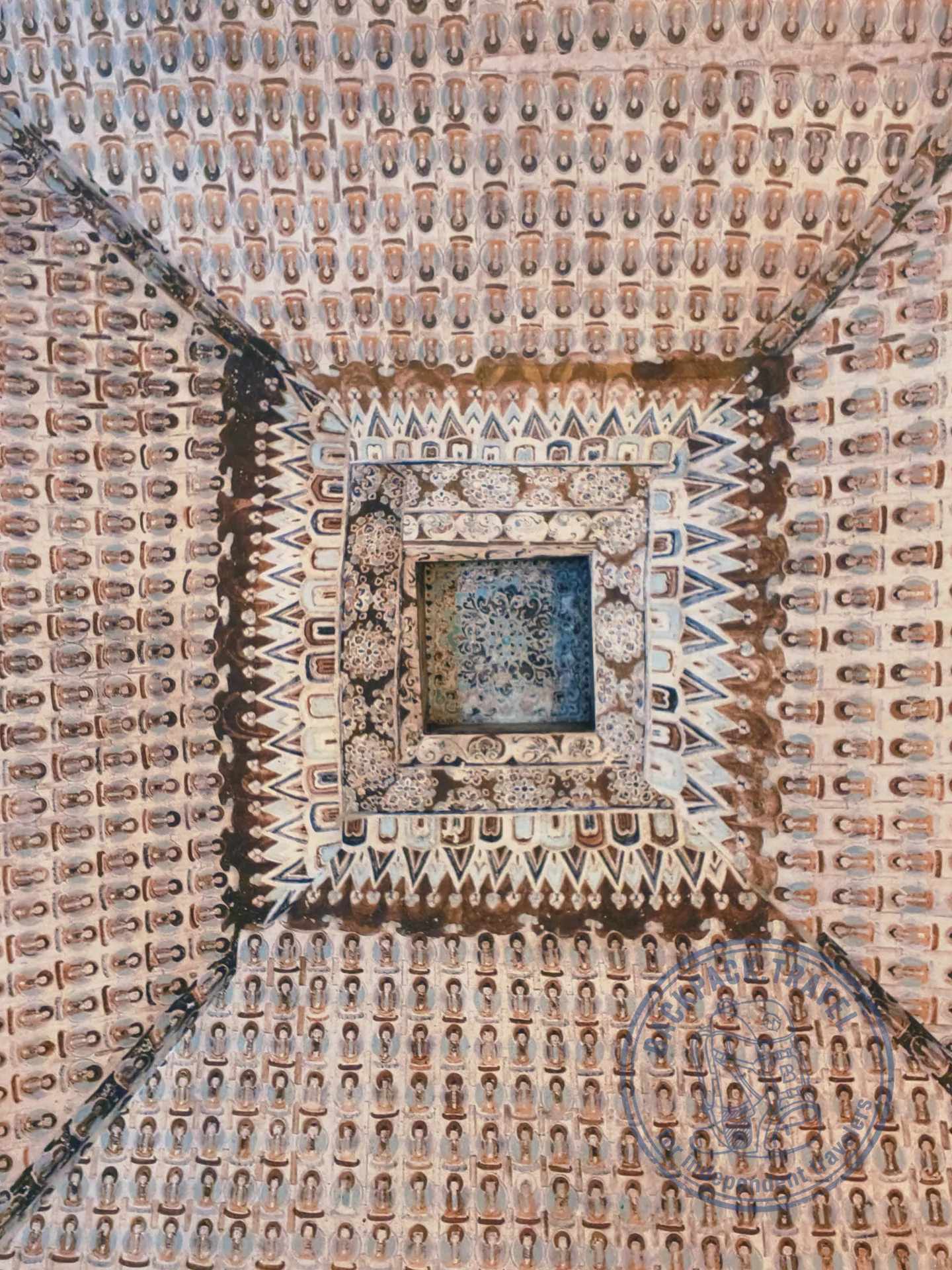
- The Mogao Caves are the main reason to come. The complex consists of 735 caves cut into a cliff face from the 4th century onwards and painted over the course of about a thousand years; it has been on the UNESCO list since 1987. In 1900 the Daoist caretaker Wang Yuanlu opened up the sealed Cave 17, with tens of thousands of manuscripts and paintings on silk. In 1907-1908 a substantial part of the collection was carried off by the expeditions of Aurel Stein and Paul Pelliot, and the Dunhuang texts were scattered among the museums of Europe and Asia.
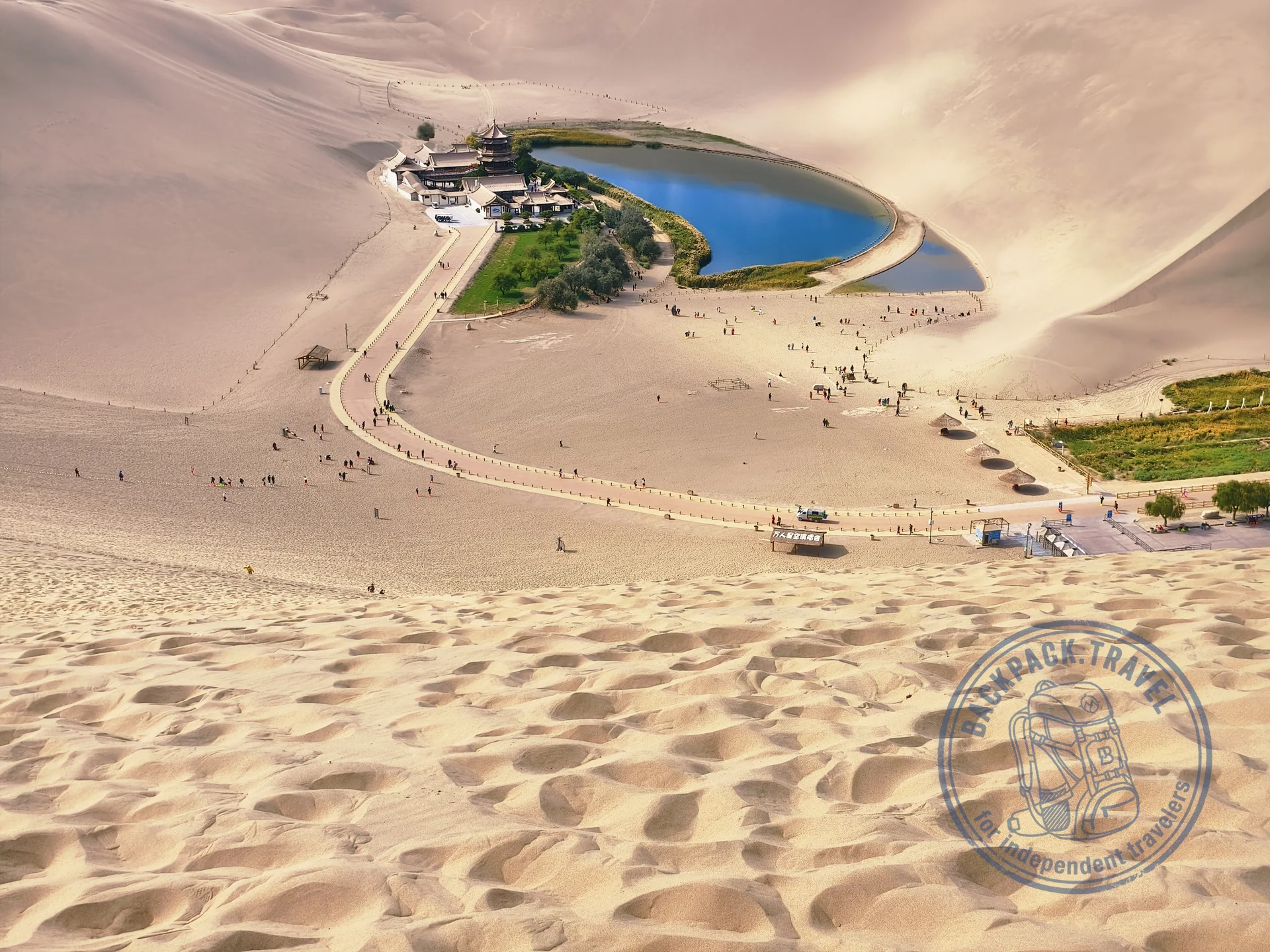
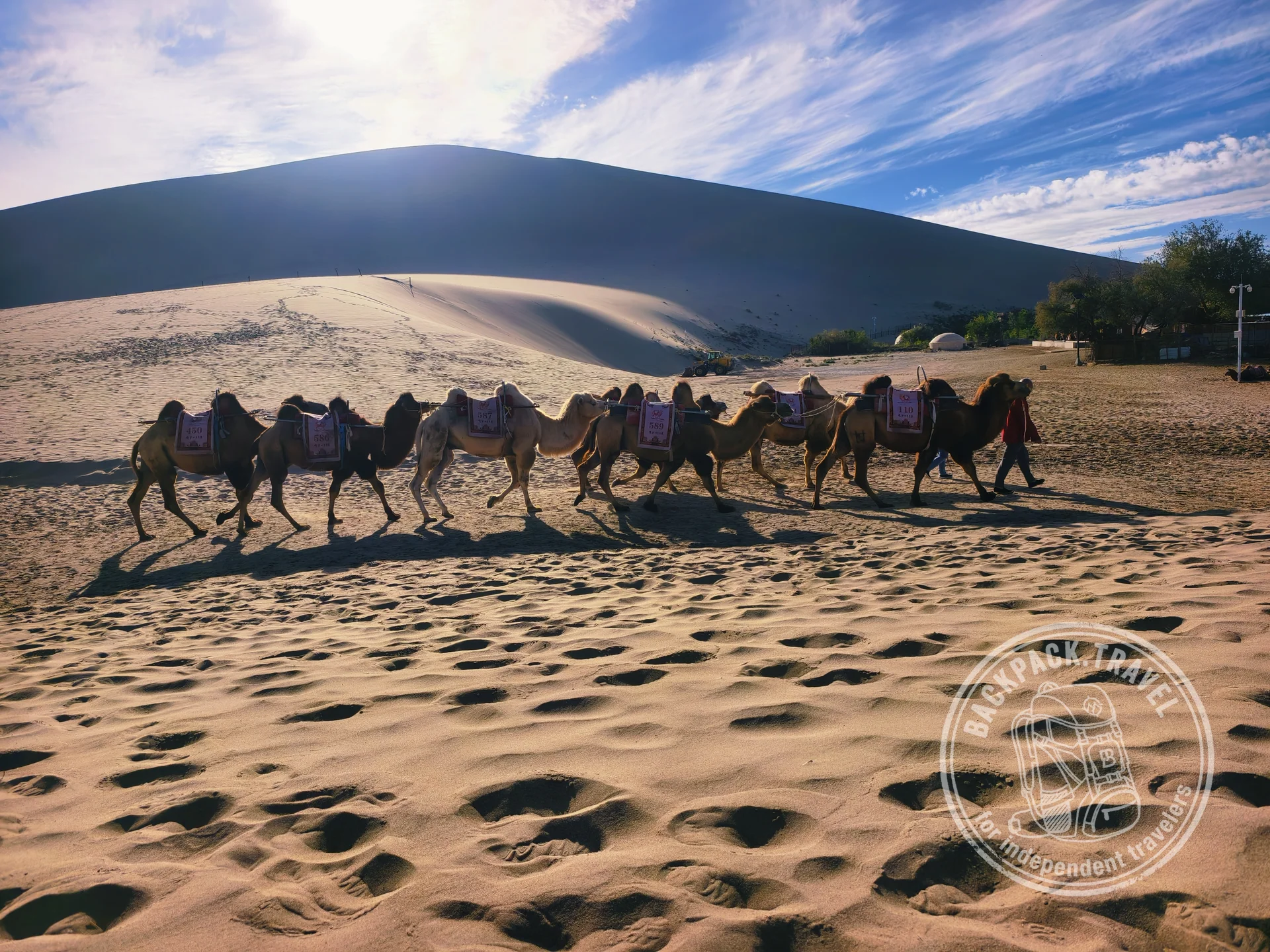
- The Mingsha Sand Dunes and Crescent Lake are the dune massif at the southern edge of town and the crescent-shaped lake at the foot of the dunes. Camel caravans cross the sand and people ride sandboards; at sunset there is a crowd, but the light is at its best.
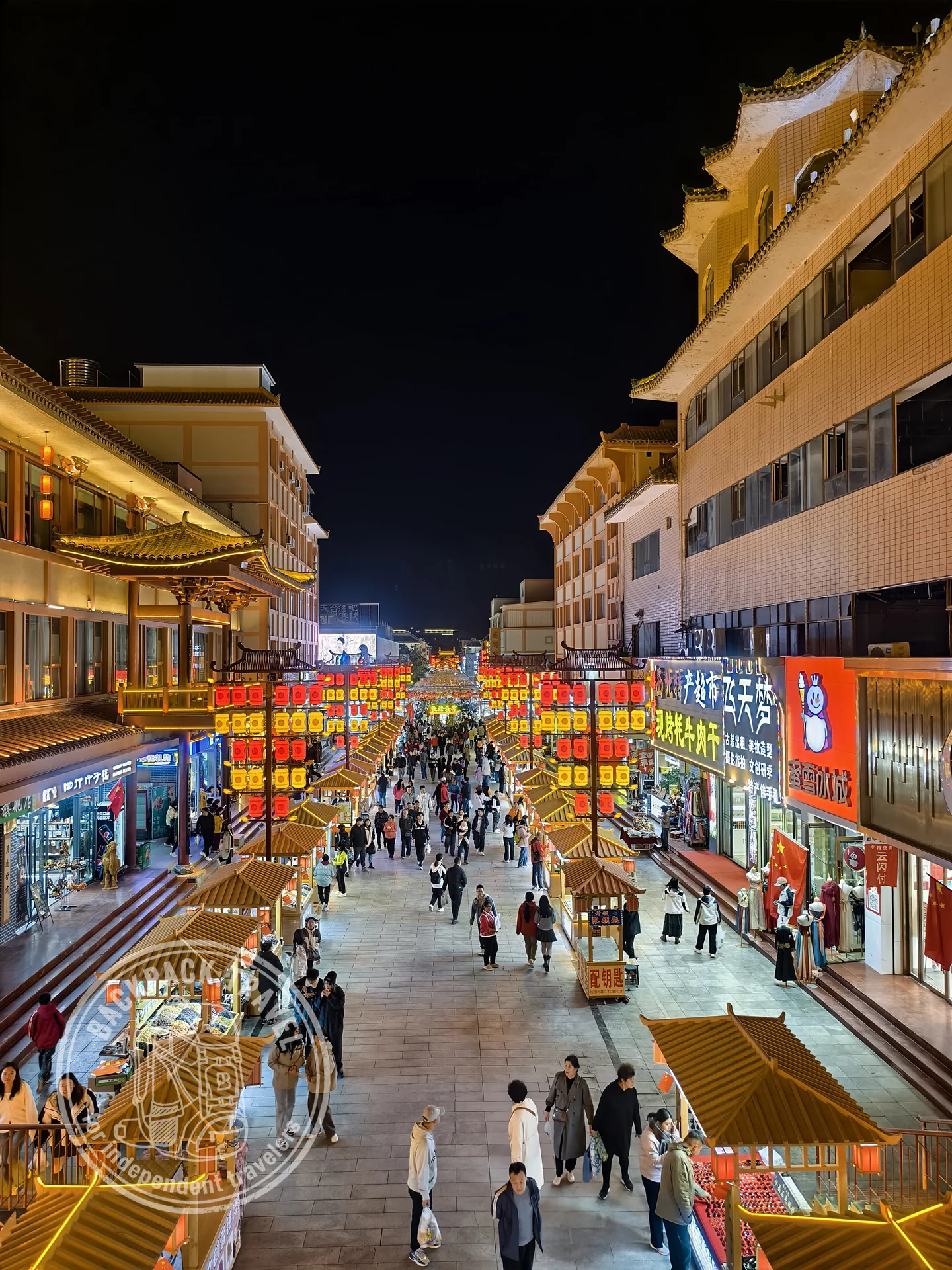
- The Shazhou night market is the city's evening spot: grills, noodles, dried fruit and souvenirs. It is noisy and touristy, but it is the only lively place after dark.
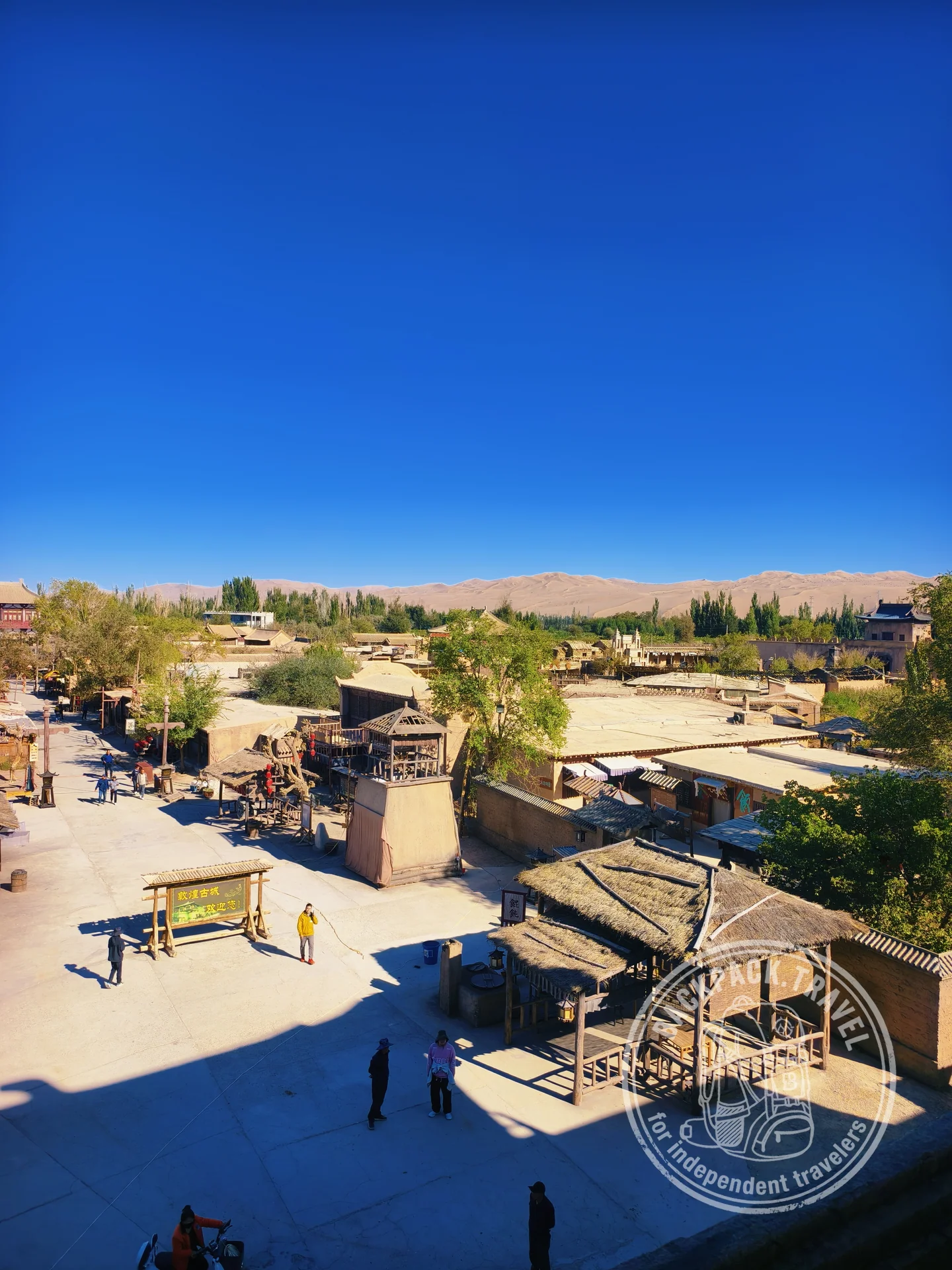
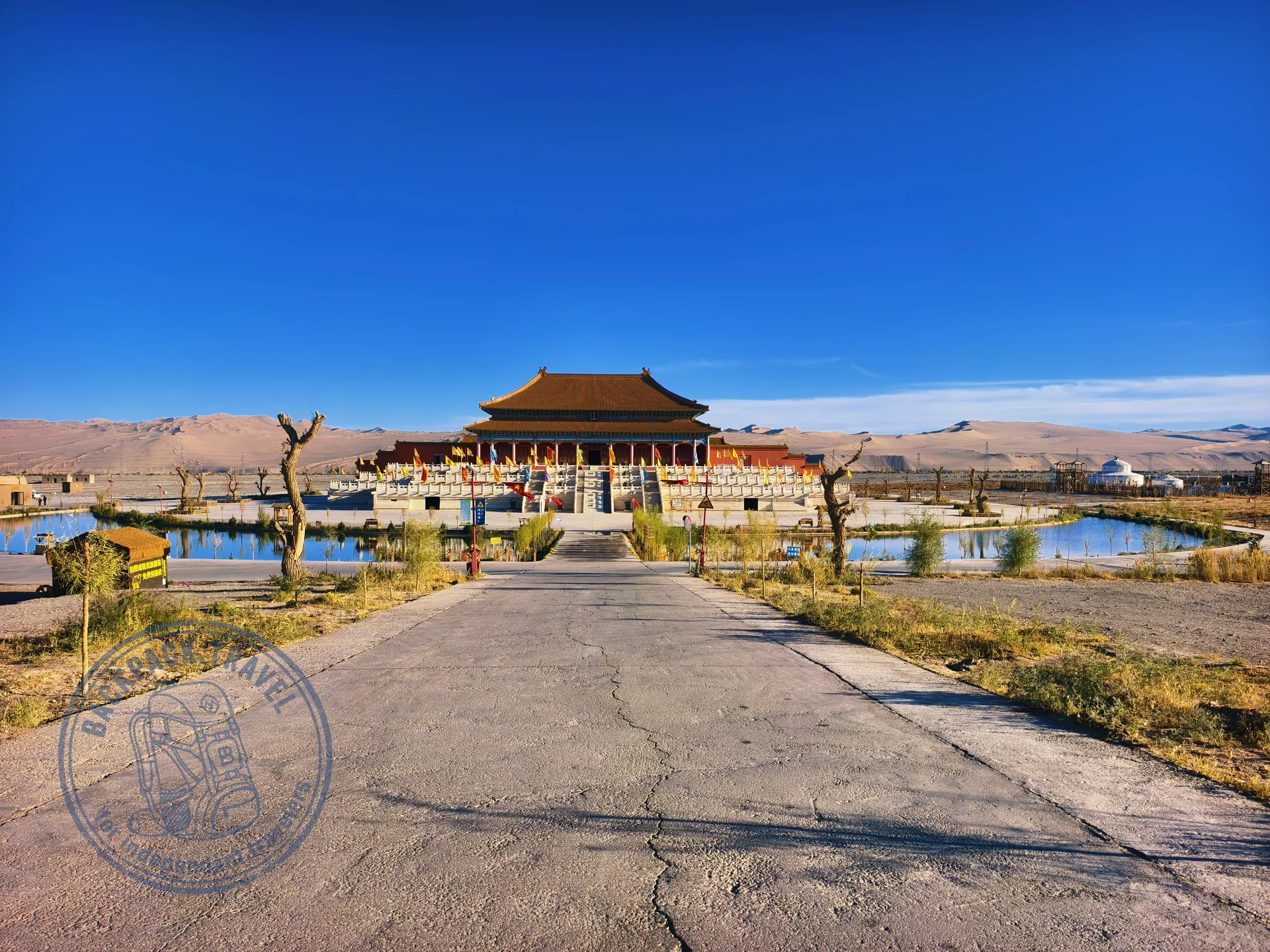
- Dunhuang Ancient City is not archaeology but scenery: the complex was built in 1987 for the shooting of the film Dunhuang and has served as a film set ever since.
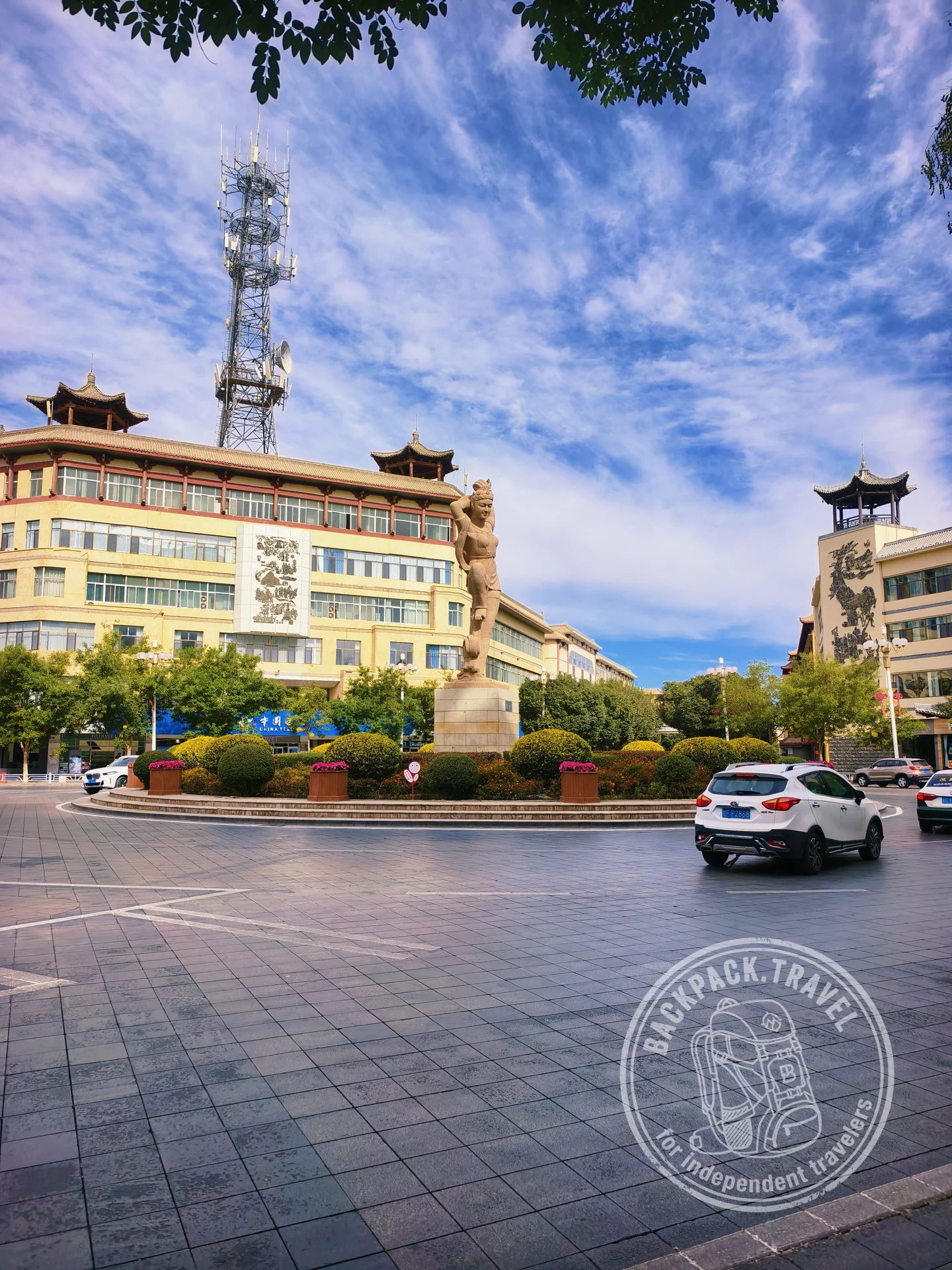
- The "Pipa Player" statue is the city's emblem, a sculpted version of a Mogao fresco in which a woman musician plays with the instrument slung behind her back.
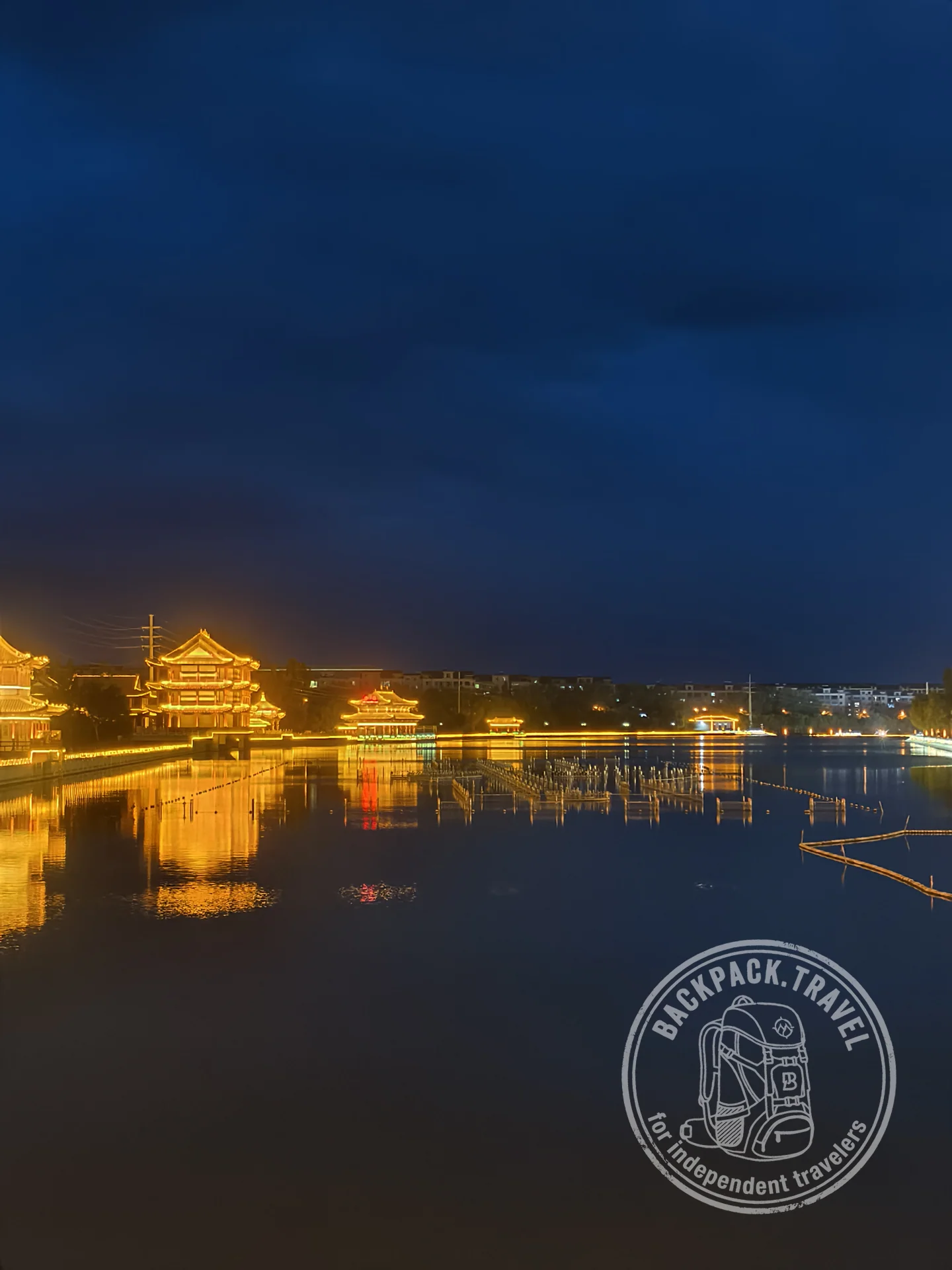
- The Dang River embankment and the Silk Road Heritage City are new spaces for an evening walk, and nothing more than that.
The second half of the programme lies outside the city: the Yumen Pass (111 BC, about 90 km to the north-west), the remains of the Han Great Wall, the Yang Pass and the Yardang Geopark some 180 km away, a field of wind-eroded clay ridges known as the "devil's city". There is no public transport out there, so people travel by car with a driver, and the circuit takes a full day.
How to get into Mogao
- Tickets are sold by advance booking and the daily limit is capped; in high season places are taken weeks ahead.
- The visit begins not at the caves but at the Digital Exhibition Centre 9 km from the city: first two films, then a bus to the cliff.
- Inside you are led round by a guide with your group; the usual route covers eight to ten caves in about an hour, and the selection changes. Photography is not allowed.
- Foreigners have a separate and smaller quota, and the ticket is collected in person at the box office on presentation of a passport.
Ticket formats and prices change, so check before you travel.
How much time to allow
The minimum at which the trip makes sense is one day: Mogao in the morning, the Mingsha Sand Dunes with Crescent Lake towards evening, and the night market. A second day goes on the Yumen Pass, the Han wall and Yardang, which is a separate full-day excursion into the desert. A third will be needed if you add the Yang Pass and the Western Thousand Buddha Caves.
Getting there and when to go
Dunhuang has its own railway station and airport. The nearest station on the high-speed line is Liuyuan South, about 130 km away and roughly two hours by transfer. Along the same line to the east are Jiayuguan and Zhangye, and to the west Hami, Turpan and Urumqi; the direct high-speed train to Zhangye takes about four and a half hours.
The climate is extremely dry: around 67 mm of precipitation a year and more than 3,200 hours of sunshine. May to June and September to October are the best times. Summer is hot and crowded, winter is cold and windy, and some of the out-of-town sites keep reduced hours. Take water, a hat and something against the sand: on the dunes and at Yardang the wind lifts the dust.
Who won't enjoy it
Dunhuang demands discipline: without a ticket to Mogao bought in advance you risk not getting inside at all, and once you are in you will see eight caves out of seven hundred, in an hour, with no photographs and no chance to choose. For anyone unwilling to take a tour written to somebody else's script, that is irritating. Yardang means several hours on the road for the sake of clay ridges that are far from universally liked. The town itself is small and touristy, and in the evening it comes down to a single market. But if the frescoes and the history of the Silk Road genuinely interest you, Mogao is the strongest point on the route, and people cross half the country for it.