Description
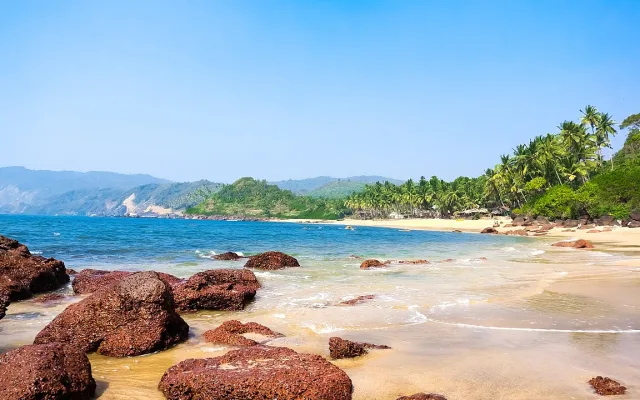
Goa is known for its beaches, Portuguese architecture and colourful markets. It also serves some of the best seafood in India.
Wiki
Goa is the smallest state in India by area, on the country's south-western coast along the Arabian Sea. For more than four and a half centuries it was a Portuguese colony, and that legacy still defines the place: Catholic cathedrals stand alongside Hindu temples, and an unhurried, almost Mediterranean rhythm of life contrasts sharply with the rest of India.
Where Goa is
The state stretches along the Arabian Sea coast in western India, between Maharashtra to the north and Karnataka to the east and south. The coastline runs for about 105 km of near-continuous beach. Administratively Goa is divided into two districts, North and South, and informally into "North Goa" and "South Goa", which differ greatly in atmosphere. The capital is Panaji (Panjim), and the main transport gateways are Dabolim International Airport and Mopa Airport in the north of the state, opened in 2022. The Portuguese ruled these lands from 1510 and held them until 1961, when Goa joined India; it became a full state in 1987.
What to see in Goa
Beyond the beaches, Goa is worth visiting for its colonial architecture, old forts, temples and natural sights. It makes sense to explore area by area.
North Goa
North Goa is the busiest and most touristy part of the state, the place people come for nightlife, markets and a young crowd. Here are the famous beaches of Baga, Calangute, Anjuna, Vagator and Arambol, along with flea markets and no shortage of bars. Anjuna made its name with hippie fairs and trance parties back in the 1960s and 70s, and the bohemian spirit survives. The roads are more built up, the infrastructure better developed, and the distances between beaches short — which makes a scooter the natural way to get around.
Old Goa
Old Goa, the former capital of Portuguese India and a UNESCO World Heritage Site, lies about 10 km from Panaji. It preserves a remarkable ensemble of 16th- and 17th-century churches and monasteries. The great shrine is the Basilica of Bom Jesus, which holds the relics of St Francis Xavier, patron of missionaries. Beside it rises Se Cathedral, one of the largest Christian churches in Asia. The church of St Francis of Assisi and the church of St Catherine are also worth seeing. The whole complex takes a few hours; entry to most churches is free.
Fort Aguada
Fort Aguada is among the best known and best preserved of the Portuguese forts, built in the early 17th century to hold off the Dutch and pirates and, at the same time, to supply fresh water — hence the name, from the Portuguese agua. The fortress stands on a headland by Sinquerim beach and offers panoramic views over the Arabian Sea and the mouth of the Mandovi river. An old lighthouse survives on the grounds. It belongs on any North Goa itinerary. The other notable fort is Chapora, familiar from Bollywood films, with fine sunsets.
Dudhsagar Falls
Dudhsagar is one of the tallest and most spectacular waterfalls in India, dropping around 310 metres. The name means "sea of milk": the water pouring off the sheer rock really does resemble spilt milk. The falls lie deep in the jungle on the border with Karnataka, roughly 60 km from Panaji. Reaching them independently is difficult, so most visitors go by jeep safari. They are at their fullest and most dramatic during and just after the rains, from July to October.
Bhagwan Mahavir Sanctuary
The Bhagwan Mahavir Sanctuary, together with Mollem National Park, is the largest protected area in the state, covered in humid tropical forest. Leopards, sambar deer, wild boar and a great many birds and butterflies live here. Dudhsagar Falls sits within the sanctuary. Jeep safaris and walking trails are organised for visitors; it is a good chance to see the non-beach side of Goa.
Temples and churches
Shri Mangeshi Temple at Ponda is one of the largest and most revered Hindu temples in the state, dedicated to a form of Shiva. It stands out for its white seven-tiered lamp tower (deepastambha) and is a centre of pilgrimage. In Panaji the dominant landmark is the Church of Our Lady of the Immaculate Conception, a white church with symmetrical staircases, built in the 16th century and rebuilt later; lit up in the evening, it is one of the most photographed spots in the city.
Panaji
Panaji (Panjim) is the state's easy-going capital on the Mandovi river. Walk the Latin quarter of Fontainhas, with its narrow lanes and brightly painted Portuguese houses, see the Immaculate Conception church and the riverfront with its floating casinos. It is a calm colonial town where Goa's European past is easy to feel.
The beaches
Beaches are the main reason people come to Goa. Those in the north are crowded and noisy, those in the south quiet and secluded.
- Palolem (South Goa) — a scenic curved bay ringed with palms; calm, and good for families. It is known for the "Silent Noise" parties, where the music comes through wireless headphones.
- Arambol (North Goa) — a bohemian beach with a long-established hippie community and a large crowd of foreign long-stayers. A market, yoga classes, drum jams at sunset and a freshwater lake nearby.
- Betalbatim (South Goa) — a quiet beach of soft white sand with almost no crowds; good for a secluded stay and for watching the sunset.
- Agonda (South Goa) — one of the calmest beaches, valued for its cleanliness and tranquillity.
- Vagator (North Goa) — a shore red with laterite rock, looking across to Chapora fort, popular with a younger crowd and with partygoers.
- Baga and Calangute — the liveliest beaches in the north, with bars, watersports and the Tito's and Cafe Mambo clubs.
One day in Goa
A full day might run like this: morning in Old Goa with the Basilica of Bom Jesus and Se Cathedral; then across to Panaji for a walk through Fontainhas and a look at the Immaculate Conception church. After a Goan lunch, drive out to Fort Aguada for the views, and finish with sunset on one of the northern beaches — Sinquerim, Vagator or Arambol.
What to eat
Goan cooking is a distinctive fusion of Indian spices and Portuguese tradition, heavy on seafood and coconut. Do try:
- Fish curry rice — the everyday dish of Goa;
- Pork vindaloo — spicy pork in a sharp, sour sauce, a Portuguese inheritance;
- Xacuti and cafreal — rich spiced sauces for chicken and meat;
- Fresh seafood — tiger prawns, crab, lobster and squid;
- Bebinca — the traditional layered dessert;
- Feni — the local spirit, made from cashew or coconut.
Sunset traditionally comes with a cold Kingfisher. According to Numbeo, an inexpensive lunch costs from about $3, dinner for two around $15 and a cup of coffee roughly $2.
Advice for travellers
When to go
The best season is the dry period from November to March: warm, dry, calm seas and plenty of visitors. The peak falls in December and January, taking in Christmas and New Year. From June to September the monsoon brings downpours, rough seas and the closure of many beach shacks — but the landscape is at its greenest and the waterfalls at their fullest.
Health and hygiene
Take the usual care in India: drink only bottled water, avoid ice of uncertain origin and unwashed vegetables, and choose busy places where the food turns over quickly. Bring a small kit for stomach upsets and an insect repellent. Sun protection is essential — the southern sun is harsher than it feels.
What to bring home
Popular souvenirs include spices and tea, cashew nuts, feni, natural cosmetics and handmade soap, textiles and jewellery from the flea markets at Anjuna and Arambol, and coconut sweets.
Getting around
The main way to travel is a rented motorbike or scooter (from around $5 a day); you will need an international driving permit and some caution on roads with left-hand traffic. Taxis, ride-hailing apps, auto-rickshaws and state buses are also available. Accommodation ranges from beach huts (from $8 a night) to mid-range hotels (around $50).
Why people come
Goa combines what rarely comes together in one place: long ocean beaches to suit every taste, European colonial heritage with UNESCO-listed churches, forts and waterfalls, a distinctive cuisine with the best seafood in India, and a relaxed atmosphere at affordable prices. That is why quiet family holidaymakers, night-life devotees and culture lovers all find what they came for — and come back.
Photos