Description
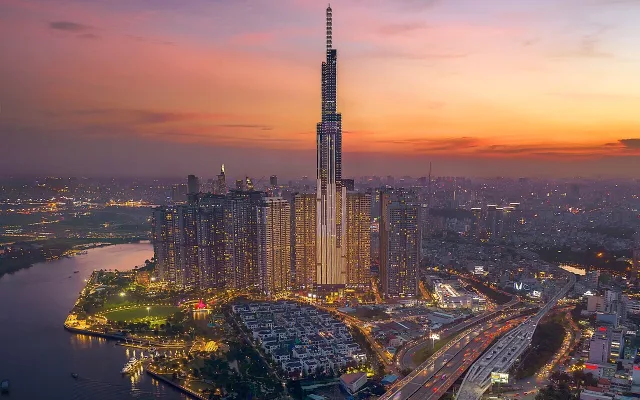
Ho Chi Minh City, formerly Saigon, is known for landmarks such as the War Remnants Museum, Notre-Dame Cathedral and Pham Ngu Lao street.
Wiki
Ho Chi Minh City is the largest metropolis in Vietnam and the engine of its economy, a place where colonial architecture stands beside glass towers and an endless stream of motorbikes turns the streets into a living organism. The city's former name, Saigon, still runs through local conversation and remains the name of the main river port and of the central district.
History and heritage
The settlement on the banks of the Saigon river grew on the site of the Khmer town of Prey Nokor. In 1862 the territory passed under French control, and Saigon became the administrative heart of Cochinchina and then of the whole of French Indochina. It was then that the centre took on its look of broad boulevards, mansions and public buildings in the European manner — the city was even nicknamed "the pearl of the Far East".
After the division of the country in 1954, Saigon became the capital of the Republic of Vietnam (South Vietnam). The key event of the 20th century came on 30 April 1975: North Vietnamese tanks broke through the gates of the presidential residence, and the fall of the city ended years of war. A year later the reunified Saigon was renamed in honour of the revolutionary leader Ho Chi Minh.
Main sights
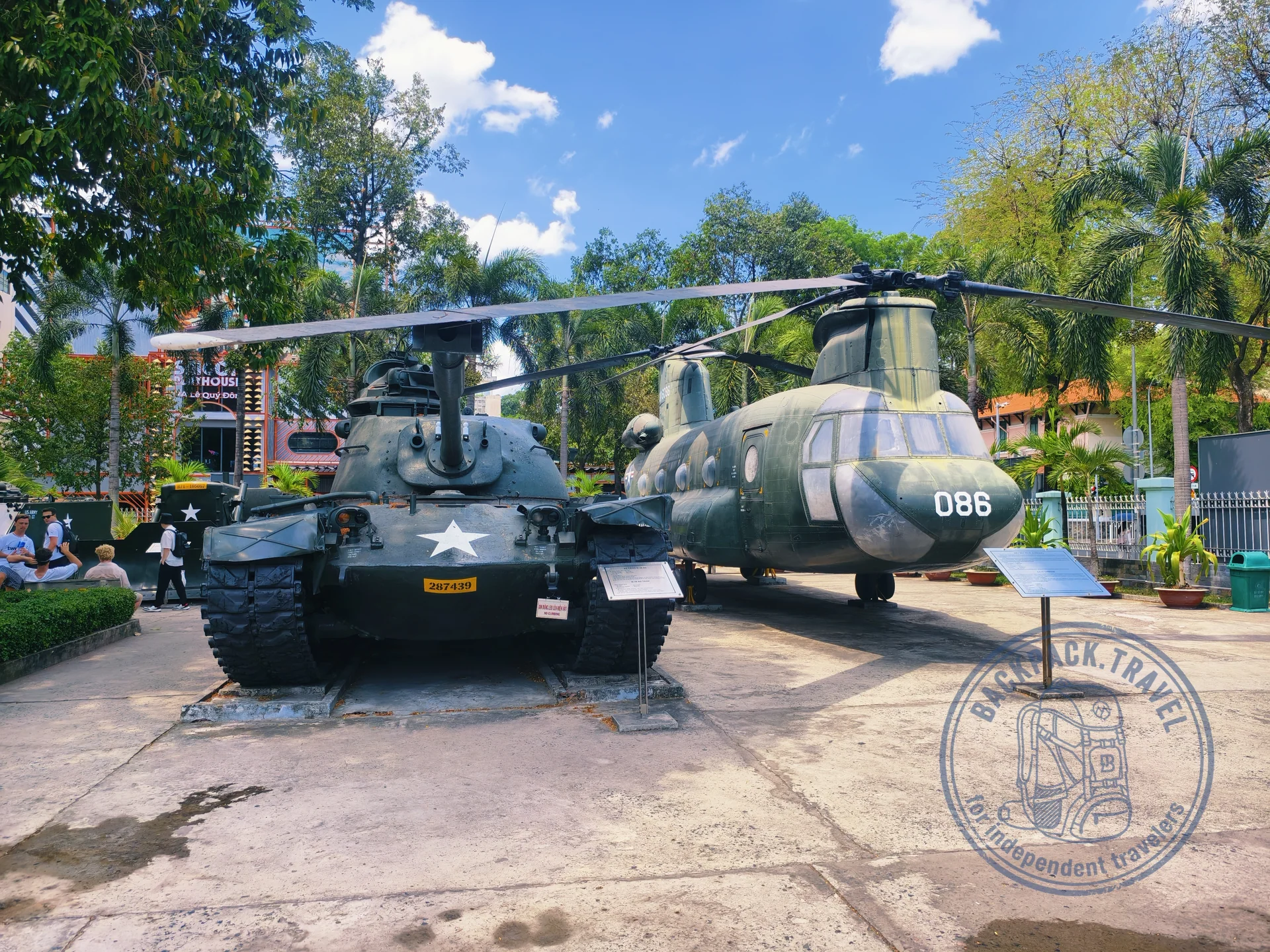
- The War Remnants Museum — the hardest and at the same time the most visited display in the city. The photographs, the military hardware in the courtyard and the sections on the consequences of defoliants and napalm make a powerful impression.
- The Reunification Palace — a modernist building of the 1960s that has kept its period interiors. Inside you can see the meeting rooms, the offices and the bunker with its maps and radio equipment.
- Notre-Dame Cathedral — a Catholic church in neo-Romanesque style, built in the 1880s from red brick brought from Marseille. Its two bell towers are a landmark of the historic centre.
- The Central Post Office — an elegant building of the late 19th century with an arched vaulted ceiling; the design is associated with Gustave Eiffel's engineering school. The post office still works as one.
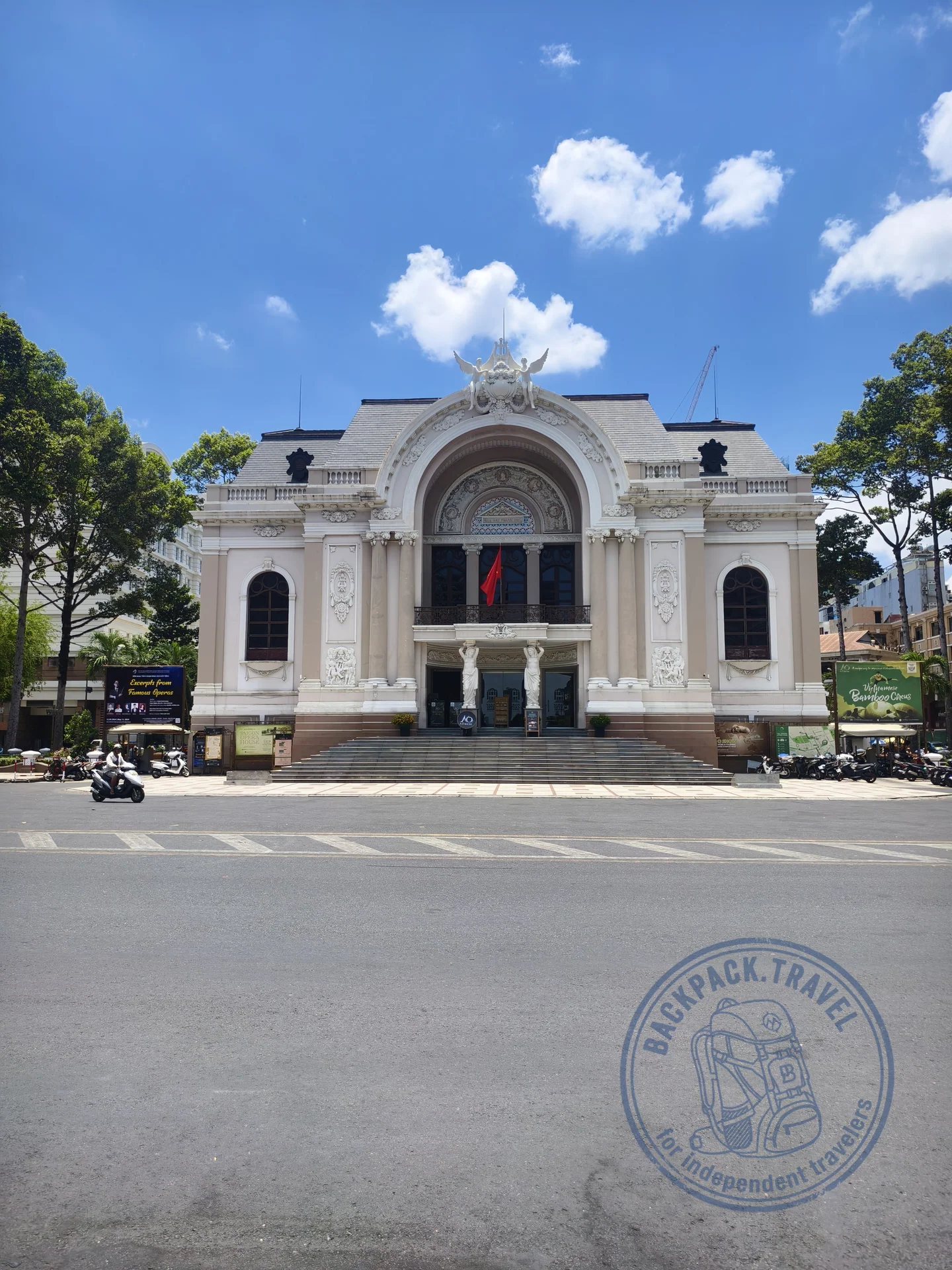
- The Opera House (the municipal theatre) — an example of neoclassicism from 1898, hosting concerts and theatrical productions.
- Ben Thanh market — the instantly recognisable covered bazaar with its clock tower, trading in fabrics, spices, coffee and street food.
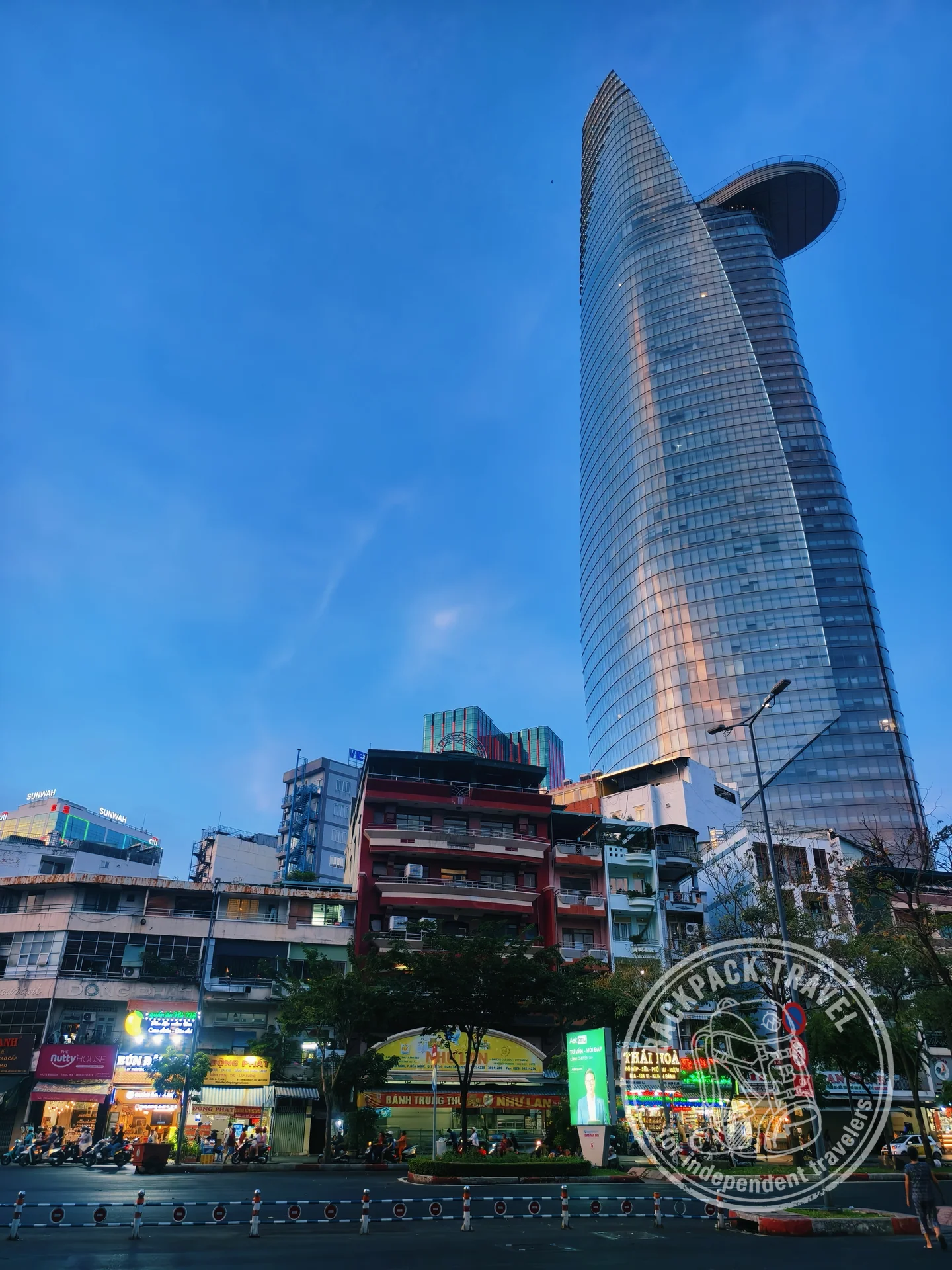
- The Bitexco Financial Tower — the high-rise landmark with a silhouette like a lotus bud and the Sky Deck observation level.
Districts and city life
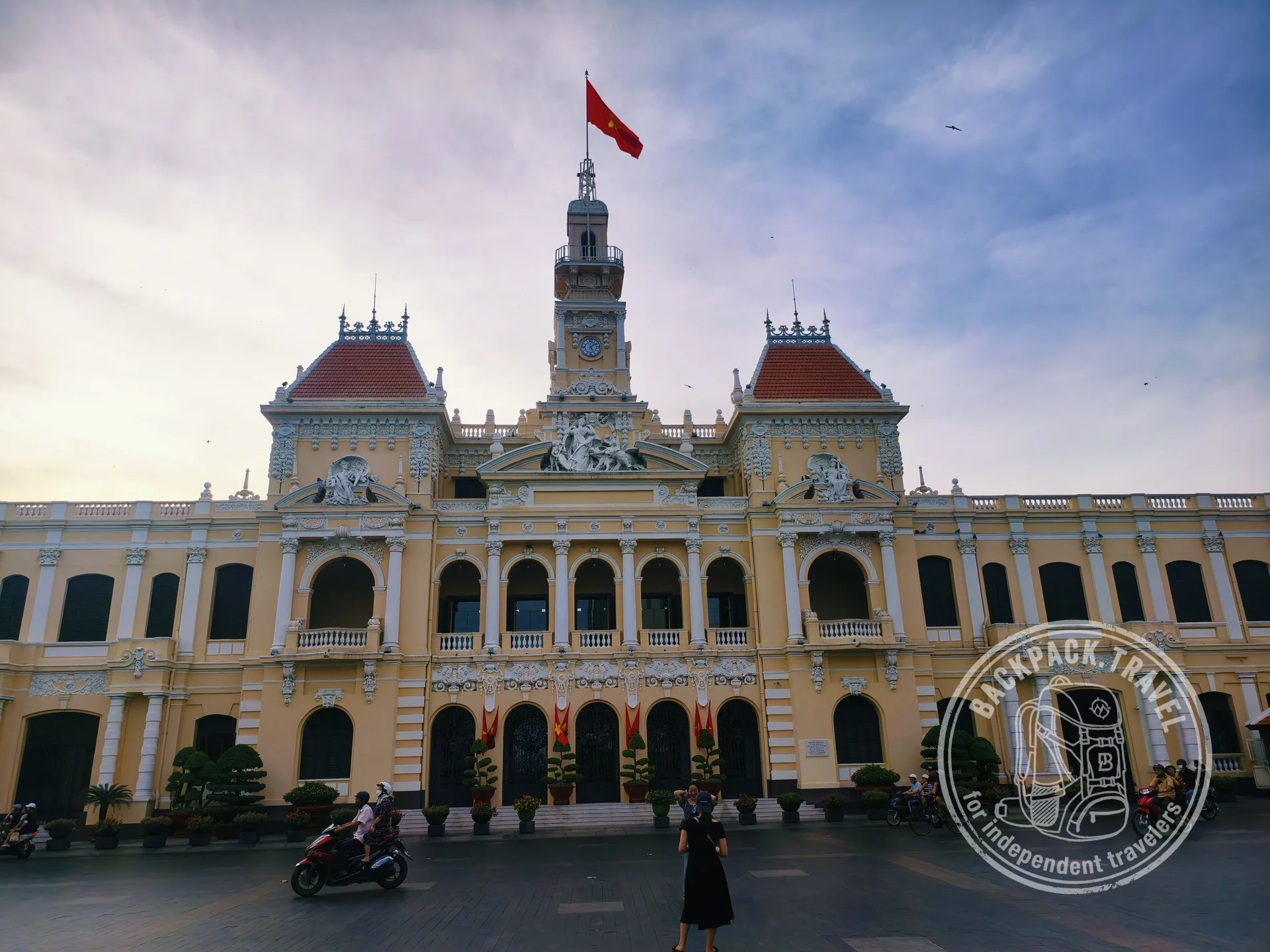
District 1 concentrates most of the monuments, hotels and shopping streets, including the pedestrian Nguyen Hue boulevard by the People's Committee building. The famous crossings without traffic lights deserve a mention of their own: to cross the road in a dense flow of bikes you need to move slowly and predictably, letting the riders steer around you.
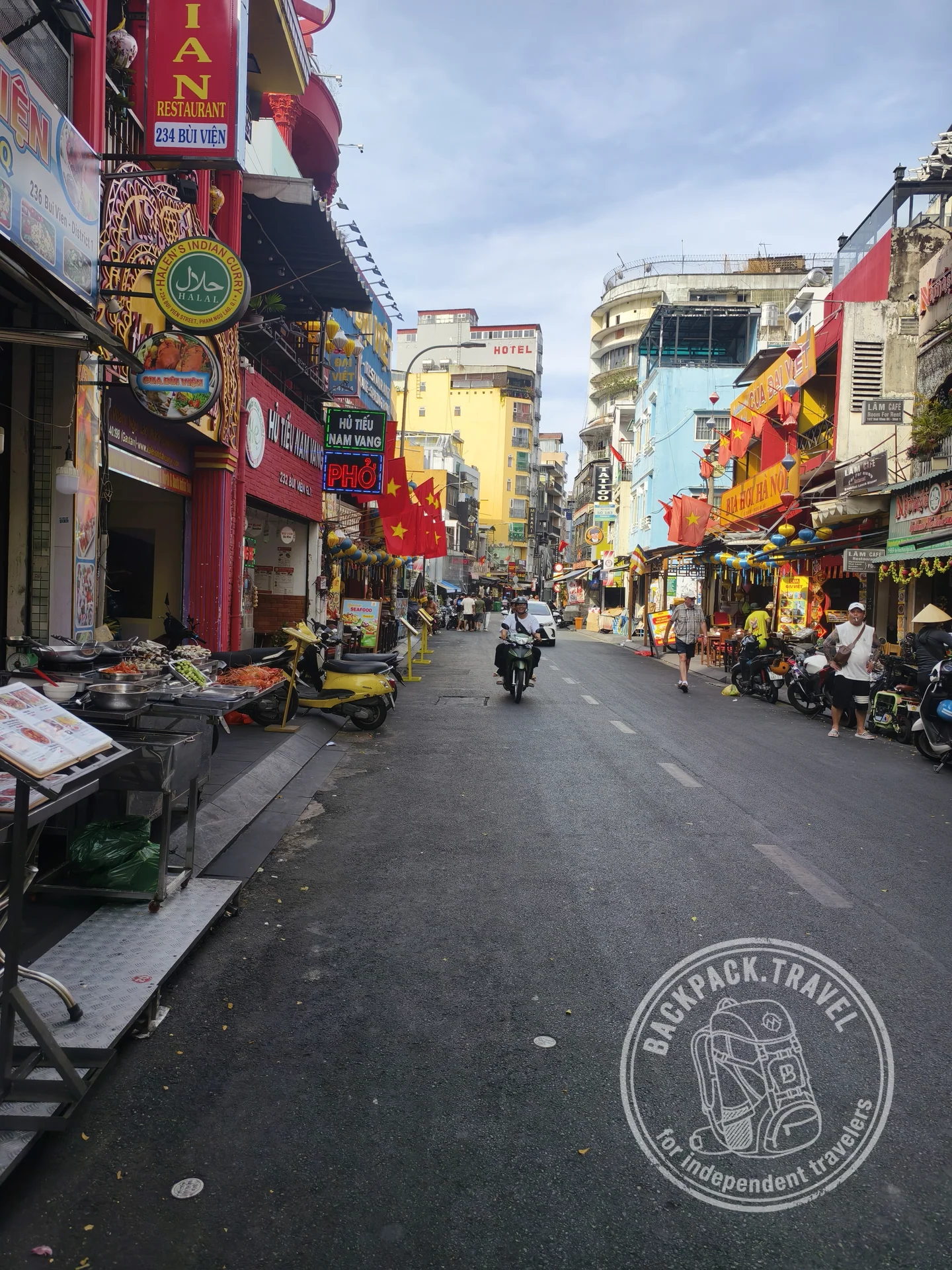
The Pham Ngu Lao quarter is the historic centre of backpacker travel, with cheap rooms, bars, travel agencies and a lively night scene. Further from the centre lies Cholon, the largest Chinatown in Vietnam, with pagodas, traditional medicine shops and the Binh Tay market.
Food
The south of the country has a gastronomic manner of its own: the local version of phở is milder and sweeter than the northern one, rounded out with bean sprouts, basil and lime. The symbol of street food is the bánh mì baguette, an inheritance of the French baking tradition, filled with pâté, pork, vegetables and sauces. It is worth trying bánh xèo rice pancakes, bún vermicelli, fresh spring rolls and strong coffee with condensed milk (cà phê sữa đá). The main draws for anyone who likes eating are the street carts, the family-run holes in the wall and the market food courts.
What to see nearby
- The Cu Chi tunnels — a branching underground network built by the guerrillas, stretching for tens of kilometres; part of the passages is open to go down into.
- The Mekong Delta — a land of rice fields, canals and floating markets (Cai Be, Vinh Long), an easy trip out for a boat excursion.
- Vung Tau — a seaside town with a statue of Christ on the hill, popular with city residents for a break by the sea.
Practicalities
The tropical climate divides the year into a dry season (roughly November to April) and a rainy season of short downpours. The optimal three-day route: the first day for the historic centre (the cathedral, the post office, the war museum, the palace), the second for a trip out to the Cu Chi tunnels, the third for the Mekong Delta or an unhurried look at Cholon and the markets. Getting around the city is easy with the taxi and motorbike apps; cash comes in handy at markets and for street food.