 Города и дороги
Description
Malaysia's former tin capital: a colonial railway station, shops in old shophouses, street art on peeling walls and coffee with condensed milk that people come from Kuala Lumpur for.
Wiki
Ipoh is the capital of Perak state and a city that grew up on tin. It was mined in the Kinta valley from the end of the nineteenth century, the money went into shophouses, clubs and colonial mansions, and when prices collapsed in the 1980s the city froze for decades. That is why the old buildings have survived so well here: there was simply never time to knock them down. Since the middle of the 2010s Ipoh has been rediscovered as a place of street food, street art and white coffee. It stands halfway between Kuala Lumpur and Penang, and the most logical way to see it is on the road between the two.
The old town
Ipoh's old town is a compact square of blocks on the western bank of the Kinta, and it can be walked in half a day.
- Ipoh railway station (1917) is a white building in the neo-Moorish spirit with domes and arcades, designed by Arthur Benison Hubback, the author of the old Kuala Lumpur station; the local nickname is the Taj Mahal of Ipoh. Opposite it stand the town hall and a cricket field.
- The Birch Memorial Clock Tower (1909) commemorates James Birch, the first British Resident of Perak, killed in 1875. The panels around it illustrate a European idea of the development of civilisation.
- Concubine Lane is a narrow alley in the heart of the old town: tradition has it that the tin magnates housed their second wives and mistresses here. Today it is a dense row of little shops and cafes; it is cramped during the day, but the quiet Market Lane and Wife Lane are right beside it.
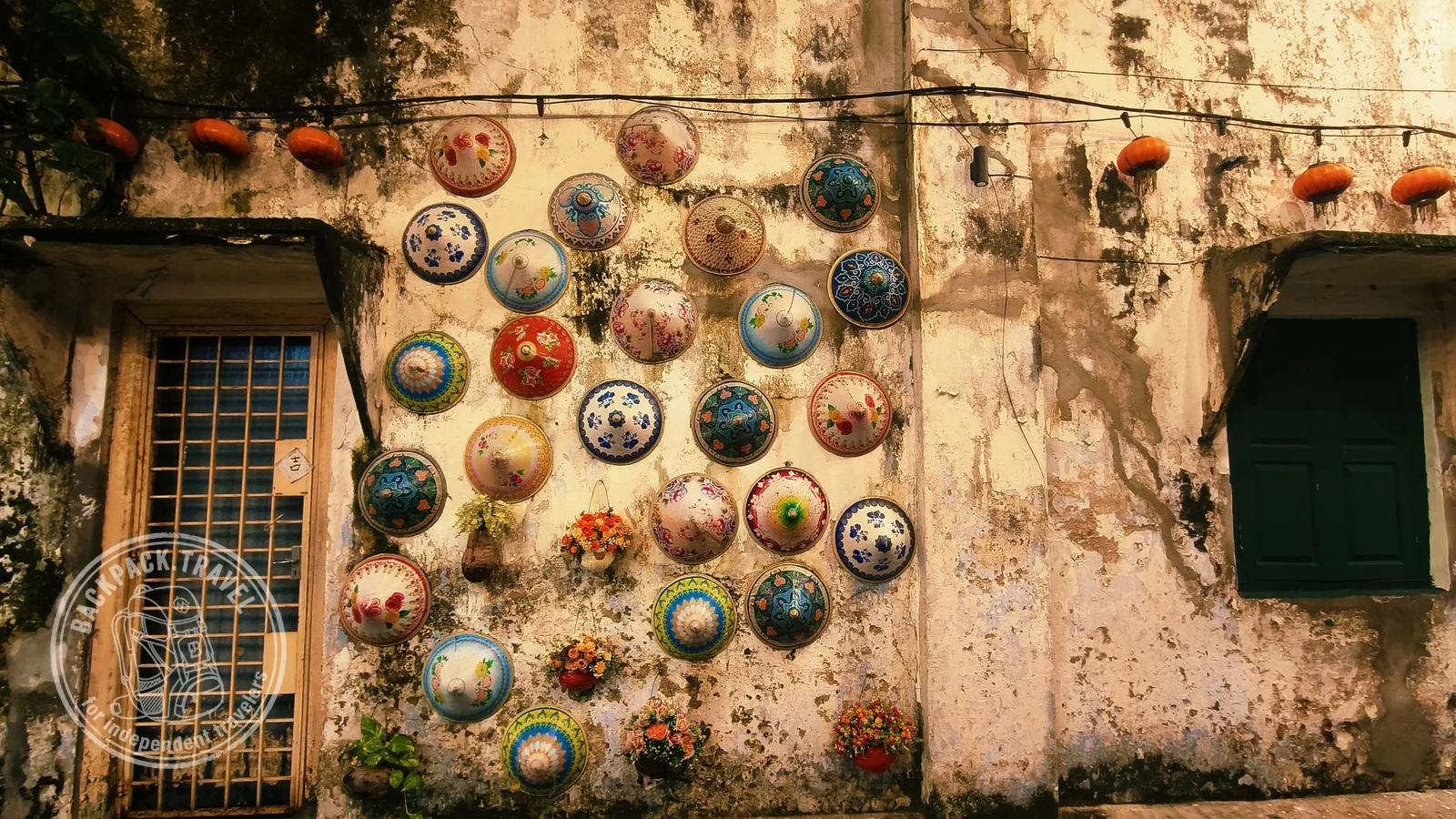
- Street art: some of the murals were made in 2014 by the Lithuanian artist Ernest Zacharevic, the same one who painted George Town in Penang; his works play off real objects on the walls.
- Han Chin Pet Soo is the former club of the Hakka tin magnates, now a museum of the underside of that era. Visits are by appointment only.
The cave temples
Ipoh is ringed by limestone outcrops, and Buddhist and Taoist temples have been cut into them. Entry is free and they are all a short way from the centre.
- Perak Tong to the north has murals and a staircase of more than two hundred steps up to a viewpoint in the rock.
- Sam Poh Tong in the south is one of the oldest in Malaysia, with a turtle pond. Next to it is Kek Lok Tong, a through cave that opens into a park with lakes, and the calmest and most beautiful of the three.
Food
This is half the reason for coming to Ipoh.
- White coffee is a local invention: the beans are roasted with margarine and without sugar, which makes the taste softer than ordinary Malaysian coffee. It is drunk with condensed milk, in the old coffee shops of the old town where it all began.
- Chicken with bean sprouts (nga choy kai) is the city's calling card: poached chicken, crunchy mung bean sprouts and rice noodles in broth served separately.
- Hor fun is flat rice noodles in a clear broth with prawns. There is also dim sum in the mornings in the coffee shops across the river, which closes early.
What is nearby
Kellie's Castle in Batu Gajah, 20 kilometres away, is the unfinished mansion of the planter William Kellie-Smith, abandoned after his death in 1926: a hybrid of European and Indian architecture, and the most popular outing from the city. Further on, at Gopeng, is Gua Tempurung cave, with an underground river and routes ranging from dry ones to wading through water.
Getting there and how much time to allow
The main way to get here is the ETS express train: some two to two and a half hours from Kuala Lumpur, about the same from Butterworth opposite Penang, and tickets for the popular departures are taken well in advance. Buses are cheaper but take longer and arrive at a terminal away from the centre. Walking around the city makes sense only within the bounds of the old town.
Ipoh is usually taken as a single day along the way: the old town, coffee, lunch and one cave temple. Two nights give you Kellie's Castle, another couple of temples and morning dim sum without rushing. Three days are needed if you want Gua Tempurung cave and the small towns around it.
Who will not enjoy it
Ipoh is small and quiet, and it empties out in the evening: there is almost no nightlife, many places close early, and some of the famous coffee shops are open only until lunchtime. The street art here is more modest and more scattered than in George Town, so if murals are precisely what you are coming for, Penang will give you more. The cave temples, for all their impact, are much of a muchness. And this is not a resort: there is no sea, the climate is hot and humid, and walking around the old town in the middle of the day wears you out.
Updated