 Города и дороги
Description
A mining city in central Kazakhstan that grew up on coal and on the camp history of Karlag. Known for its monument to Viktor Tsoi and for the Russian saying "where, where — in Karaganda".
Wiki
Karaganda stands in the middle of the steppe in central Kazakhstan, a city that grew up on coal and on forced labour. The first coal finds date to the 1830s, and the settlement was granted city status in 1934. It is known from the joking Russian saying "where, where — in Karaganda", which describes its position exactly: everyone has heard of it, and nobody travels there on purpose.
What to see in the city
Karaganda divides into two parts. The Old Town is the districts around the first mines, barracks and low-rise blocks, half-abandoned in places. The New Town is the post-war centre with its avenues, Stalin-era buildings and parks; everything of interest is here.
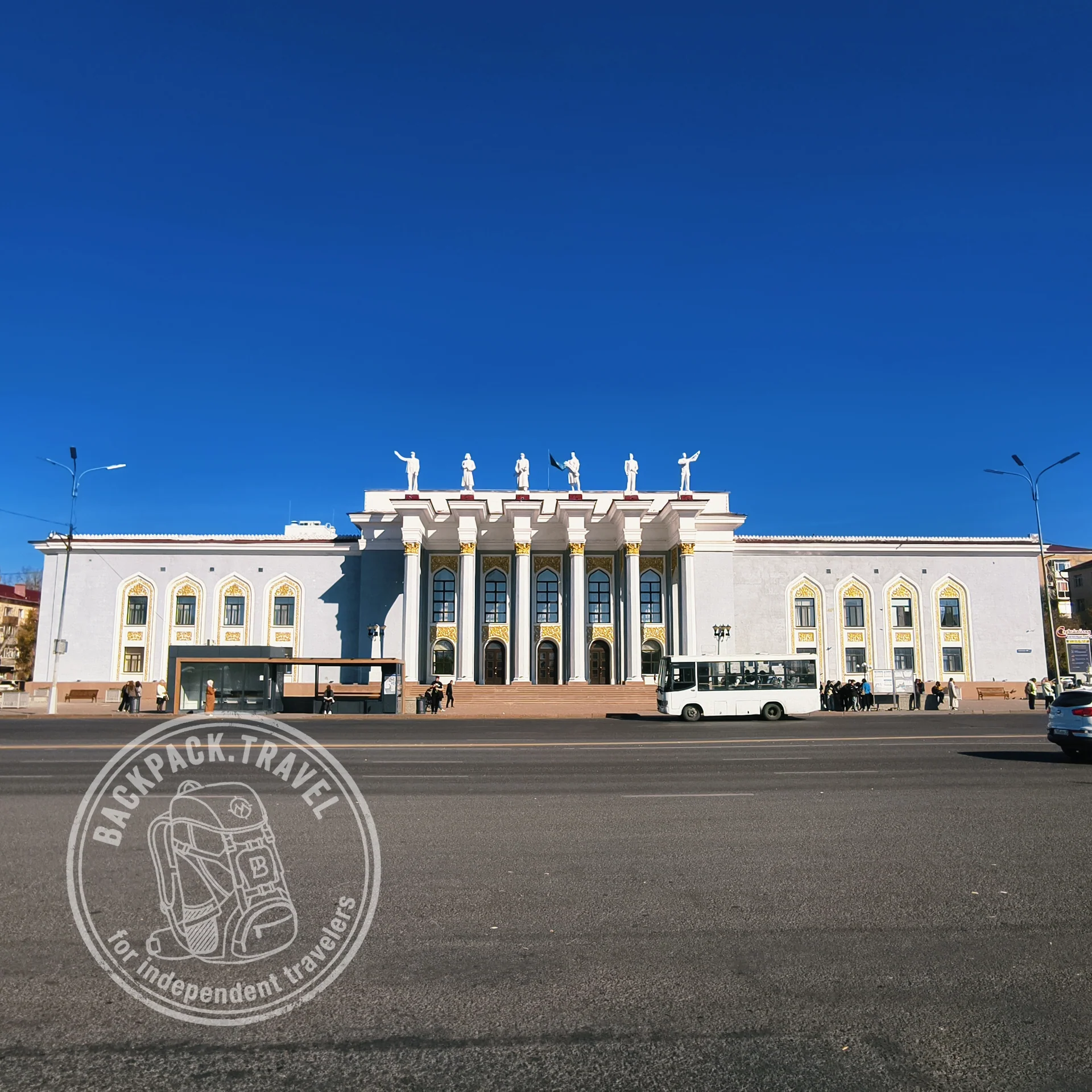
- The Miners' Palace of Culture is the finest example of grand post-war architecture in the city: a colonnade, a portico and stucco work. It was built in the early 1950s, partly by prisoners and prisoners of war, and the building still serves its original purpose.
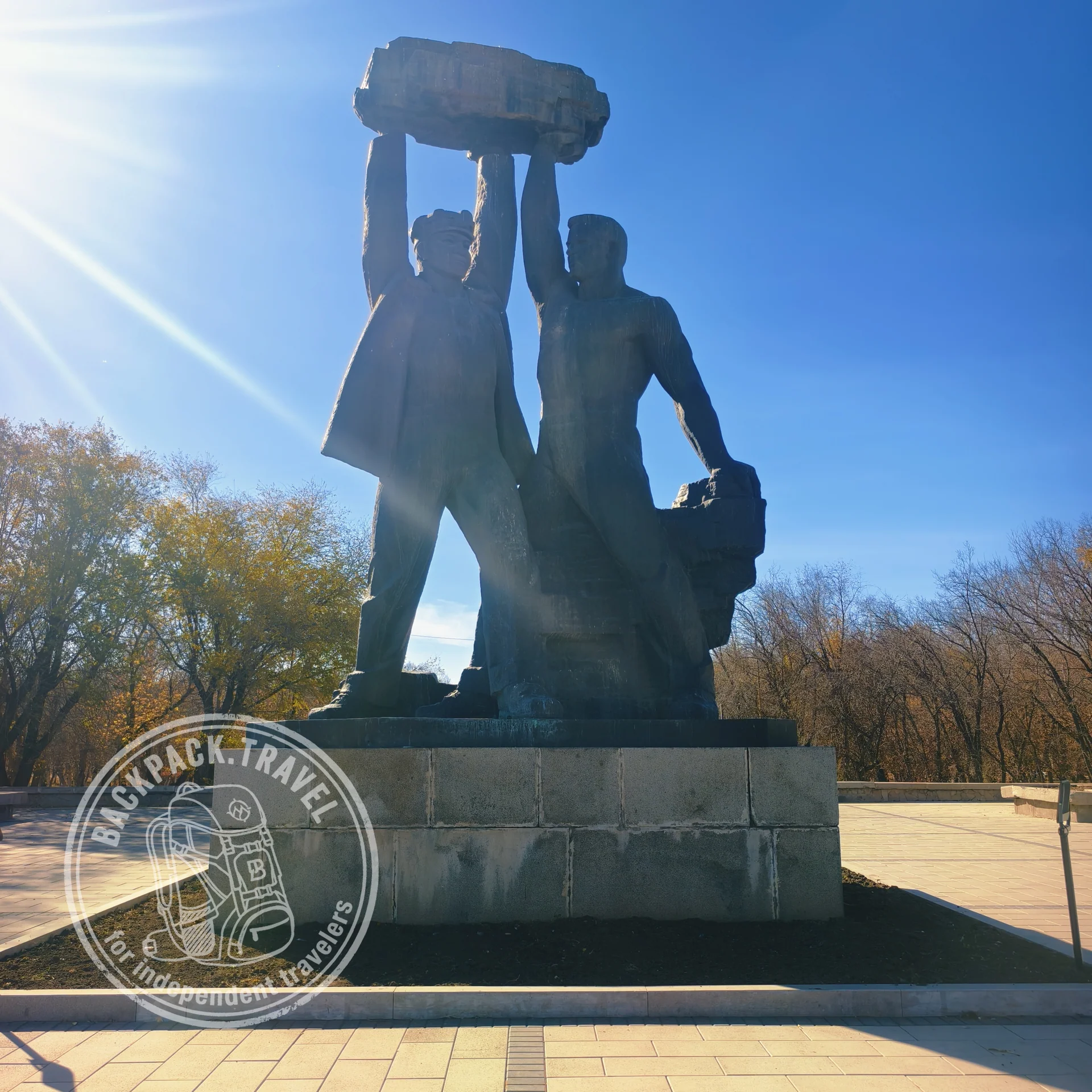
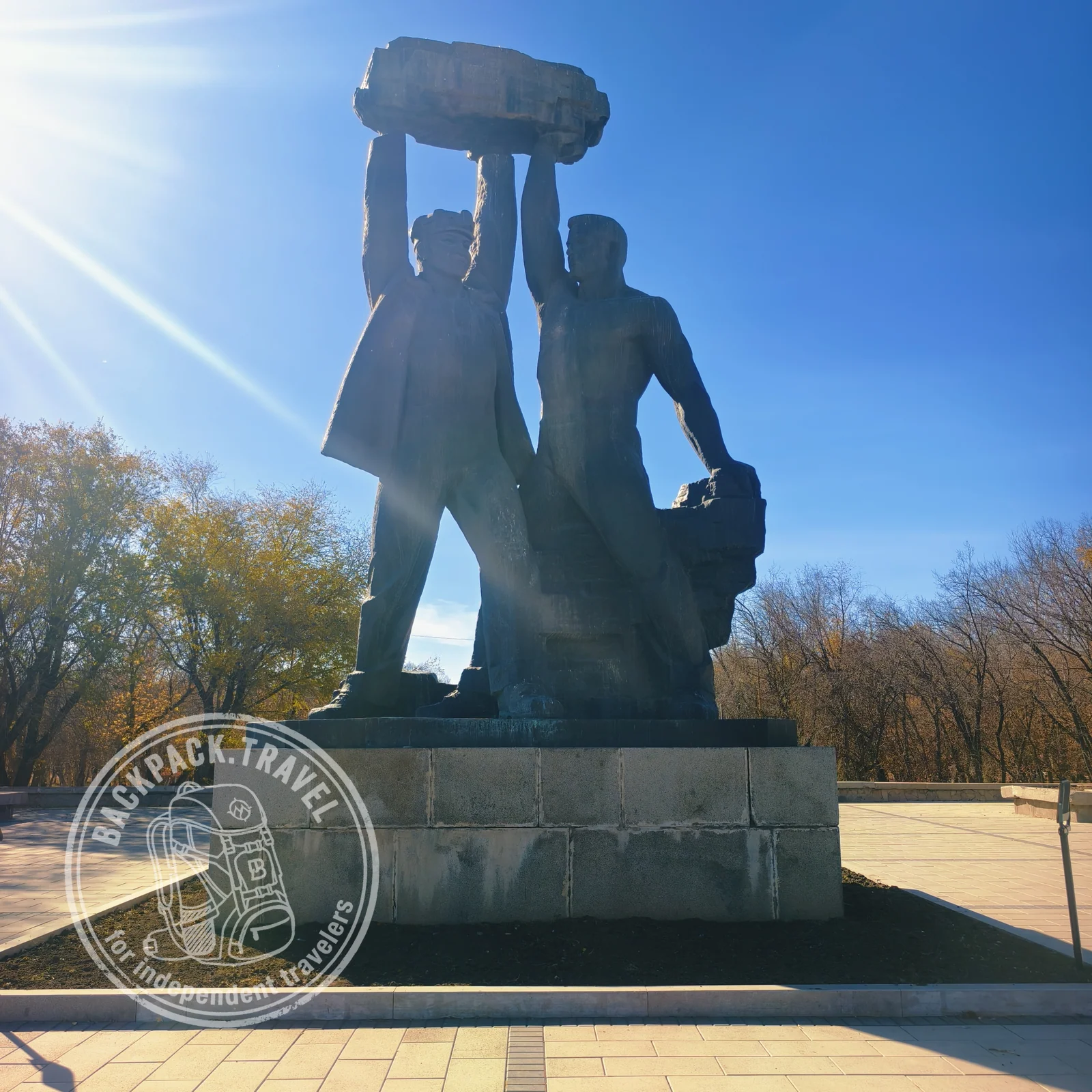
- The "Miners' Glory" monument is a figure of a miner on an avenue in the new town, the symbol around which local identity has been built.
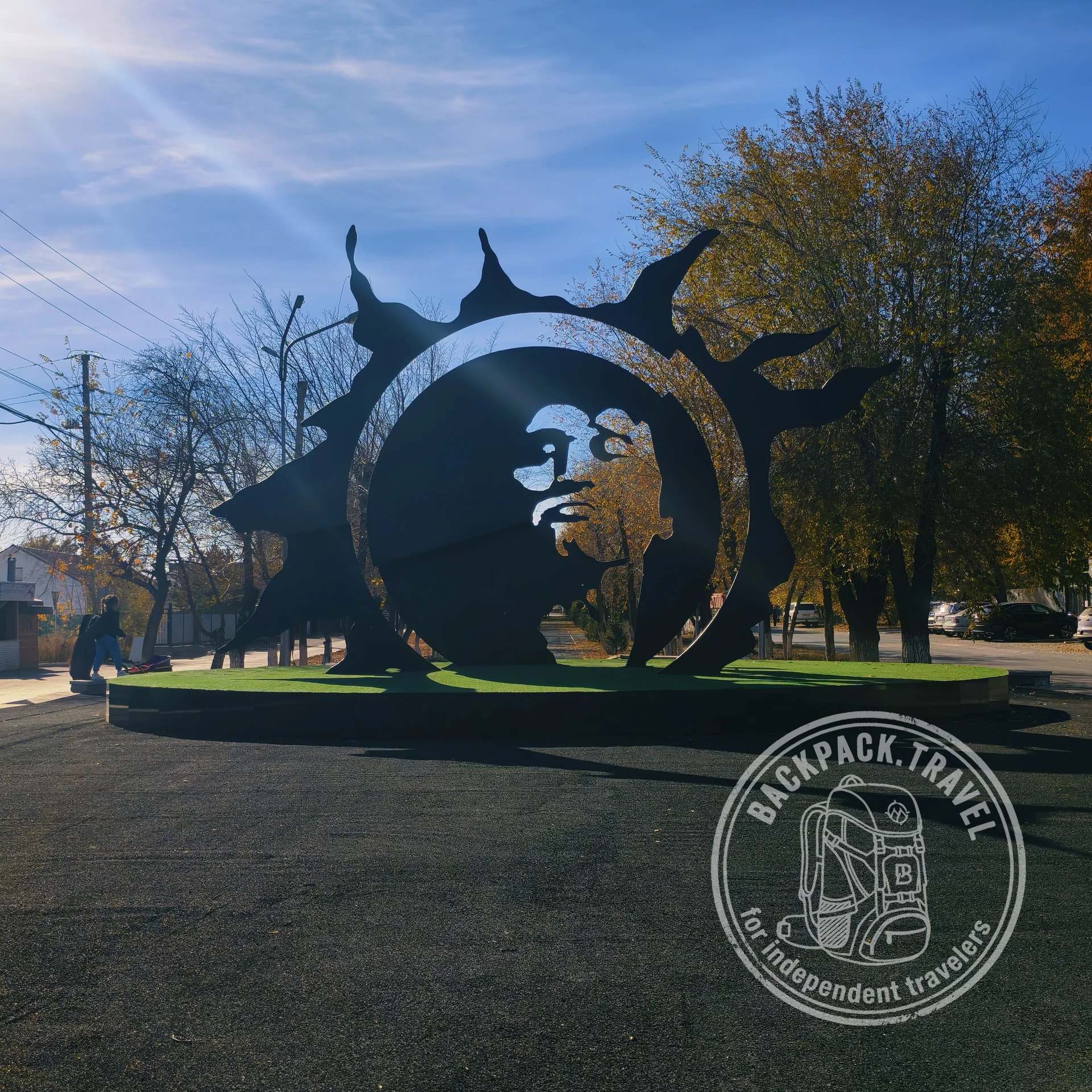
- The monument to Viktor Tsoi was unveiled in August 2017 beside the stadium: a metal portrait against a solar eclipse, a reference to the cover of the album A Star Called Sun. It was put up on the initiative of the Korean society, a local diaspora that took shape after the deportation of 1937.
- The Ecological Museum is an exhibition on the consequences of industrialisation and nuclear testing, with fragments of equipment from the test sites.
- The Cathedral of Our Lady of Fatima is a cathedral of 2012 and the largest Catholic church in Central Asia; the parish grew out of deported Germans and Poles.
Karlag
The Karaganda corrective labour camp was created in 1931 and lasted until 1959. It was one of the largest structures of the Gulag: not a single zone but a network of camp sections spread across the steppe, with its own agriculture, mines and industries. Estimates of the number of people who passed through the camp differ; the figure runs into the hundreds of thousands. The region also received special settlers — deported Volga Germans, Poles, Chechens, Ingush and Koreans — and this explains the present-day make-up of the province's population.
- The Museum in Memory of the Victims of Political Repression in the village of Dolinka is 45 km from the city, in the former Karlag Administration building, put up by prisoners in 1933-1935 and opened as a museum in 2001. There are restored interiors, interrogation rooms and a cellar. Going round takes an hour and a half to two hours. Transport is irregular, so people usually take a taxi.
- The Spassk memorial lies 35 km to the south, on the site of the cemetery of a camp section that also held foreign prisoners of war. It is a field with memorial markers from different countries.
ALZHIR, the camp for the wives of "traitors to the motherland" that is remembered in the same breath, is not near Karaganda but near Astana.
How much time to allow
Half a day is enough for the centre of the new town with its monuments and the museum. The main scenario for a trip is a full day, when Dolinka and the museum in the former Karlag administration are added to the city. Two days are needed if you are also going to Spassk; beyond that there is nothing left to do in Karaganda.
Getting there and what to combine it with
From Astana the trains take about three and a half hours and run frequently; buses along the highway take the same. Karaganda lies on the Astana-Almaty axis, and it is more logical to treat it as a stop along the way than as a destination in itself. Nearby is Temirtau, with an industrial texture of its own. The most distant but most scenic side trip is Karkaraly National Park, 200 km to the east: pine-covered hills and lakes in the middle of the steppe, a full day with an overnight stay.
When to go
May to June and September are the months to come. The climate is sharply continental: close to minus thirty in winter and heat approaching forty in summer. The wind blows constantly in every season, and exposed Spassk is hard to bear in bad weather.
Who won't enjoy it
Karaganda is not a tourist city, and there is no point in pretending otherwise. There is no architectural ensemble here, the old town looks depressing in places, and there will be no restaurant scene of capital-city standard. The main reason to come is the camp history, and that is heavy, unentertaining material: Dolinka and Spassk are not about impressions but about facts. For scenery you are better off further south and east. But if the history of the repressions interests you, Karaganda is one of the few places where the subject is presented systematically and on the authentic sites.