 Города и дороги
Description
A cold city on a Russian grid of dark volcanic stone in north-eastern Turkey, and the gateway to Ani — the abandoned Armenian capital of a thousand and one churches on the Armenian border.
Wiki
Kars is a small city in north-eastern Turkey, about 100,000 people against 270,000 in the province as a whole, at an altitude of roughly 1,750 metres. It is one of the coldest places in the country: minus 25 in winter is unremarkable here. From 928 Kars was the capital of the Armenian Bagratid kingdom, then of a separate kingdom of Kars, after which came the Seljuks and the Ottomans. But the look of the city was set by the Russian period: under the terms of the Congress of Berlin, Kars belonged to the Russian Empire from 1878 to 1918, and the centre was laid out on a rectangular grid of two-storey houses in dark volcanic stone. There is no other street plan like it in Turkey. Readers will also know the city from Orhan Pamuk's novel Snow.
Why come and what to actually see
The main reason to come to Kars is not in Kars but some 40 kilometres to the east, right on the Armenian border. Ani is the ruin of a medieval Armenian city that in the eleventh century held more than 100,000 people and was known as the city of a thousand and one churches. It stood on a branch of the Silk Road and was the Bagratid capital; the Mongols took it in 1236, and the earthquake of 1319 finished off the rest. Nobody has lived here since.
Ani needs to be seen slowly: a plateau about a kilometre across, ringed by a city wall, with the buildings scattered over it. The cathedral was built between 989 and 1001 by the architect Trdat, the same man who repaired the dome of Hagia Sophia in Constantinople. The Church of the Redeemer of 1035 survives as exactly one half: lightning took the other away in the mid-twentieth century, and the cut face reads like a drawing. In the best condition is the Church of St Gregory of Tigran Honents, 1215, with carving across the façade and frescoes inside. There is also the Ebu'l Menucehr Mosque of 1072, held in Turkey to be the first Seljuk mosque in Anatolia. The gorge of the Akhurian river along the edge of the plateau is the border itself; the far bank is Armenia, and the crossing is closed. Some of the buildings stand in scaffolding, with restoration running for years at a time. Ani was inscribed on the UNESCO list in 2016.
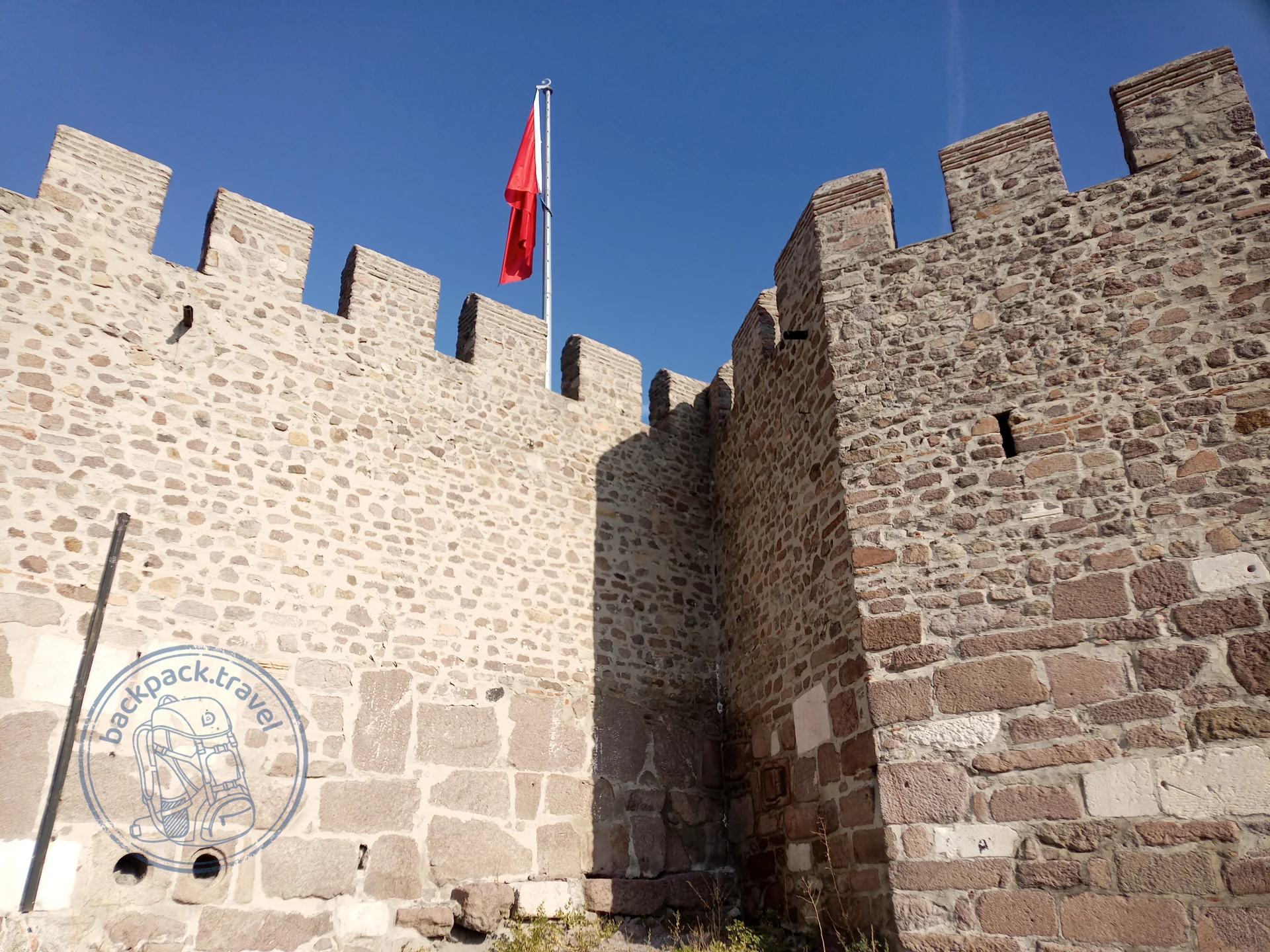
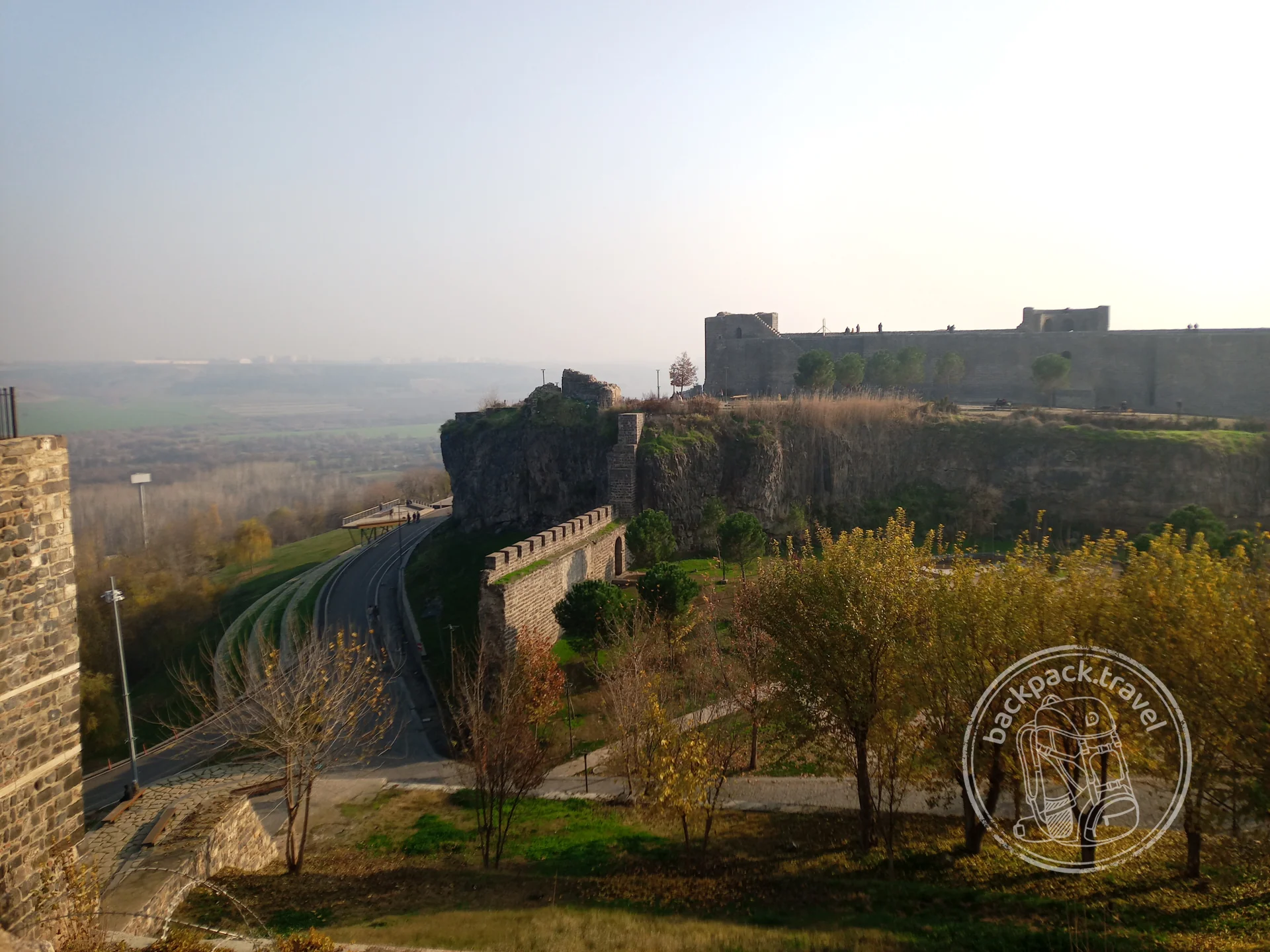
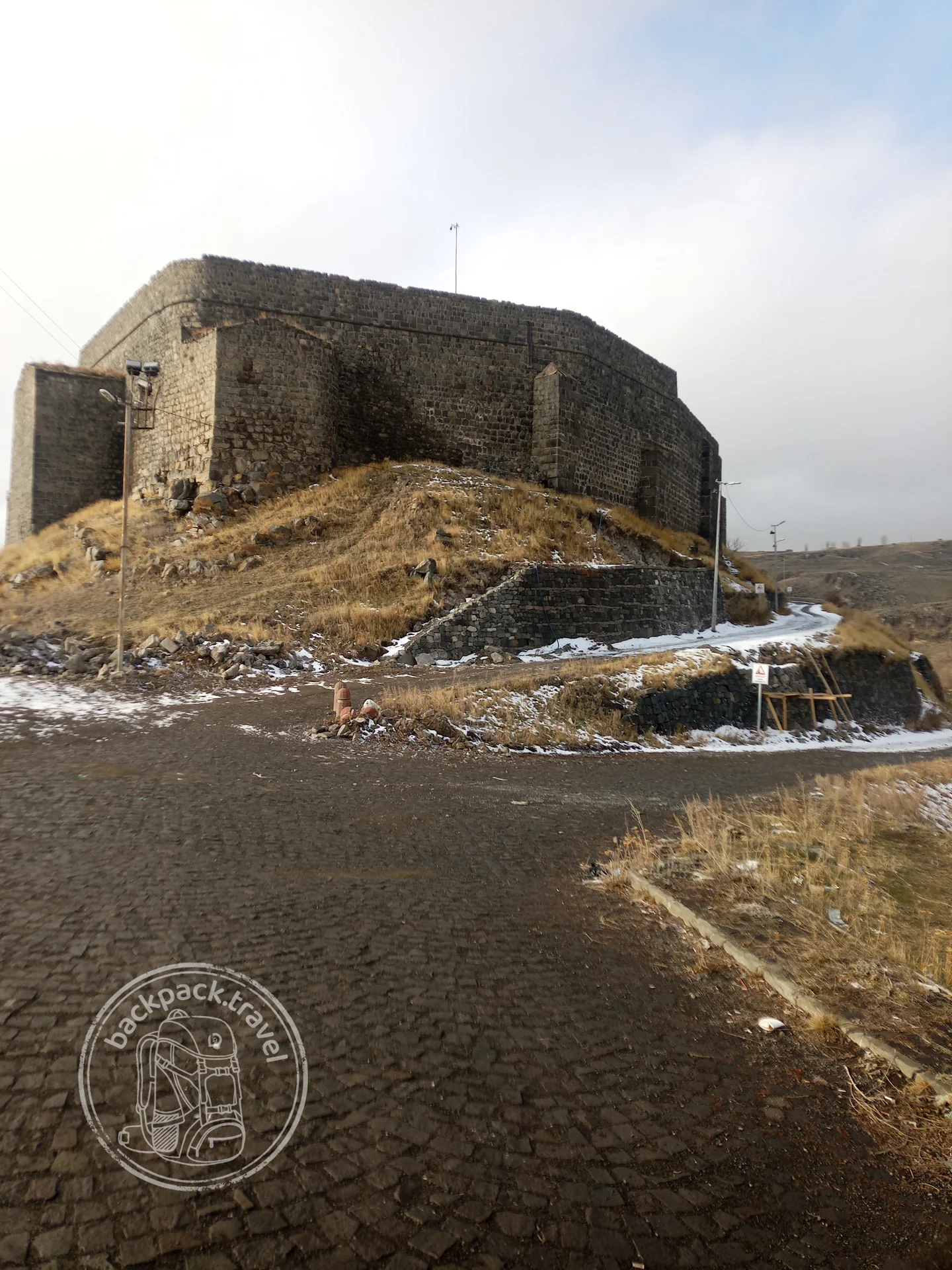
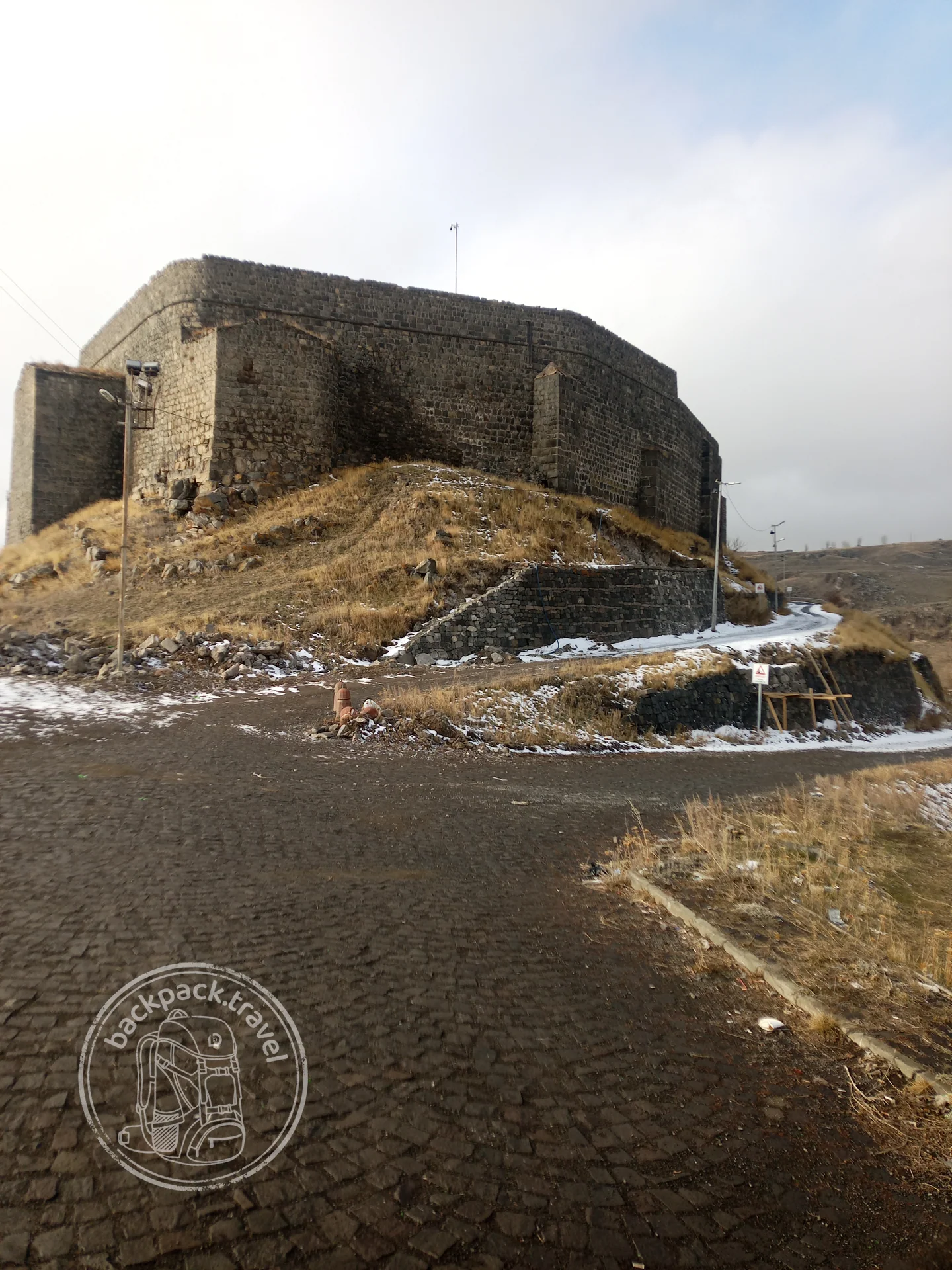
In the city itself, the sight is Kars Castle on the rock above the river — the present walls were rebuilt in 1579 by Lala Mustafa Pasha. Below it stands the Kümbet Mosque, formerly the Church of the Twelve Apostles, put up under King Abas I around the 930s: figures of the apostles are carved on the drum of the dome, and the building became a mosque in that same year of 1579. The rest of the pleasure is walking the Russian quarters and looking at the cornices of houses 140 years old.
Getting there and getting around
The airport is six kilometres from the centre, with daily flights from Istanbul and Ankara and a flying time of about two hours. The bus from Ankara takes around 16 hours.
The Doğu Express, the night train from Ankara to Kars, is a story of its own: roughly 26 hours across the whole of Anatolia. In winter the Turistik Doğu Ekspresi is added to it — the same route from December to March, three times a week, with stops in Erzincan and Erzurum. Tickets go months in advance.
The city can be walked in an hour. A scheduled minibus runs to Ani from the Gazi Ahmet Muhtar Pasha museum: out in the morning, back in the middle of the day, which leaves about three hours on site and is tight. The alternative is a taxi that waits for you, which is easier on time.
Where to stay
The choice is small and almost entirely in the centre: several mid-range hotels plus hotels in restored Russian mansions, the latter noticeably nicer and not much more expensive. In winter, during the Sarıkamış season and the tourist train, rooms run short, and January and February need booking ahead. Separate from all this are the mountain hotels by the lifts in Sarıkamış itself.
Day trips
Ani is the compulsory item and takes half a day.
Sarıkamış is 55 kilometres to the south-west: a ski resort in pine forest, with dry snow thanks to the cold and the altitude, and a season from December to March. It also has a memorial to the winter operation of 1914–1915, when tens of thousands of Ottoman soldiers froze to death in these mountains.
Lake Çıldır, about 75 kilometres to the north-east, is the largest freshwater lake in eastern Turkey. In winter it freezes over, locals cut holes and set nets, and visitors are taken across on horse-drawn sleds; in summer it is quiet water among treeless hills.
When to come
Kars is one of the few Turkish cities where winter is the reason to come rather than an obstacle. From December to March Sarıkamış is open, Çıldır freezes, the tourist train runs, and Ani under snow looks more convincing than in any other season. The price is the temperature: January nights go down towards minus 30, and minus 10 is a normal daytime figure.
Summer is short and mild, with July and August giving about 25 degrees by day and cold nights; this is the easiest time to walk around Ani, where there is neither shade nor water. May and September are the compromise: few visitors, but changeable weather. April and November are best skipped, as the snow melts and falls again in turn.
Food and money
Kars lives on milk and meat. The local kaşar and gravyer cheeses have been made here since Russian times and are sold from the shops in whole wheels; the village of Boğatepe outside the city has a small cheese museum. The second speciality is goose: the bird is salted, air-dried through the winter and then roasted, and served with bulgur. The third is dark Kars honey from the high mountain meadows.
Cards are accepted everywhere in the city and there are plenty of ATMs. Cash is needed on the minibus to Ani and in the villages.
What to know
Ani is a border zone, so your passport must be with you. The site is open ground, the wind is strong in any season, there is no shade at all, and the distances between the buildings are considerable over uneven terrain — bring water and proper shoes.
Winter kit is not a formality here: minus 25 with wind on an open plateau is a different matter from the same figure in town. English is rarely spoken.
Updated