 Города и дороги
Description
The city of the Çukurova plain on the Seyhan river: a Roman stone bridge, a striped Mamluk-style mosque, the country's tallest clock tower, and the kebab that carries the city's name.
Wiki
Adana is the largest city of the Çukurova, the fertile plain of southern Turkey: about 2.28 million people live in the province. It lies on the Seyhan river some thirty kilometres from the Mediterranean, among cotton and citrus fields; lowland Cilicia was a granary in antiquity. The Tepebağ mound in the centre has been settled since the Neolithic. Roman roads from Anatolia to Syria ran through Adana, the Armenian rulers of Cilicia held the city later, and from the end of the fifteenth century it belonged to the Ramazanoğulları dynasty. Its present shape was formed in the nineteenth century on cotton money.
Why come and what to actually see
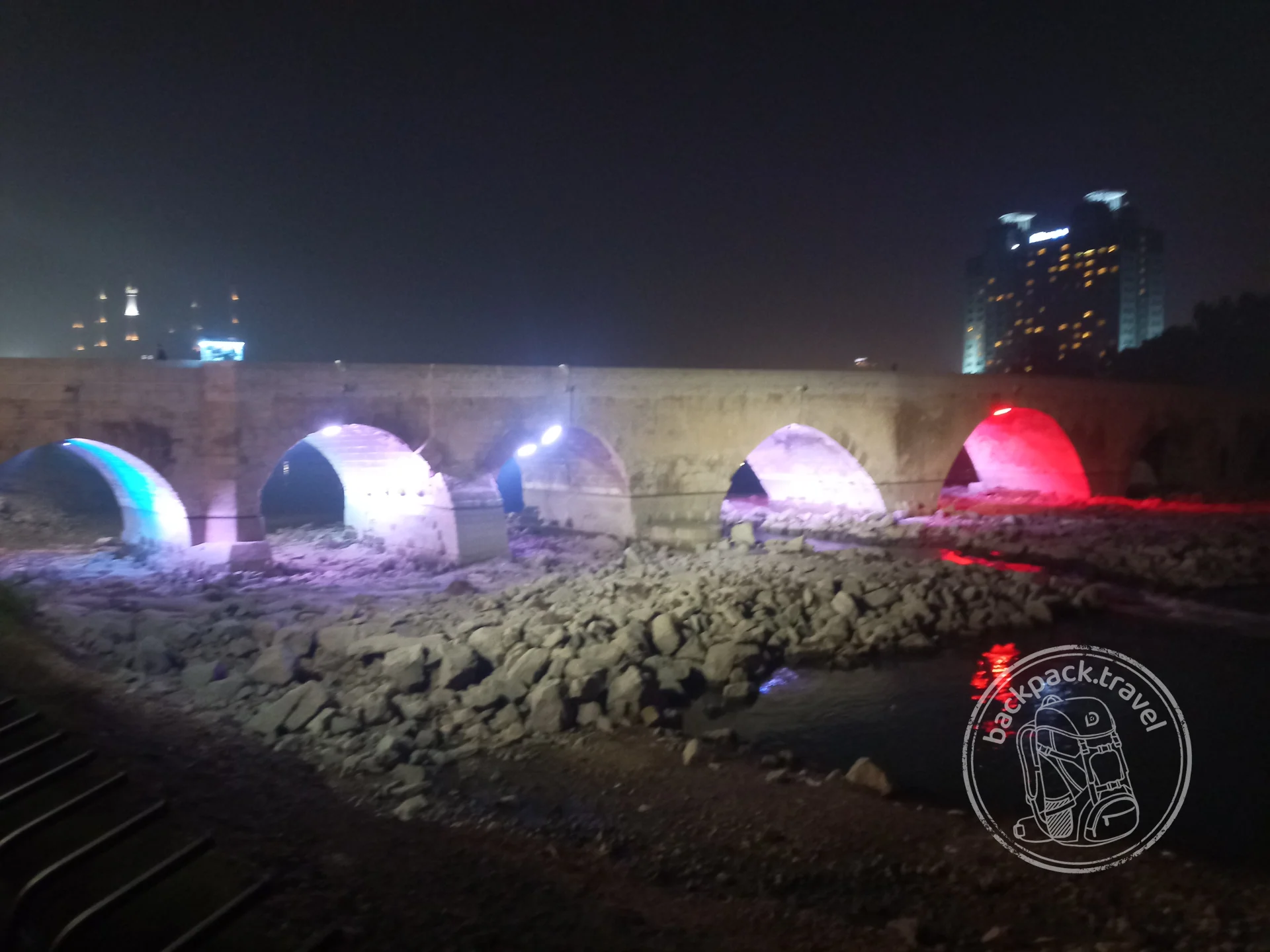
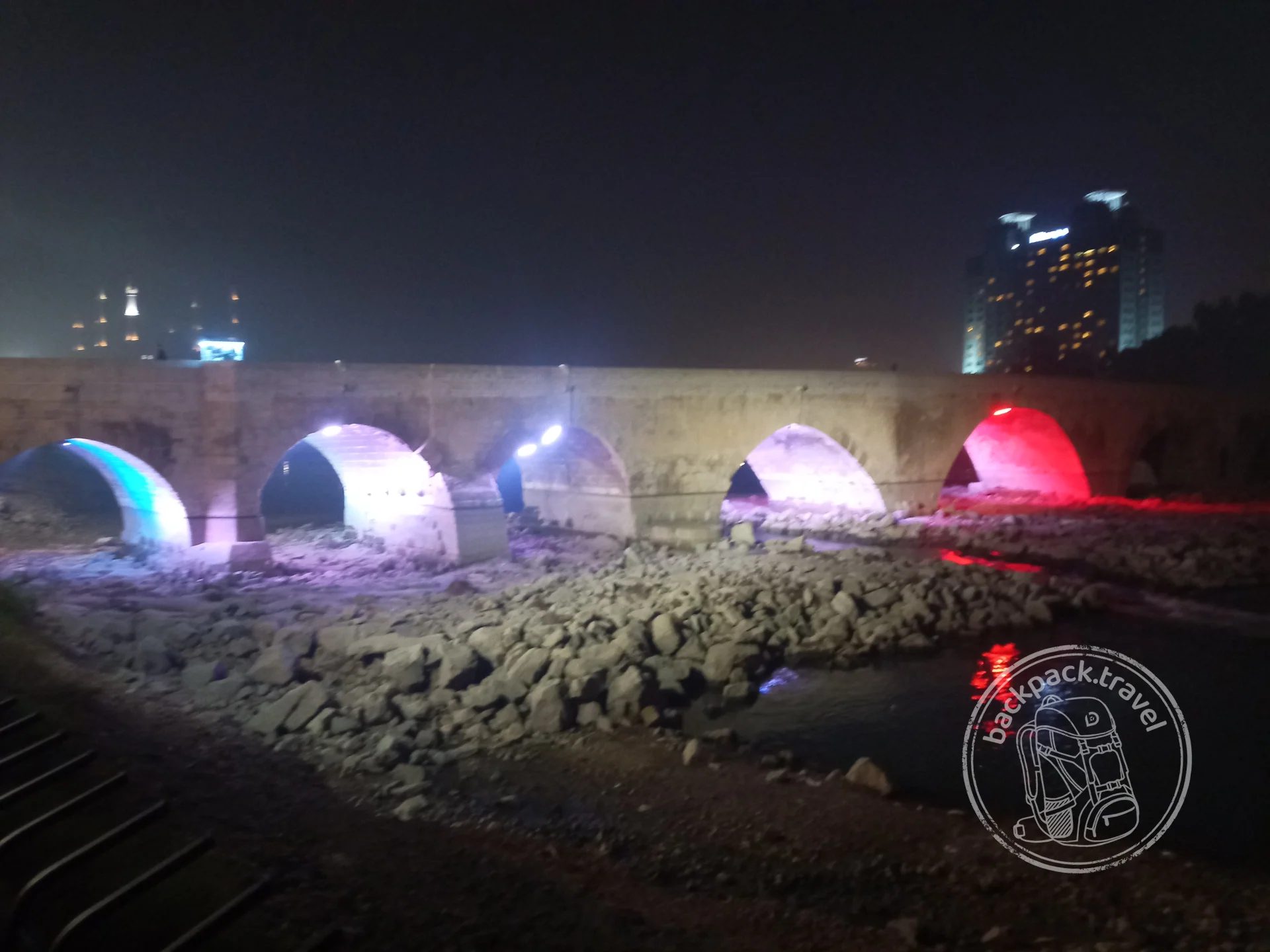
Taşköprü, the Stone Bridge over the Seyhan, is the oldest structure in the city: Roman, about three hundred and ten metres long, with fourteen of its twenty-one arches still standing. Cars used it until 2007; it is now pedestrian and full of strollers in the evening.
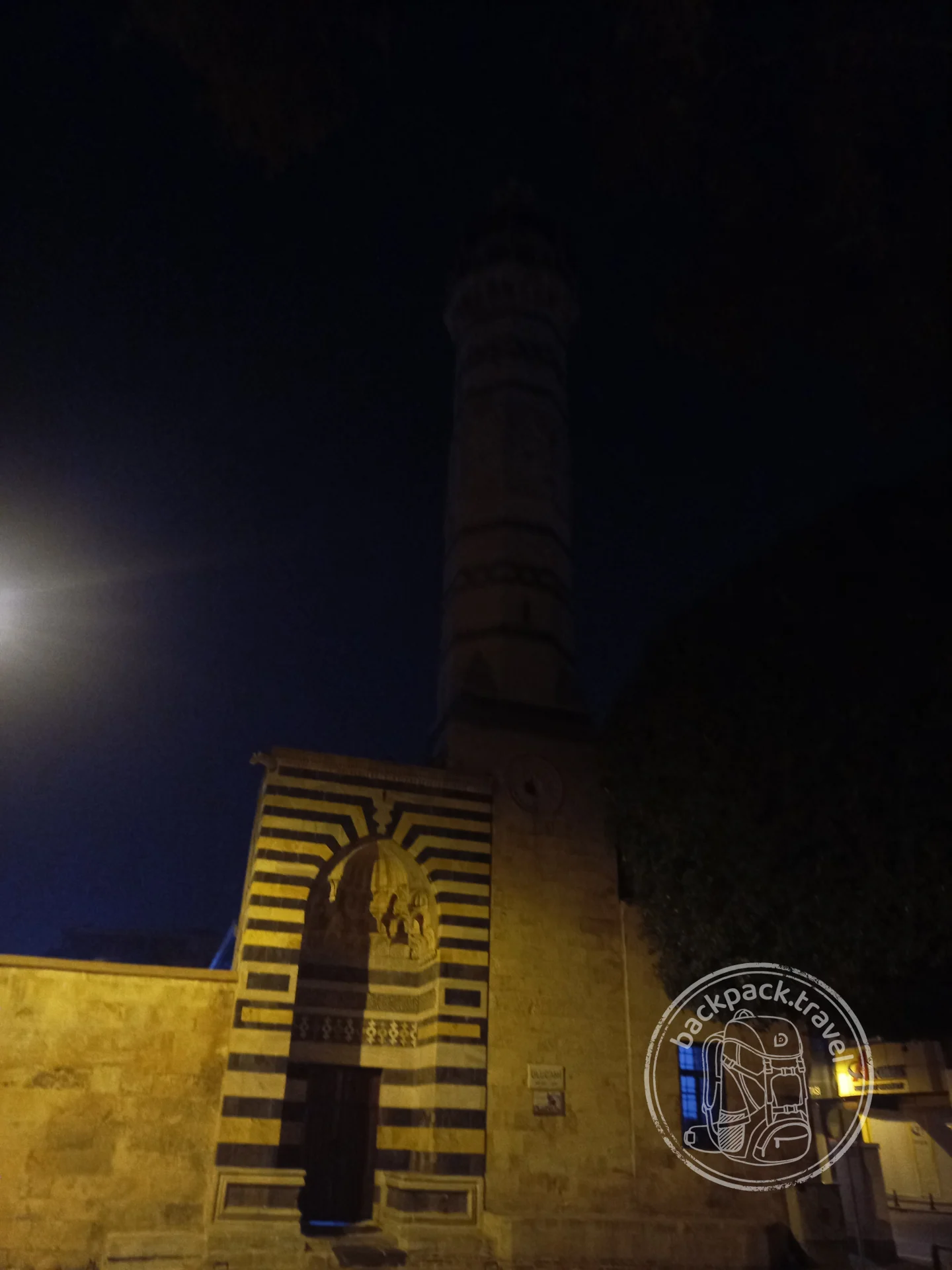
The Ulu Camii was built between 1513 and 1541 by Halil Bey of the Ramazanoğulları and his son. The masonry is banded in black and white, a Mamluk Syrian manner rare in Anatolia; the mihrab and the walls are faced with tiles. Next to it stands the fifteenth-century Ramazanoğlu mansion, one of the oldest dwelling houses in Turkey.
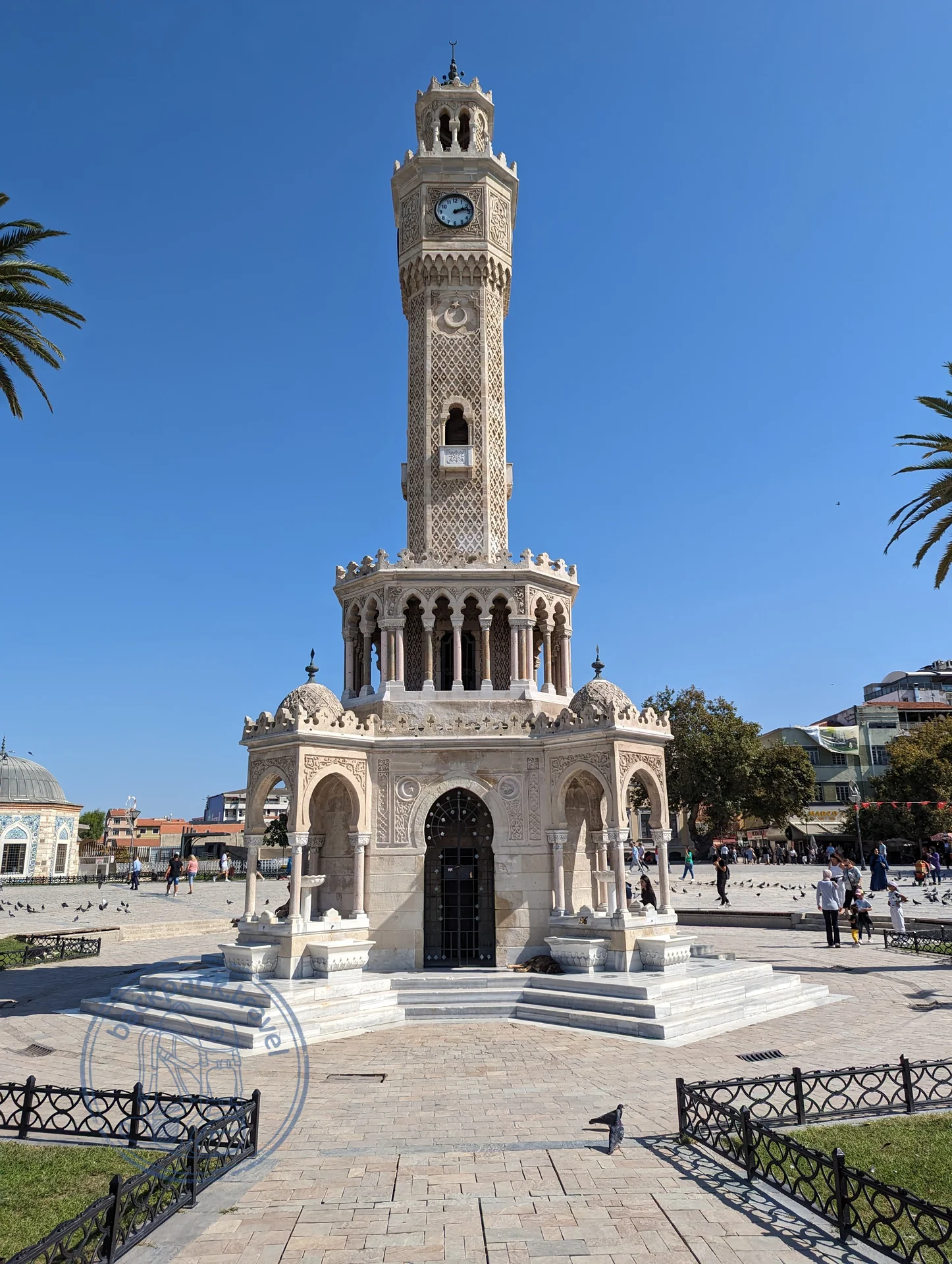
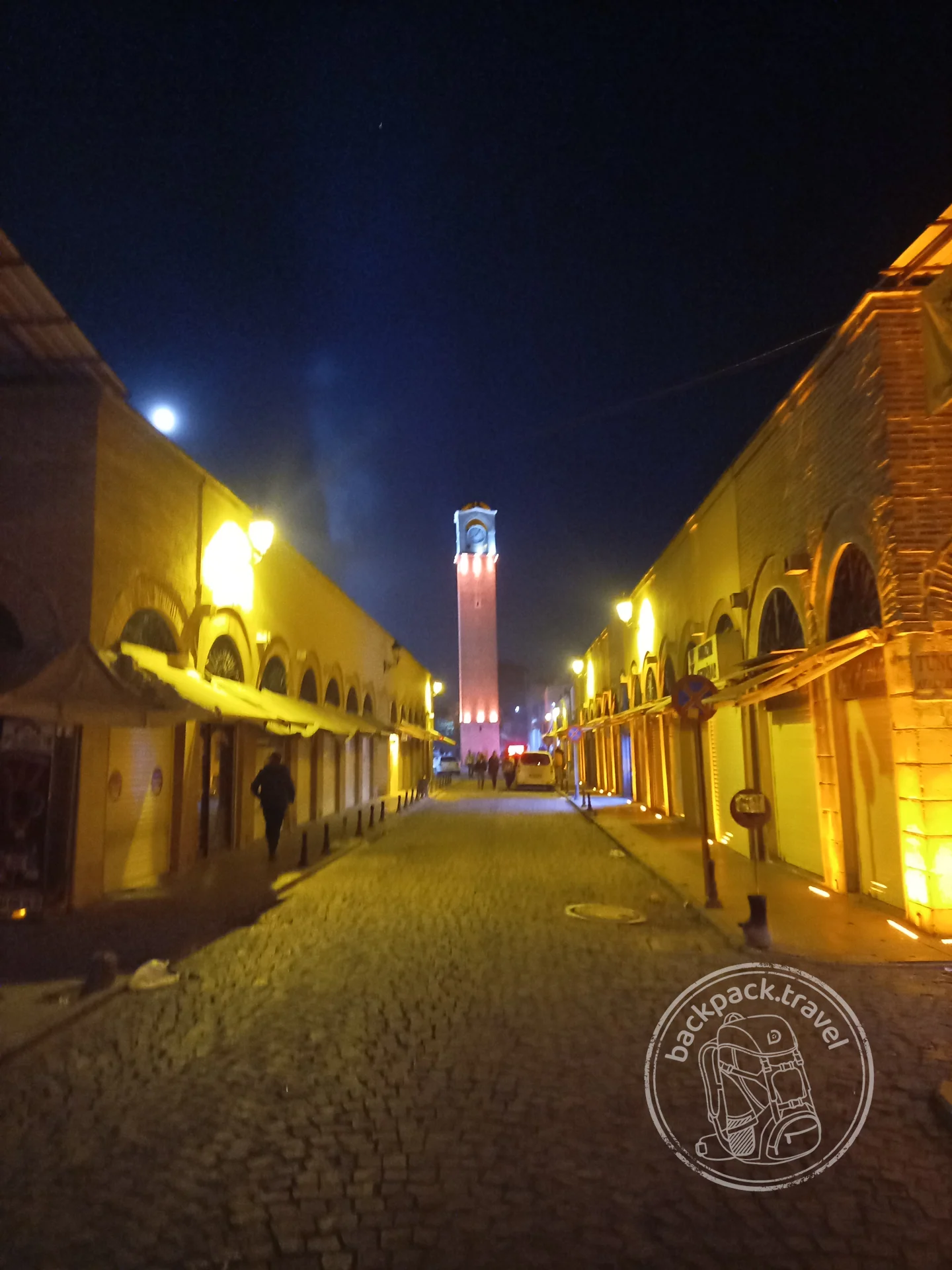
The Great Clock Tower of 1882, thirty-two metres tall, is the highest in the country; it was put up by the governor Abidin Pasha and damaged in the 1920s during the French occupation. At its foot begins Kazancılar Çarşısı, the coppersmiths' rows, where vessels are still beaten by hand.
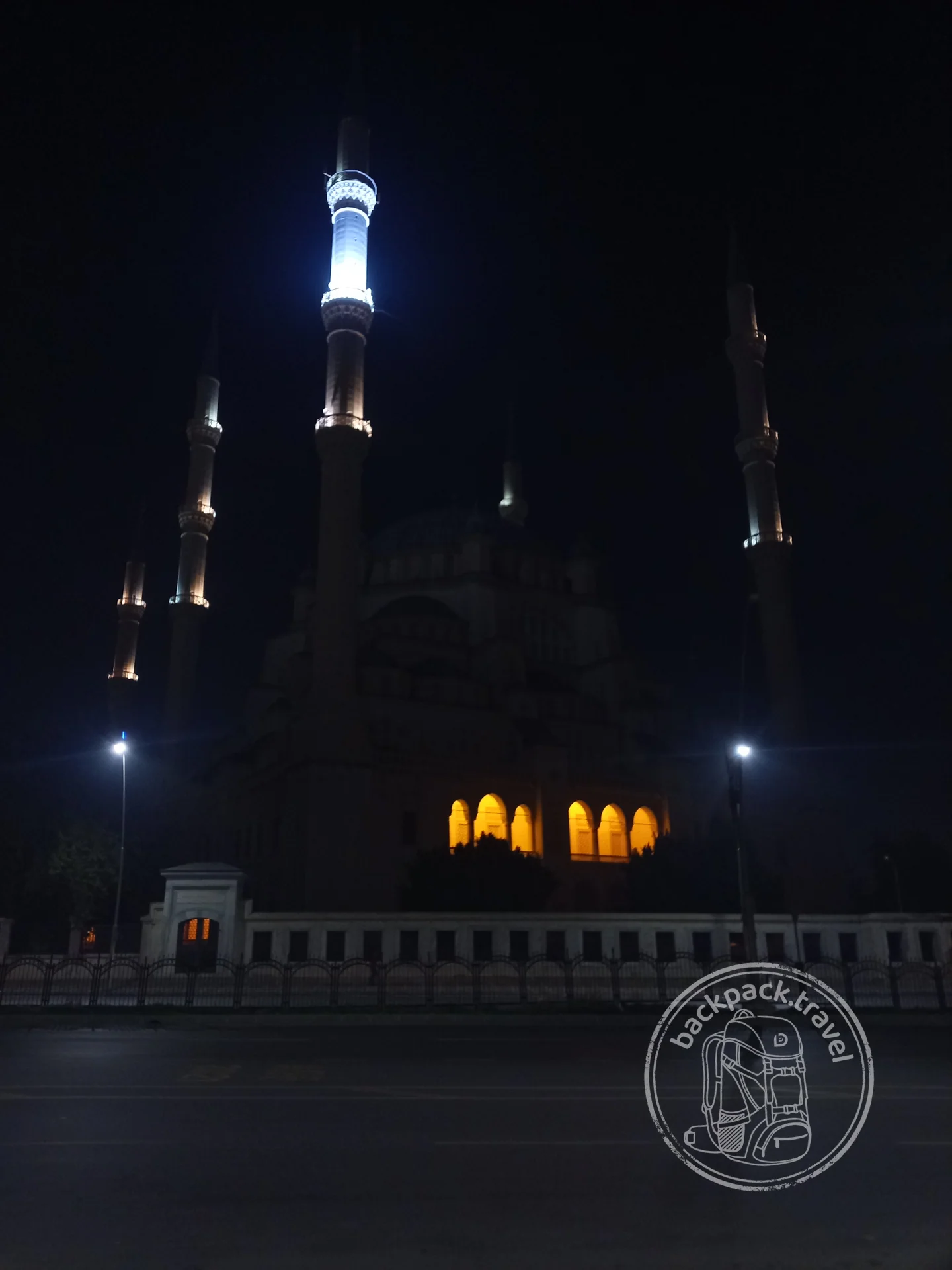
The Sabancı Mosque on the west bank of the Seyhan opened in 1998: six minarets, room for around twenty-eight thousand, the largest in Turkey when it was built. It stands in Merkez Park along the river, the main place for an evening walk.
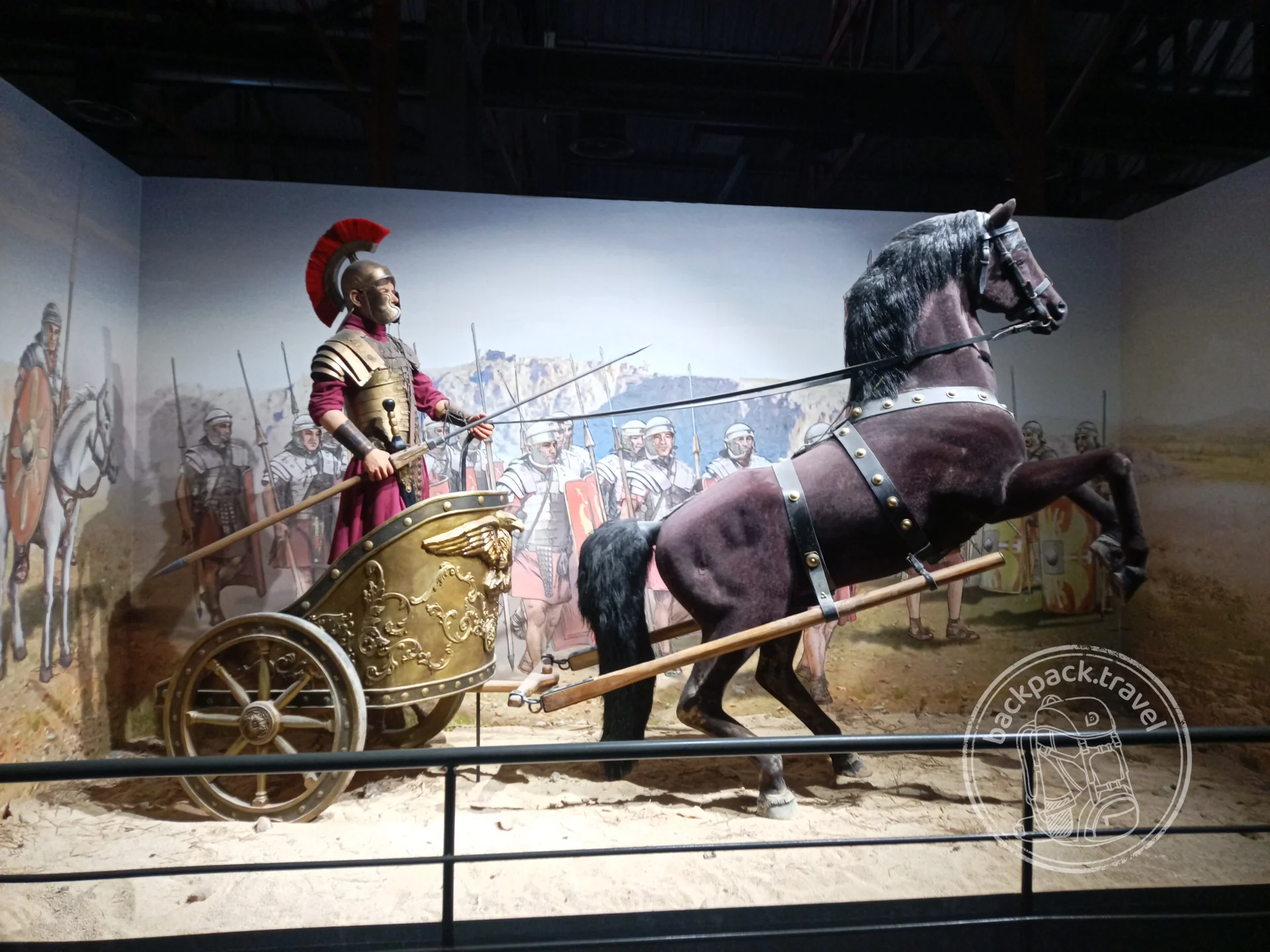
The Adana Museum opened in 2017 in the buildings of the Milli Mensucat textile mill: Roman mosaics and sarcophagi, Hittite finds, with museums of cinema and science alongside.
Getting there and getting around
Since August 2024 the city airport at Şakirpaşa has been closed to scheduled flights; these are handled by the new Çukurova international airport about forty kilometres from the centre, between Adana and Tarsus. It also serves Mersin, with flights to Istanbul, Ankara and Europe.
Trains are frequent: Mersin is about an hour away with a departure every half hour, and lines continue to Gaziantep and İskenderun. The high-speed link from Karaman to Adana is still being laid, so Ankara is quicker by bus or plane.
The city has one metro line with thirteen stations plus a dense network of buses and dolmuş minibuses. The centre can be walked, though in summer that is hard work.
Where to stay
The main choice is the Seyhan district around the clock tower and Merkez Park: from there it is a walk to the Ulu Camii, to the bridge and to the Sabancı Mosque. Newer and more expensive hotels stand in Çukurova, closer to the business quarters. Across the river in Yüreğir it is cheaper, but you will be commuting.
The city is a business and transit place and its hotels are built for people on work trips: plain rooms, prices below resort levels.
Day trips
Tarsus, forty kilometres away, is the birthplace of the apostle Paul: the well at the house said to be his, Cleopatra's Gate, and a waterfall on the Berdan river. It combines with the drive to the airport or on to Mersin.
The Varda viaduct near Karaisalı, sixty-four kilometres out, was built by German engineers between 1907 and 1912 for the Baghdad Railway. Its stone arch, a hundred and seventy-two metres long, rises ninety-nine metres above the gorge; trains still cross it, and it became widely known through a James Bond shoot.
Anavarza, seventy kilometres to the north-east, is a Roman and later Armenian city under a rock ridge: a triumphal arch, a colonnade, mosaics and a fortress on the crest. Yılankale, the Snake Castle, thirty-five kilometres out, fits into half a day.
Karatepe-Aslantaş, a hundred and thirty-five kilometres away, is a late Hittite fortress where the bilingual inscription was found that gave the key to reading Luwian hieroglyphs. The beaches at Karataş are an hour to the south.
When to come
Come in spring or autumn: from March to May and in October and November the days run from twenty to twenty-eight degrees, the citrus is in flower, and the riverside is comfortable in the evening.
Summer here is genuinely punishing: from June to September it holds at thirty-five and above, humidity comes in off the sea, and this kind of heat is harder to take than the dry Anatolian sort. The city empties by day and life shifts to the evening. Winter is mild, around ten to fifteen degrees, but it is the wettest season and December and January pour.
Food and money
Adana is the culinary capital of the south. Adana kebab received protected registration in 2005: by the rules it is lamb chopped with a knife, mixed with tail fat, pressed onto a wide skewer and made necessarily with hot pepper, served with sumac onions, roast vegetables and flatbread. The drink with it is not beer but şalgam, a salty juice of red turnip and carrot which holds a European designation of origin.
Breakfast here is ciğer kebab, liver on a skewer, with herbs and the same şalgam, and it starts at six in the morning. For dessert people take bici bici, crushed ice with rose syrup and cubes of starch.
Cards are accepted everywhere. Cash is handy at the markets and in small kebab houses.
What to know
The earthquake of 6 February 2023 reached the city: several apartment blocks collapsed and there were deaths. The bridge, the Ulu Camii and the clock tower were unharmed and the city runs normally, but the traces of demolished unsafe buildings are visible in places, and the province holds many people displaced from further east.
Summer heat is not a figure of speech: without a hat, water and a break in the middle of the day, sightseeing will not work. Closer to the delta there are plenty of mosquitoes.
Adana is easier-going than the cities of central Anatolia, but it is not a resort and beachwear is not worn here. A day covers the city; the rest of the time is better given to the surroundings.
Updated