 Города и дороги
Description
A city in northern Afghanistan, a road junction between Kabul, Mazar-i-Sharif and the Tajik border. There is no tourist infrastructure; people come through in transit.
Wiki
Kunduz is the capital of the province of the same name in northern Afghanistan, a city of roughly 400,000 people, on a plain at an altitude of about 350 metres. It is not a tourist destination in any sense, and the text below should be read as a reference note rather than an invitation.
A road junction
Kunduz has always mattered as a transport hub. Four routes radiate from it:
- To Kabul — via Pul-e Khumri and the Salang Pass with its tunnel, built by Soviet engineers and opened in 1964. This is the only year-round link between the north of the country and the capital. The drive usually takes eight to ten hours, but the Salang is regularly closed for repairs and because of the weather, and then the detour stretches the journey out to a full day.
- To Mazar-i-Sharif — a little over three hundred kilometres, five to seven hours.
- To Taloqan — about seventy kilometres, and on to Fayzabad in Badakhshan another two hundred or so, often unpaved and subject to seasonal closures.
- To the border — about sixty kilometres to Sher Khan Bandar on the Panj. The bridge to Panji Poyon on the Tajik side opened in August 2007.
The city has an airport, but no scheduled passenger service can be confirmed at present — people travel overland.
What there is in the city
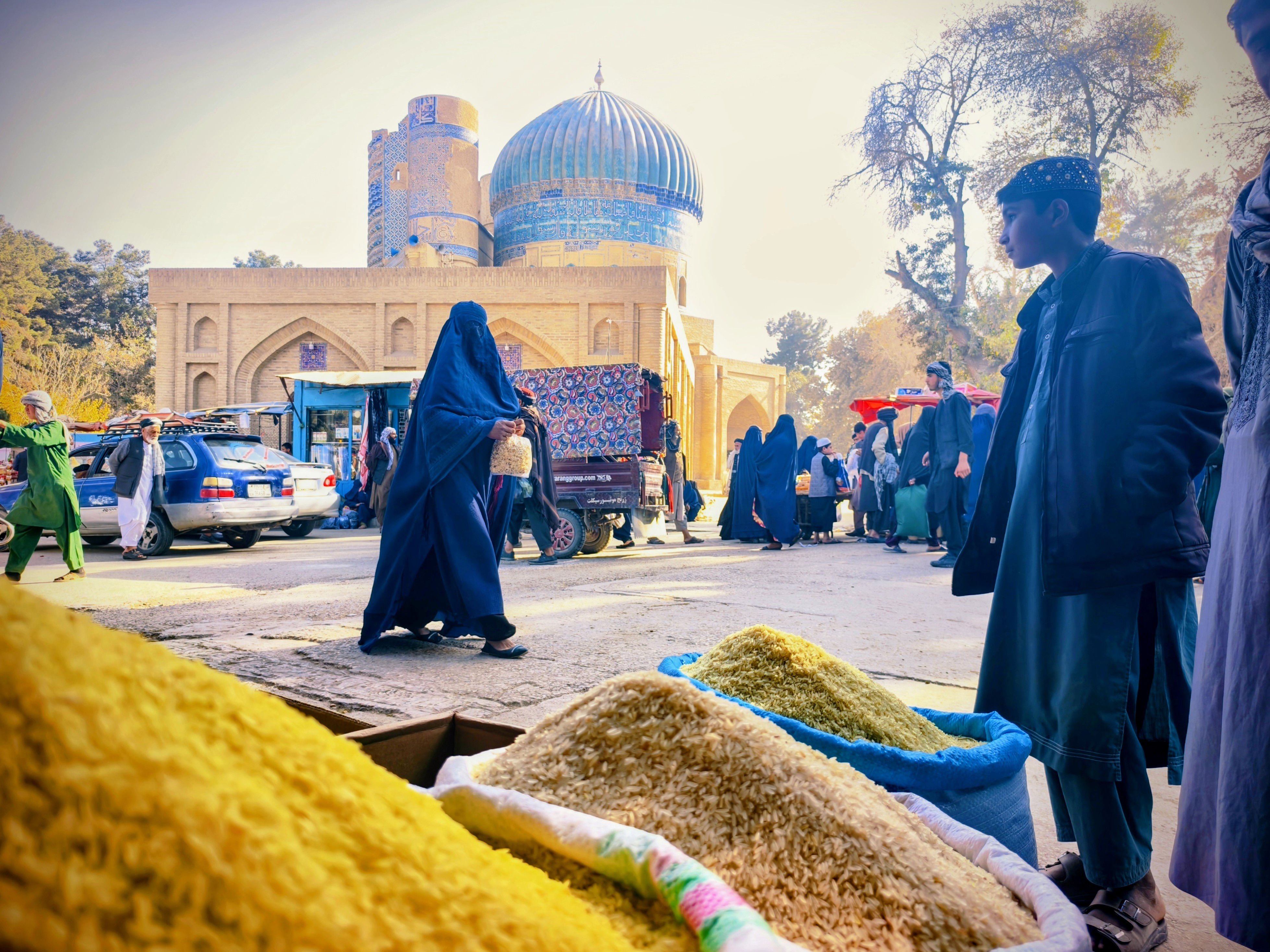
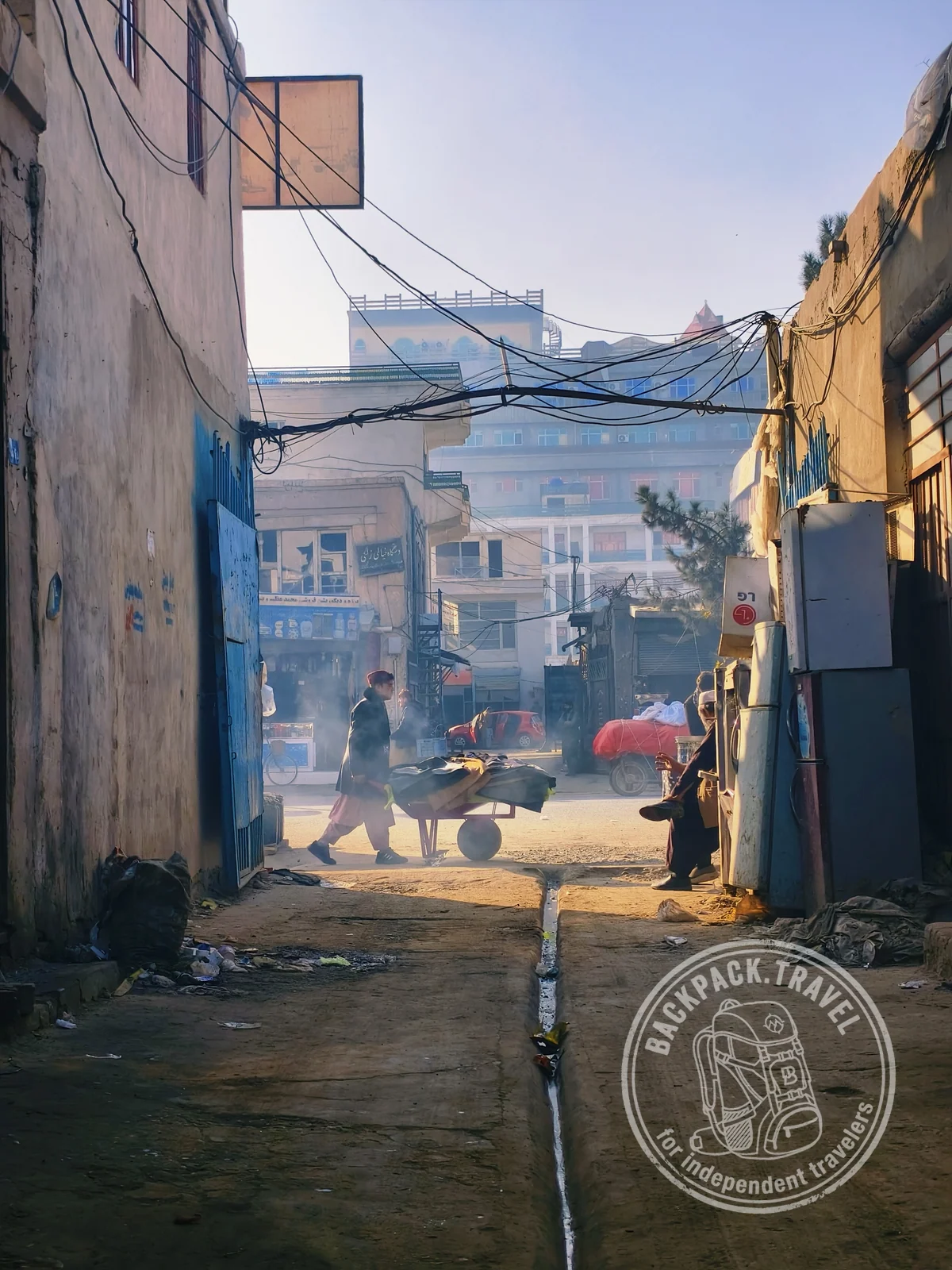
Kunduz is a trading and agricultural centre, not a city of monuments. The name comes from the Timurid "Kuhandiz", meaning "old fortress"; identifying it with the ancient Drapsaca remains a hypothesis. There is one focal point — the old bazaar around a large circular square: spices, dried fruit, fabrics, rows of tailors. This is a working urban economy, not an attraction laid on for visitors.
The second theme is cotton. The Spinzar company was founded in 1936, and at its peak the province was considered one of the richest in the country. That legacy is visible in the buildings and the industrial zones, but the story has not been given any museum treatment.
Malaria is worth knowing about separately: the marshes and rice paddies around the city historically made it an unhealthy place, and it used to be said of Kunduz that people came here either to get rich or to die. In summer it reaches close to forty degrees and is dry; the rains come in winter and spring.
There is no infrastructure
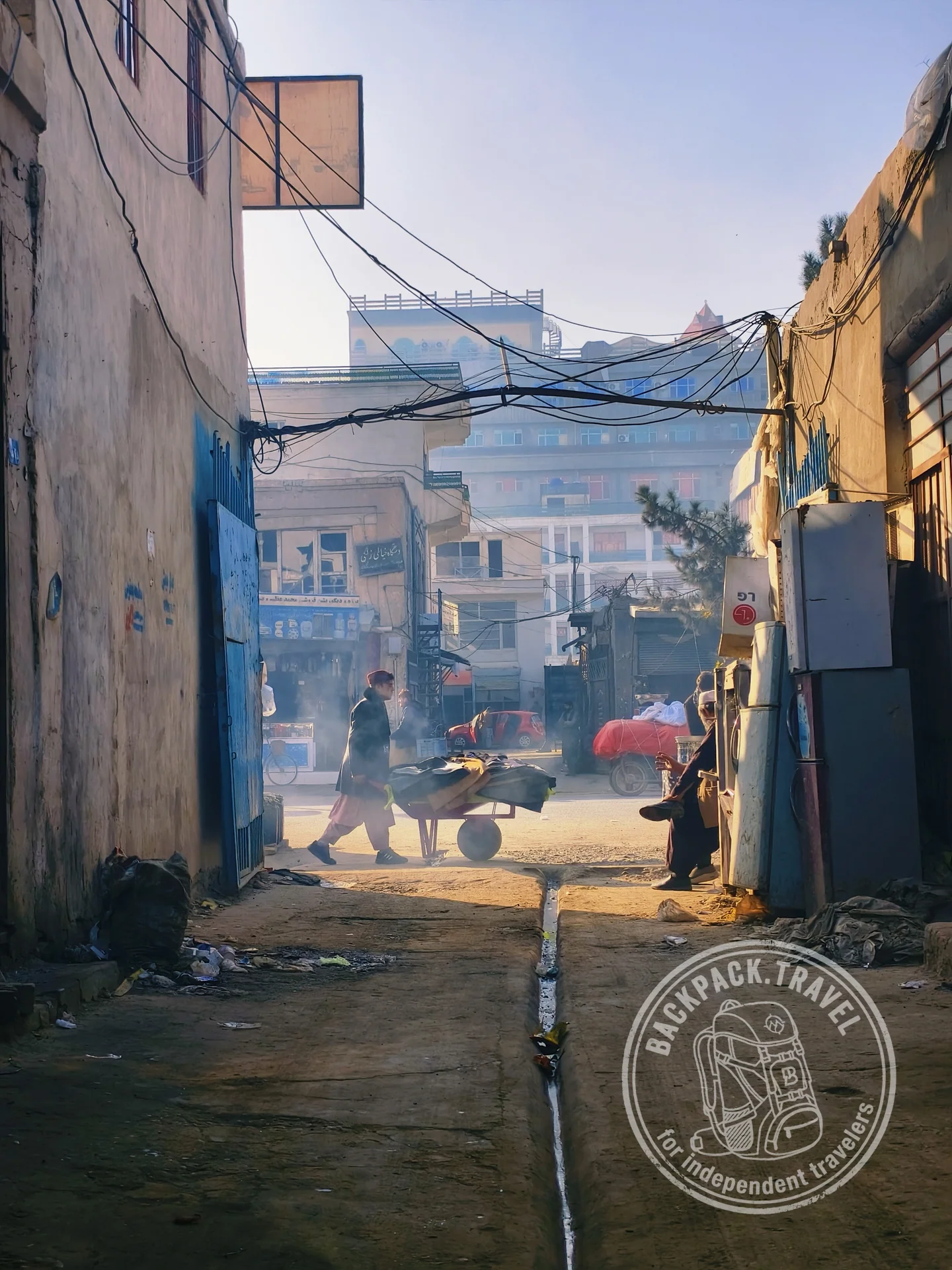
This should be taken literally. There are no hotels in the usual sense — only guesthouses; there are no museums operating normally, and no insurance that would cover the trip. The economy is cash-based, international cards work nowhere, and dollars need to be new, clean notes. Mobile internet is slow, and communication blackouts are not a hypothetical: in the autumn of 2025 the whole country was cut off for almost two days. There is no visa-free entry to Afghanistan; travel between provinces requires a permit, and on arrival you must register locally. The rules are applied inconsistently.
Safety and time
The Russian Foreign Ministry advises against visiting Afghanistan for private or tourist purposes; equivalent top-level advisories are in force from the United States, the United Kingdom and Canada and, as of mid-2026, have not been lifted. Among the risks cited are armed conflict, terrorist attacks, kidnapping and the arbitrary detention of foreigners. In 2025 a Russian ethnographer was held in Kunduz for 52 days, on the pretext of souvenirs he had bought. In the statistics on incidents the province consistently ranks among the highest in the country.
In terms of time, there is no such thing as a meaningful tourist route around the city. Those who end up here for work or in transit spend an hour or two on Kunduz itself — the bazaar and the road — and the rest of the time goes on the journeys: eight to ten hours to Kabul, half a day to Mazar-i-Sharif. A night here is usually forced rather than planned.
Who won't take to it: practically everyone. This is a city with no sights and no services, with serious risks for a visitor, and on top of that you may not photograph people or anything connected with the authorities. Women face additional restrictions on movement and on access to public places. If you are interested in the Graeco-Bactrian archaeology of the north of the country, bear in mind that Ai-Khanoum in the neighbouring province of Takhar has long been systematically looted. Kunduz makes sense only as a logistical point between Kabul, Mazar-i-Sharif and the Tajik border.