Description
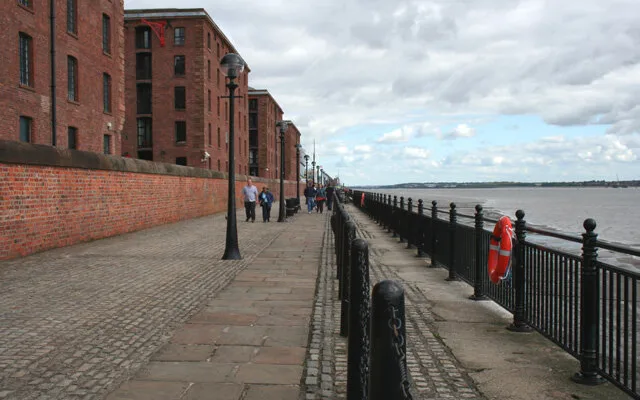
Liverpool is the city known as the birthplace of the Beatles. Its landmarks include the Albert Dock and the Cavern Club, and it is home to two famous football clubs.
Wiki
Liverpool is a port city in the north-west of England, spread along the mouth of the Mersey by the Irish Sea. The Beatles made it famous worldwide, but behind the musical legend lies one of the most distinctive cities in Britain: a place of grand maritime heritage, Victorian quarters, rich cultural life and a footballing passion few can match.
History
The settlement received its name and its first royal charter in 1207 from King John, yet for several centuries it remained a modest fishing harbour. The change came in the 18th and 19th centuries, when Liverpool grew into one of the largest ports of the British Empire. Goods passed through these quays to America, Africa and Asia; the city was also involved in the transatlantic slave trade, and later became the main gateway for millions of European emigrants heading across the ocean. The cotton trade with the American South and the industrial boom brought enormous capital, which went into the docks and into monumental public buildings.
In the 20th century the port gradually lost its importance and the city went through a long economic decline. Revival began in the 1990s, driven by tourism, culture and a large-scale rebuilding of the waterfront. In 2008 Liverpool was European Capital of Culture. The historic port area was on the UNESCO World Heritage list as Liverpool Maritime Mercantile City until it was delisted in 2021 over new waterfront development.
What to see
- The Albert Dock — a complex of mid-19th-century brick warehouses that has become the emblem of the renewed city. Today it is a busy waterfront of museums, galleries, restaurants and cafés.
- The Pier Head and the Three Graces — three imposing buildings on the Mersey: the Royal Liver Building with its legendary liver birds on the towers, the Cunard Building and the Port of Liverpool Building.
- The cathedrals — Liverpool has two, and both stand on the same street, Hope Street. The Anglican cathedral is the largest in Britain and among the largest in the world, built of red sandstone. The Catholic Metropolitan Cathedral of Christ the King, nicknamed Paddy's Wigwam by locals, is striking for its circular modernist form and its stained glass.
- The Walker Art Gallery and the World Museum — major collections of painting, archaeology and natural history, among the best regional museums in the country.
- The Museum of Liverpool and the International Slavery Museum — telling the story of the city's difficult past, its role in maritime trade and the fate of the people caught up in it.
The Beatles
For millions of travellers Liverpool is first of all the home of the Fab Four. The legendary Cavern Club on Mathew Street, where the band played early in their career, still puts on concerts. Fans take the Magical Mystery Tour, visit The Beatles Story museum at the Albert Dock, and see the childhood homes of John Lennon and Paul McCartney, preserved by the National Trust. Places known from the songs are scattered across the city: Penny Lane and the Strawberry Field children's home.
Football
Liverpool is a city of two great clubs. Liverpool FC play at Anfield, where the anthem You'll Never Walk Alone is born, and Everton are the historic rivals with traditions of their own. The Merseyside derby is one of the most emotional fixtures in English football. Both stadiums run tours taking in the museums and the stands.
Food and culture
The local culinary emblem is scouse, a rich meat and potato stew that gave the residents their nickname — Scousers — and their recognisable accent its name. Musical and theatrical traditions run deep: there is the Royal Liverpool Philharmonic Orchestra and no shortage of clubs and pubs, while the area around Bold Street is known for independent cafés and multicultural cooking. Here too is the oldest functioning Chinatown in Europe, with its distinctive paifang gate.
Practicalities
Two days are enough to cover the essentials. The first sensibly goes to the waterfront: the Albert Dock, the Pier Head, the museums and a walk along the Mersey, including the ferry across the water for the classic view of the skyline. The second goes to the Beatles trail, the cathedrals, the Georgian Quarter with its elegant terraces, and — if you can — a stadium tour.
Getting here is easy by train from Manchester (about an hour) and London (roughly two to two and a half hours), and John Lennon Airport is close by. The centre is compact and good for walking, while buses and the Merseyrail suburban network link the districts. The best time to visit is from late spring to early autumn, though cultural life goes on here all year.