Description
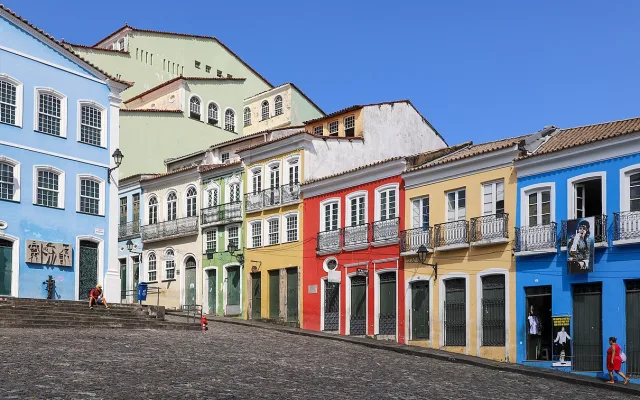
Salvador was Brazil's first capital and is known as the cradle of Afro-Brazilian culture, from capoeira to carnival.
Wiki
Salvador — in full, São Salvador da Bahia de Todos os Santos — is the largest city in the state of Bahia and the fifth most populous in Brazil, spread across a peninsula between the Atlantic and the wide Bay of All Saints. Founded in 1549, it became the first capital of colonial Brazil and remains the heart of Afro-Brazilian culture, the source of capoeira, axé music, cooking built on palm oil, and one of the largest street carnivals in the world.
Salvador in brief
Salvador is the administrative centre of Bahia state in north-eastern Brazil. Around 2.4 million people live in the city and close to 3.9 million in the wider metropolitan area, making it one of the largest in the country. Founded by the Portuguese, it was the capital of the entire colony until 1763 and the main slave-trading port in South America. That is why African heritage runs through everything: the language, the rhythms, the Candomblé religion, the food and the look of the historic centre. The city is often called the blackest city outside Africa, a nod to the proportion of its residents of African descent.
Geography and climate
The city stands on a raised peninsula, which historically split it in two: the Upper City (Cidade Alta), with the colonial quarters, and the Lower City (Cidade Baixa), with the port and the commercial districts. They are joined by the famous Lacerda Elevator, one of Salvador's symbols, built in the 19th century and lifting passengers some 70 metres.
The climate is tropical and humid, hot and steady all year. Average temperatures sit between 24 and 30°C and the sea is always warm. There is no real winter; the seasons differ only in rainfall. The wettest period runs from April to July, when downpours are short but intense. The coastline is long and varied, from sheltered bays to open beaches with heavy surf.
Money
The official currency is the Brazilian real (BRL, symbol R$). Cards are accepted almost everywhere, but cash is useful in small shops, at markets and with street vendors. Currency is best exchanged at banks and dedicated bureaux (casas de câmbio) at the airport and in large shopping centres. ATMs are plentiful, but it is wiser to withdraw cash during the day, in busy and secure places.
Time zone
Salvador runs on Brasília time (BRT, UTC−3). Brazil has abolished daylight saving, so the offset stays the same all year. Most long-haul arrivals cross several time zones, so it is worth allowing the first day of the trip for adjusting.
Entry requirements
Brazil's entry rules change from time to time, so check the current requirements with a consulate or an official source before travelling. Tourist visits have traditionally been visa-free or simplified for a limited stay, but the introduction of an electronic visa for a number of countries has changed the picture. A passport with sufficient validity and a return ticket are required, and arrivals from certain regions may need a yellow fever vaccination certificate.
Getting to Salvador
The main air gateway is Salvador Deputado Luís Eduardo Magalhães International Airport (SSA), some 20-30 km north of the centre. It has regular flights to São Paulo, Rio de Janeiro, Brasília and other Brazilian cities, along with a number of international routes; most long-haul journeys are built with a connection in Lisbon or a major Brazilian hub. Taxis, ride-hailing apps and buses run from the airport into the city. Within Brazil, Salvador is reachable on the intercity bus network, which arrives at the central Rodoviária.
Districts and main places
Pelourinho and the historic centre
Pelourinho is the heart of the Upper City and a UNESCO World Heritage Site: a dense ensemble of cobbled streets with pastel houses, baroque churches and squares where drums sound in the evening. Here stands the church of São Francisco with its overwhelming gilded interior, the cathedral, and the church of Nossa Senhora do Rosário dos Pretos, built by enslaved Africans. Groups of capoeiristas and drummers work the squares; this is the home of the legendary Olodum. The district is beautiful but calls for ordinary caution, especially after dark.
The beaches
The city's shoreline runs for tens of kilometres. At the Barra lighthouse (Farol da Barra) is one of the most recognisable beaches, with a historic fort and a maritime museum; tourists and locals alike come here for sunset. Further north are Ondina, Rio Vermelho — a bohemian quarter of bars and live music — and the long beaches of Itapuã and Flamengo. The bays on the harbour side suit calm swimming, the open ocean stretches suit surfing and walking. Rio Vermelho is also known for acarajé: bean fritters deep-fried in palm oil and filled with shrimp, sold by street vendors in white dress, the baianas.
The Upper and Lower City
Beyond Pelourinho, the Upper City has the Santo Antônio quarter, with cosy guest houses and views over the bay. In the Lower City, visit the Mercado Modelo with its craft stalls and the church of Nosso Senhor do Bonfim, the most important site of popular devotion, whose coloured ribbons (fitas) have become the city's souvenir symbol and are said to grant wishes.
Three days in Salvador
Three days are enough for the essentials. Give the first to the historic centre: Pelourinho, the Lacerda Elevator, the churches and museums, and an evening drumming performance. The second belongs to the coast: the Barra lighthouse, a walk along the beaches, sunset in Rio Vermelho with acarajé and moqueca — a stew of fish and seafood in coconut milk and dendê palm oil. The third can go to the Bonfim church, the Mercado Modelo and, if you like, a boat trip across the Bay of All Saints to the island of Itaparica.
When to go
The steady warmth makes any time of year comfortable. The driest and sunniest season runs from September to March. The climax is carnival in February, the largest street carnival on the planet: for several days the trio elétrico sound trucks move along routes near the coast and millions of people dance in the streets. It is the best time to feel the spirit of the city and also the busiest: accommodation prices jump and hotels must be booked far ahead. Anyone who prefers a quieter trip should choose a month outside carnival and the religious festivals.
Traditions, culture and food
Salvador's cultural identity is inseparable from its African heritage. Capoeira — a martial art and dance to the accompaniment of the berimbau — was born among the enslaved Africans of Bahia. The Candomblé religion, with its veneration of the orixá spirits, coexists with Catholicism, and festivals often weave the two together, as happens in February at the feast of Yemanjá, goddess of the sea, in Rio Vermelho, when offerings and flowers are carried out onto the water.
Bahian cooking is among the most distinctive in Brazil. Alongside acarajé and moqueca there are vatapá and caruru, thick pastes of shrimp, nuts and spices, and bobó. Dendê palm oil underpins many dishes, giving them their deep colour and flavour. Street food, the markets and family-run restaurants give the fullest picture of the local table.
Travellers are almost unanimous: Salvador is vivid, musical and full of colour, a place where history and living street culture are felt at every step. Experienced visitors do advise sensible care with valuables, sticking to busy areas and using trusted transport after dark. Follow those simple rules and a trip to Brazil's first capital is hard to describe as anything other than unforgettable.