Description
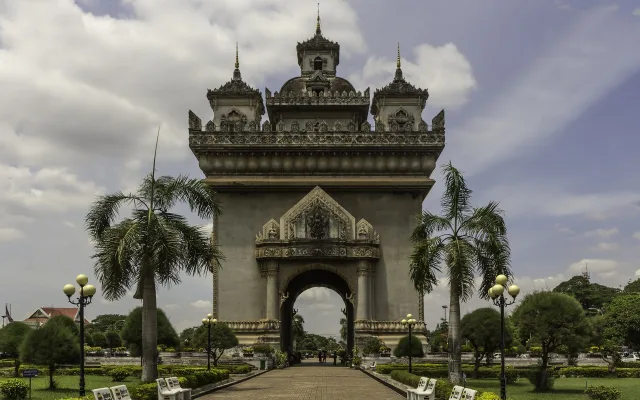
Laos's unhurried capital — the golden Pha That Luang stupa, the Patuxai arch and cafés along the Mekong.
Wiki
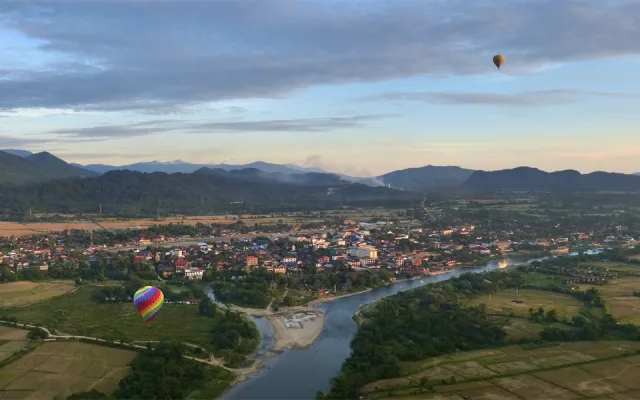
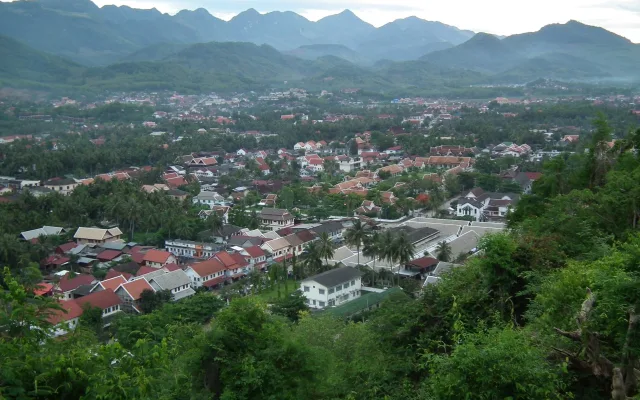
The capital of Laos stands on the left bank of the Mekong, which forms the border with Thailand here, and remains one of the least hurried capitals in Southeast Asia. Around 750,000 people live in it, and instead of towers and permanent traffic jams the visitor finds wide boulevards left over from the French colonial period, gilded stupas and low-rise streets with a ribbon of river visible behind them.
Atmosphere and first impressions
Next to Bangkok or Ho Chi Minh City, Vientiane feels almost provincial — and that is exactly its charm. The pace is measured, there is not much traffic, monks in orange robes collect the morning alms, and by evening the centre drifts down to the riverfront. The city is small, and most of the key sights can be walked or cycled in a day or two. The colonial inheritance shows in the architecture, the street names and, above all, the cooking, where the baguette sits beside sticky rice.
The main sights
- Pha That Luang — the golden stupa that is the national symbol and the setting for the country's biggest religious festival. Its tiered silhouette appears on the state emblem; what you see today is the result of restoration layered over centuries of destruction and rebuilding.
- Patuxai — the "victory arch" on Lane Xang Avenue, a nod to the Parisian original but decorated with Lao and Hindu motifs. The upper viewing platform gives a panorama of the centre. A well-known detail: the cement intended for an airport runway went into the monument instead.
- Wat Sisaket — the oldest surviving temple in the capital (1818), spared during the Siamese invasion thanks to its Thai architectural style. Its cloisters hold thousands of Buddha figures set into wall niches.
- Haw Phra Kaew — a former royal temple that once housed the Emerald Buddha (now in Bangkok). Today it is a museum of religious art, with a collection of sculpture and carving.
- Buddha Park (Xieng Khuan) — a surreal garden of concrete figures about 25 km out of town, where Buddhist and Hindu images share one space. A good half-day outing.
- The Mekong riverfront — where the evening happens: a promenade, a night market selling textiles and souvenirs, street food, and sunset over the river with the Thai bank opposite.
- The COPE Visitor Centre — small but powerful, devoted to the legacy of the bombing of Laos during the Indochina wars and to work on unexploded ordnance. It is the quickest way to understand the country's recent history.
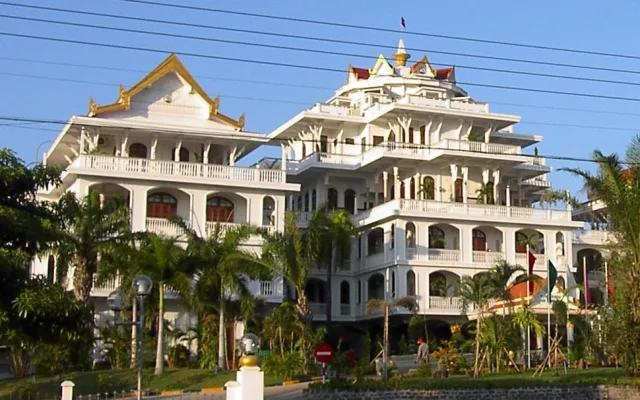
Fill out the programme with the Talat Sao morning market, quiet Buddhist courtyards such as Wat Si Muang, and the unhurried streets around the presidential palace.
Food
Lao cooking is close to that of Thailand's Isan region but distinct from it. Try larb (a spiced salad of minced meat), tam mak hoong (hot green papaya salad), the noodle soup khao piak sen, the Lao version of khao soi, and naem — fermented pork sausage. Sticky rice is the base of every meal, rolled into balls by hand. The French trace shows in crusty baguettes with pâté and vegetables and in strong Lao coffee with condensed milk. The local beer, Beerlao, has long served as the country's unofficial brand.
Rough costs: lunch in a café $4–7, dinner in a restaurant $10–20, a bottle of Beerlao about $1.50. Prices are as of 2026. Laos uses the kip, but figures for visitors are often quoted in US dollars.
Transport and practicalities
Wattay International Airport (VTE) is roughly 4 km from the centre, with Lao Airlines and a handful of regional carriers flying to Bangkok, Hanoi, Kuala Lumpur and elsewhere. The Laos–China railway has added a fast, comfortable link to Luang Prabang and the Chinese border. Around town you move by tuk-tuk ($2–5 a ride) or rented scooter ($10–15 a day); petrol costs about $1 a litre.
The Friendship Bridge across the Mekong is the border crossing towards Nong Khai in Thailand, and a popular overland route. The currency is the Lao kip, though dollars and Thai baht circulate too. The national language is Lao; English is understood in the tourist trade.
How much time to allow
Two days covers the essentials. Give the first to the historic and religious core — Pha That Luang, Patuxai, Wat Sisaket and Haw Phra Kaew — and spend the evening on the riverfront. Give the second to Buddha Park, the COPE centre and slow walks through the colonial streets with coffee stops. That pace suits the character of the city, where hurrying feels out of place.