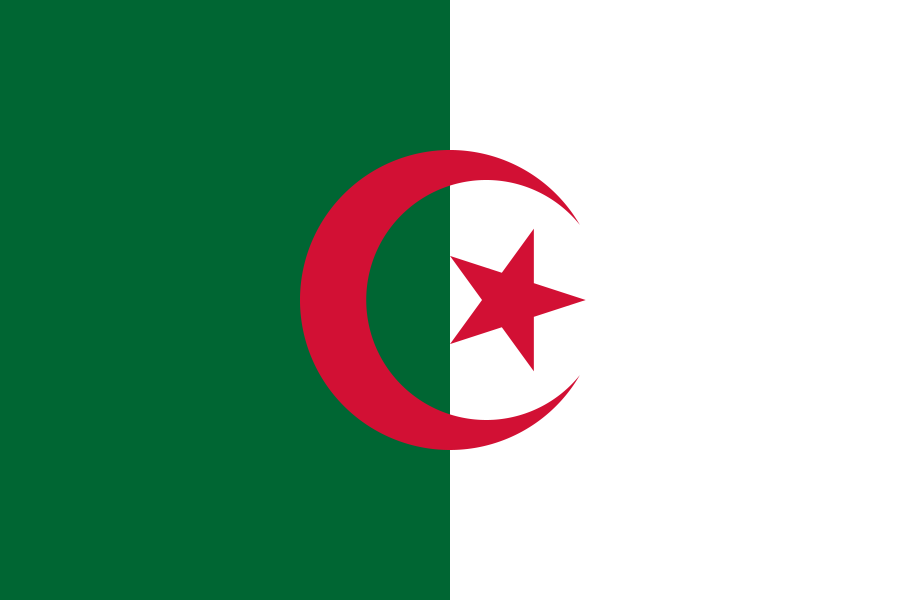
Algeria
DZAfrica's largest country, running from the Mediterranean coast deep into the Sahara. Algeria holds the Roman ruins of Tipaza and Timgad, the Ottoman Casbah of Algiers and Berber villages in the mountains. It is among the least visited destinations in North Africa, which makes it a genuine adventure for anyone drawn to the unknown. Prices are very low and the welcome is remarkable.
Where to go #
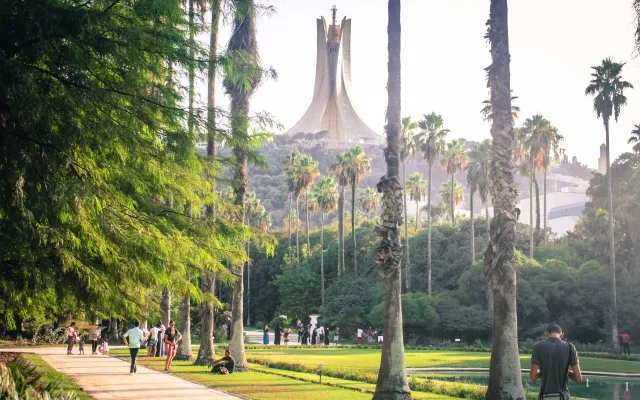
Algiers
The capital of Algeria — the UNESCO-listed Casbah, French boulevards and the great white mosque above the Mediterranean.
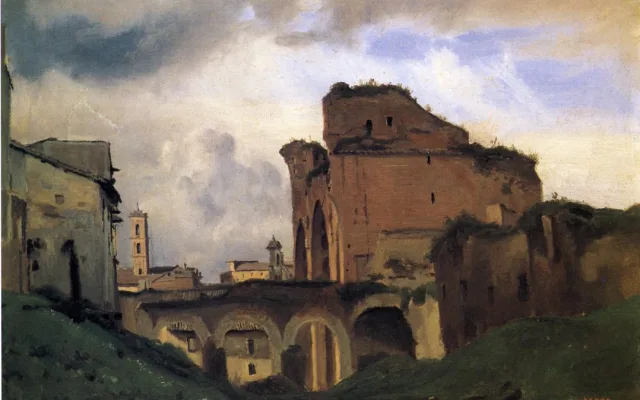
Constantine
The city of bridges over the Rhumel gorge, ancient Numidian Cirta, and a base for Timgad and Djemila.
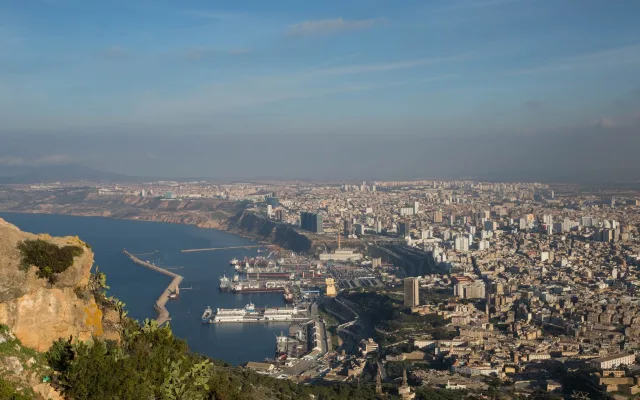
Oran
Algeria's second city — the Spanish fortress of Santa Cruz above the bay, and the birthplace of raï music.
What to see #
The Casbah of Algiers: A medieval quarter tipping down the hillside, a labyrinth you will get lost in without a guide.
Look for the old fountains and the courtyard palaces hidden behind unremarkable doors. It is UNESCO-listed and still very much a living neighbourhood.
Timgad: These ruins of a Roman city in the mountains are remarkably intact, so you can walk the ancient streets and sit in the theatre.
If you go anywhere for the history, go here, for the Arch of Trajan. People call it the African Pompeii and the grid plan alone is astonishing.
The bridges of Constantine: Structures spanning a drop of 175 metres, and they are as dramatic as that sounds.
You can walk the highest of them, including the famous Sidi M'Cid, in an afternoon. It is the symbol of the city and the picture everyone takes home.
The M'zab valley: Five ksour towns of mudbrick houses in the Saharan sands, looking like a film set that nobody struck.
Worth a trip for the otherworldly landscape and the severe architecture that has not changed in centuries. Visits are only possible with a local guide.
Tassili n'Ajjer: A vast desert plateau carrying thousands of prehistoric rock paintings.
This is a multi-day expedition where the transport is camels and reliable four-wheel drives, not a day out. People come for the stone forest and for the silence of the deep Sahara.
Djemila: Another Roman city up in the hills, with a superb mosaic collection in the site museum.
The temples and arches are perfectly doable in a day and the setting does half the work. The ruins are folded into green hills, which makes for an unusual walk.
Tipaza: Ancient columns right at the water's edge, ringed by hundred-year-old pines.
Worth a trip for the walk between the basilicas with the surf in the background, which is as romantic as Algeria gets. Even if it looks overhyped online, sunrise here settles the argument.
Prices #
Currency: The Algerian dinar (DZD) cannot be bought outside the country. The official bank rate is far worse than the parallel one, and this gap is the single most important thing to understand about money here. The street changers around Port Said square in Algiers offer the good rate, but there is always a risk of counterfeit notes.
Cards: Cashless payment is close to useless in Algeria, so bring a stock of euros or dollars. Visa and Mastercard work in a handful of expensive hotels in the capital and even there the terminals fail regularly, Amex not at all, and Wise or Revolut will not rescue you.
ATMs: Machines dispense dinars at the unfavourable official rate only, so they are a fallback rather than a plan. Euros change more readily than dollars almost everywhere.
Declaration: Anything above the equivalent of a thousand euros must go on the customs declaration on arrival. Keep bank receipts if you change money officially, and note that taking dinars out of the country is capped at a token amount.
Tipping: Around ten percent in restaurants if the service was good. Desert guides expect a modest tip at the end of a multi-day trip, and taxi and market prices are agreed in advance.
| Item | Price (USD) |
|---|---|
| Lunch in a cafe | 3 |
| Dinner in a restaurant | 12 |
| Street bourek | 1 |
| Coffee at a stand | 0.5 |
| Water, 1.5 l | 0.2 |
| Guesthouse per night | 20 |
| Good hotel | 50 |
| Metro ride | 0.4 |
| Taxi across town | 3 |
| Train to Oran | 5 |
| Flight to the south | 50 |
| SIM card | 4 |
| Entry to a ruin site | 1.5 |
| Kilo of dates | 3 |
| Cup of tea | 0.3 |
Getting around #
Getting in: Algiers has the densest links with France, so Paris, Marseille and Lyon are the easiest way in from Europe, alongside Madrid, Rome, London and Frankfurt. From North America most people route through Paris or Istanbul, and Air Algérie also serves Montreal.
Trains: SNTF services connect the northern cities and are perfectly comfortable. Algiers to Constantine or Oran takes about five hours. Book ahead, because the popular daytime departures sell out.
Shared taxis: Louage minibuses leave when full and are the fastest way into the next wilaya. They are cheap and put you straight into the local rhythm. Confirm the price per seat with the driver before you get in.
Domestic flights: Air Algérie is the only quick way into the Sahara. A flight to Tamanrasset or Djanet saves you days of grinding across stony desert. The onboard service is basic but the schedules broadly hold and fares are reasonable.
City transport: The capital has a modern metro and tram lines and tickets cost almost nothing. Use an app to navigate, because the bus network is impenetrable at first glance.
Ride apps: Download Yassir and skip the negotiation entirely. Fixed prices, and a safer bet coming in from the airport, where street drivers routinely quote foreigners several times the going rate.
Driving yourself: A bold choice given the traffic. Road quality in the north is good, but south of the Atlas you need a four-wheel drive and a guide, and city parking is paid and usually full.
Where to stay #
Budget beds: Backpacker infrastructure barely exists here, so there is no hostel scene to fall back on. The Casbah and central Algiers have modest hotels offering a clean room for very little, though booking them online is often technically impossible.
Guesthouses: In the oases such as Ghardaia, traditional houses built around a courtyard are the thing to look for. It is the best way into local daily life and the home cooking is excellent. Owners are hospitable and will happily arrange excursions.
Chain hotels: The big cities have the familiar European brands, aimed at business travellers. You get a guaranteed standard and the ability to pay by card, at a price. A reasonable choice if you would rather not take the local colour with your breakfast.
Desert camps: On a Sahara trip you will mostly sleep in tents under open sky. Tuareg operators run camps with a fire and simple, filling food. Facilities are minimal and the star fields make up for it entirely.
Booking: The big reservation sites operate in a very limited way here and many properties are simply not listed. Get hotel phone numbers in advance or arrange things in person, and note that rooms in the tourist towns run out in high season.
What to expect: Hot water and stable internet at the cheaper end are luck rather than policy. Look at the room before you pay and ask whether breakfast is included. In state-run hotels the service can be slow and thoroughly unhurried.
What to eat #
Couscous: The national dish, traditionally cooked on Fridays. Steamed grain with meat and stewed vegetables, filling and cheap. Every region has its own recipe but the foundation never changes in any Algerian home.
Street food: Bourek, and merguez, the spicy lamb sausages served in a baguette, are sold on every busy corner. Try maakouda, the potato fritters that will get you through an afternoon. Buy only where there is a queue of locals, and you will avoid most trouble.
Soups and starters: Chorba, a thick tomato and vermicelli soup, is everywhere and especially during Ramadan. Olives and fresh baguette arrive with every meal. Algerian cooking absorbed French and Berber traditions, which makes it far more varied than people expect.
Sweets and tea: For dessert, makroud, a semolina and date pastry drenched in honey. Mint tea is drunk constantly, very sweet and poured with a head of foam. Coffee is strong, French or Turkish style, and comes in tiny cups.
Alcohol: This is a Muslim country and drink is hard to find, but it exists. It is sold in specific shops and served in some restaurants behind drawn curtains. Drinking in the street is absolutely out and will bring trouble from locals and police alike.
Markets: Go to the souks for dates and seasonal fruit, and haggle, because that is the expected form. The deglet nour dates from here are among the best on the planet. Prices are usually the same for locals and visitors if you stay polite and relaxed.
Safety #
In the cities: The north is fine for walking in daylight and there is police presence on every corner. Petty theft happens in markets and on transport, so watch your bag. Violent crime against foreigners in the cities is very rare.
Desert and borders: Travel to the frontier zones with Mali or Libya is banned outright because of the terrorism risk. In the Sahara you may only move in a group with an official guide and permits, and military checkpoints on the roads are routine.
Solo women: Dress conservatively and avoid walking alone after dark. There will be a lot of male attention, though it is usually persistent curiosity rather than anything worse. The Algiers metro has carriages reserved for women and children.
Photography: Never photograph military installations, police or government buildings. It leads to detention, a long conversation and the deletion of your entire card. Always ask before pointing a camera at a person.
Scams: Fake guides in the Casbah can be extremely persistent about showing you the way. Decline politely and keep walking, or hire a vetted guide properly. At the airport, ignore drivers promising to beat the fixed fare.
Health: Medicine in the capital is acceptable, but qualified care is hard to find in the interior. Drink bottled water and wash fruit thoroughly. The sun is deceptive here, so sunscreen and a hat are not optional, and it is worth reading your own government's travel advisory before you commit to the south.
Etiquette and culture #
Religion: Islam sets the rhythm of the country, so respect local practice and prohibitions. During Ramadan, do not eat or smoke in view of those fasting until sunset. Mosques are usually closed to non-Muslims, though the architecture can be admired from outside.
Dress: Men should skip the short shorts, and women are advised to cover shoulders and legs. Covered clothing spares you attention and reads as respect. A headscarf is not required of visitors, but keeping one in your bag is useful at shrines.
Hospitality: Algerians are warm and may sincerely invite you for tea or lunch after five minutes of conversation. Refusing an offer of food is not always polite, though use reasonable judgement. People are proud of their history and genuinely pleased to see foreign visitors.
Language: Arabic is the official language, but almost every city dweller speaks French. English is rare among older people and a little better among the young, so a translation app is worth having. A couple of words of the darja dialect breaks the ice instantly.
Etiquette: Ask before photographing anyone, particularly women. Personal space is closer here than most Northern Europeans are used to, so do not flinch at a hand on the shoulder. Friday is the main day off and many shops and museums shut.
The Tuareg: In the south you will meet the blue people, whose men cover their faces with the tagelmust. Their culture is distinct and quite separate from the Arab north. Respect the old customs if you are heading into the deep Sahara with local guides.
Connectivity #
Mobile: Three operators, Mobilis, Djezzy and Ooredoo, cover most of the country. A SIM can be bought at the airport or in an official shop against your passport and entry stamp. Data tariffs are cheap and 4G is stable in the cities.
In the south: In the Sahara the signal disappears entirely, so download your maps for offline use before you leave. Hotel Wi-Fi exists in the cities but the speed can be dispiriting, and mobile data is usually the faster option.
eSIM: The easiest route if you would rather not deal with registration and queues. These profiles switch networks automatically to whatever is strongest, and you are connected the moment you land.
Messaging: All the usual apps work without restriction. Voice calls over the internet can stutter where the connection is poor. Social media is hugely popular locally, so people are reachable.
Useful apps: Install a translator that handles French and Arabic. Ride-hailing apps will save you daily in the big cities. Maps.me earns its place in the Sahara, where Google's coverage thins out to nothing.
Post: The Grande Poste in Algiers is both an architectural landmark and a functioning post office. You can send a postcard from it, which makes a decent souvenir in itself. Everything moves slowly, so bring patience to the stamp queue.
Phrasebook #
| English | Arabic (Darja) | Pronunciation |
|---|---|---|
| Hello | السلام | Salam |
| How are you? | كي راك؟ | Ki rak? |
| Thank you | صحا | Sah-ha |
| Please | بلا مزية | Bla mzia |
| Yes | ايه | Ih |
| No | لا | La |
| How much is it? | بشحال؟ | Besh-hal? |
| That's expensive | غالي | Ghali |
| Where is...? | وين...؟ | Win...? |
| Good / nice | مليح | Mlih |
| Tasty | بنين | Bnin |
| I want | انا نحب | Ana nhab |
| Help! | عاونوني | Aawnuni |
| Sorry | سمحلي | Smah-li |
| Goodbye | بسلامة | Bes-lama |
| All good | صاوا | Sawa |
| No problem | ماكاش مشكل | Makash mushkil |
| Right now | دروكا | Dorka |
| Bread | خبز | Khobz |
| Water | الماء | El-ma |
| Mint tea | أتاي بالنعناع | Atay bel-naanaa |
| Let's go | يالله | Yallah |
Good to know #
Consular cover: Most Western countries keep an embassy in Algiers, and it is worth noting the address and phone number before you travel. They are the people to call if your passport goes missing or something more serious happens far from the capital.
Ride apps: Yassir is essential in any Algerian city. It removes the haggling and the business of explaining your route by gesture. Heetch also runs in the larger cities on the same fixed-fare model.
Offline maps: Download the region in Google Maps or Maps.me before you fly. This matters most in the Sahara and in the old quarters, where navigation quietly gives up. Offline maps are more accurate and spare you the roaming data.
Airlines: You will need the Air Algérie and Tassili Airlines sites for southern flights. The interfaces can be temperamental, so a reliable agent may be easier. Baggage allowances on some domestic legs are notably strict.
Registration: When you check into a hotel your details go to the authorities automatically. If you stay in a private rental, that may need attention. Carry a copy of your passport and entry stamp when out walking, as checks do happen.
Emergencies: Police are on 17 and the ambulance service on 14. Outside the capital, operators are unlikely to speak English, so a French phrase or a local helping you will go a long way, and for anything serious contact your consulate directly.