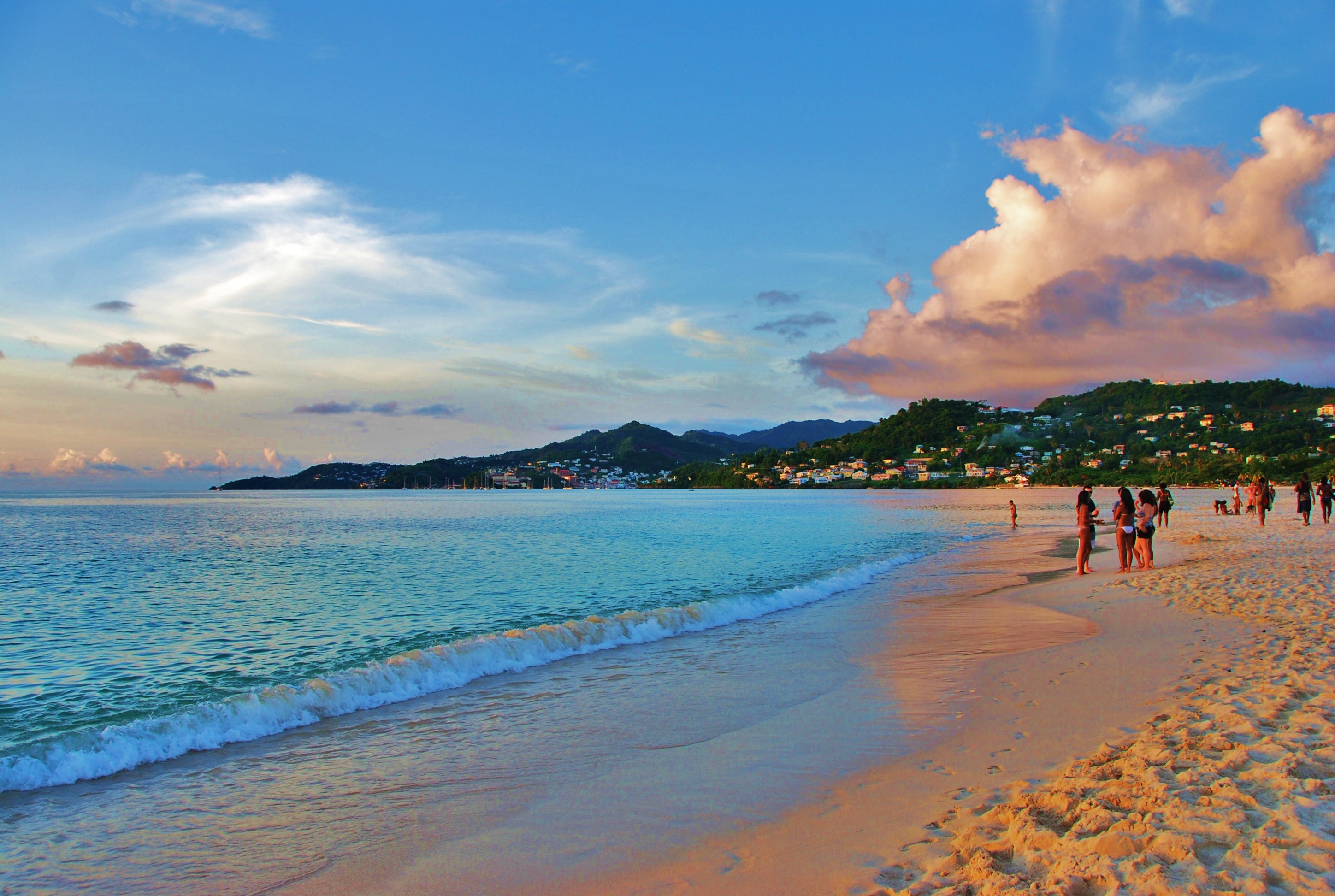

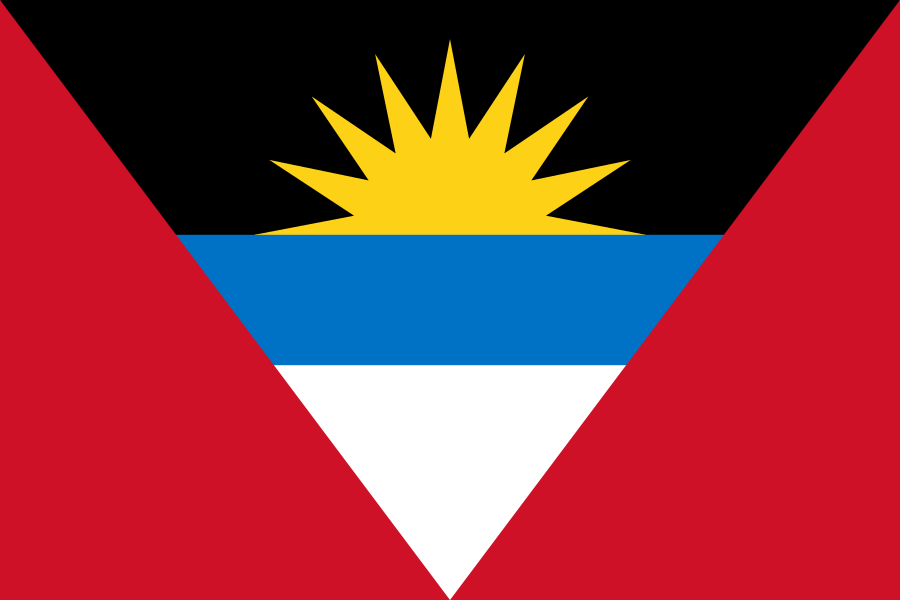
A two-island Caribbean nation famous for its 365 beaches — one for every day of the year. Antigua draws sailors from around the world, while thinly populated Barbuda offers miles of untouched pink sand and colonies of frigatebirds. British colonial history mingles here with Caribbean culture, reggae parties and rum punch. It is one of the most developed countries in the region.
Where to go
#St John's
The capital and main port, and worth a day for the colonial architecture around the cathedral. It is also where the bus terminals are, along with the markets selling cheap fruit and locally made rum.
English Harbour
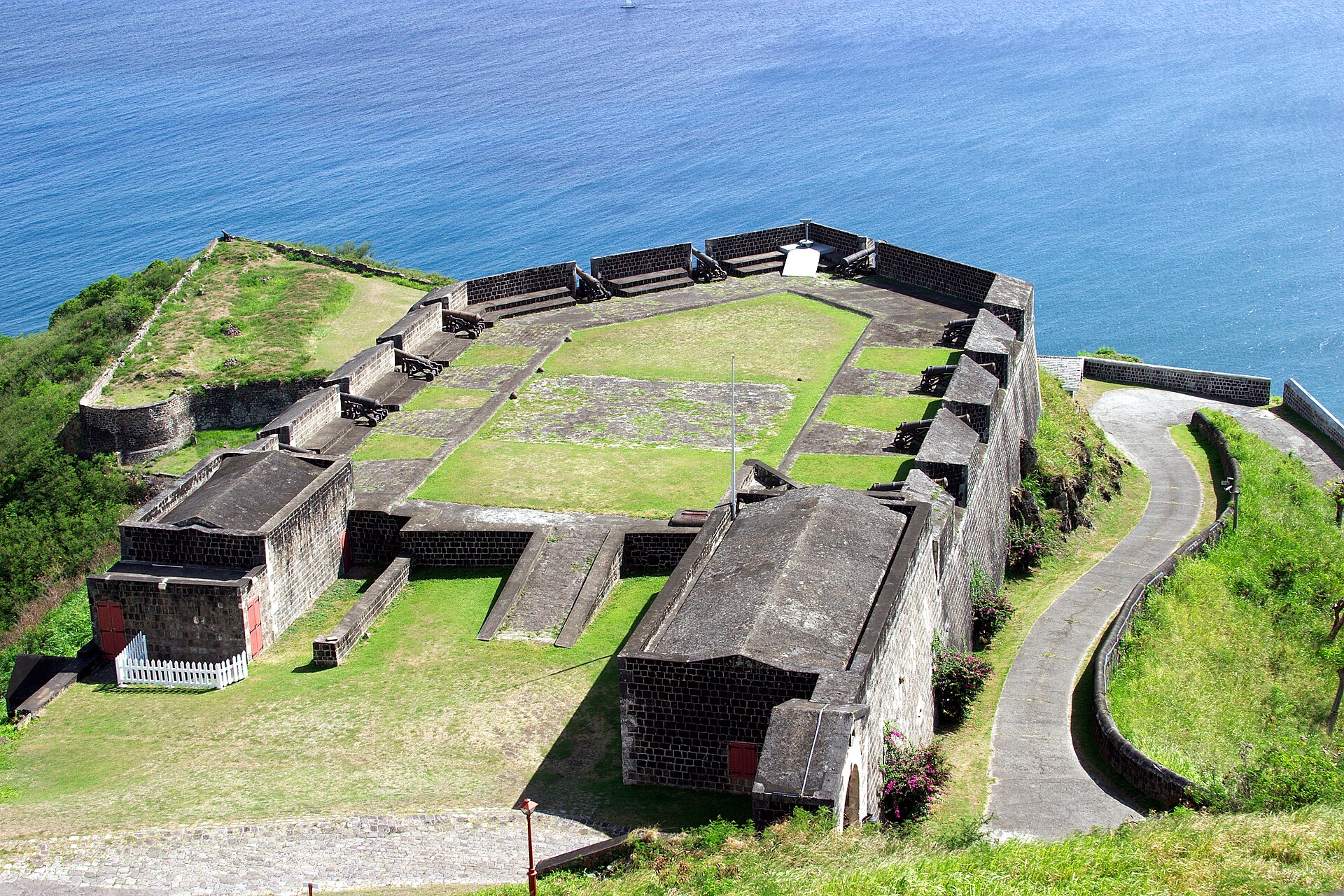
The historic corner in the south, where people come for the restored dockyard and the yachting scene that revolves around it. Old forts ring the bay and the best viewpoints in the country are a short climb above it.
Jolly Harbour
A resort village on the west coast with a large marina and easy access to calm beaches. It is a practical base for reaching the wilder shores, since the coastal buses run past all day.
Falmouth
A relaxed settlement next door to English Harbour, packed with restaurants and yacht clubs. A good base if you want a slow rhythm within walking distance of the historic sites.
Codrington
The only village on Barbuda, surrounded by more or less untouched country. People come for kilometres of pink sand beach and for the enormous frigatebird colony out in the lagoon.
What to see
#What to see: Nelson's Dockyard, the only working Georgian dockyard left anywhere, and UNESCO-listed for it.
The 15-dollar ticket also gets you into Shirley Heights, which makes it the best-value entry on the island.
Worth a trip: Get up to Shirley Heights on a Sunday by four in the afternoon.
This is the island's most famous party, with barbecue, live reggae and steel pan, and the sun going down over the harbour behind it.
Where to go: Devil's Bridge on the east coast, where the full force of the Atlantic hits the limestone.
Big swells blow geysers of water up through the rock, which is genuinely spectacular in rough weather.
Can you do it in a day: On Barbuda, hire a boat out to Codrington Lagoon and the largest frigatebird colony in the hemisphere.
Afterwards, spend the rest of the day on beaches where you will not see another person.
The famous one: Of the island's 365 beaches, Half Moon Bay in the southeast stands out.
It is undeveloped, curved exactly as advertised and equally good for snorkelling or jumping around in Atlantic surf.
For the bold: At Stingray City you swim in open water with habituated rays.
They live in the shallows, are entirely used to people and will let you hold them.
Prices
#Currency: The East Caribbean dollar (XCD) is pegged hard to the US dollar at 2.7 to 1. US dollars are accepted everywhere, but your change will almost always come back in local currency.
Exchange: There is no point changing money at a bank, since the rate is fixed. In small shops and on the buses you do better paying in EC dollars, because rounding on a US-dollar price never goes your way.
Cards: Visa and Mastercard work in supermarkets, restaurants and hotels, and Amex is accepted at the larger resorts. Keep cash for bus fares, market fruit and roadside food stalls.
ATMs: There are machines in St John's and at the bigger hotels. The local bank adds a fee of two to three US dollars per withdrawal on top of whatever your own bank charges, so a Wise or Revolut card and larger, less frequent withdrawals save real money.
Tipping: Many restaurants add a service charge, so check the bill before you add ten percent on top.
| Item | Price (USD) |
|---|---|
| Lunch in a local cafe | 10 |
| Roti from a stall | 6 |
| Dinner for two with wine | 85 |
| Beer in a bar | 4 |
| Cappuccino | 5 |
| Water, 1.5 l | 2 |
| Bottle of rum, 0.7 l | 20 |
| Guesthouse per night | 70 |
| Minibus fare | 1.5 |
| Taxi to the airport | 15 |
| Car hire per day | 55 |
| Barbuda ferry, return | 40 |
| Boat trip to the rays | 50 |
| SIM card with data | 25 |
Getting around
#Getting in: V.C. Bird International is well served from London, New York, Miami and Toronto, and there are seasonal additions over the winter. Regional hops on the small Caribbean carriers link Antigua to St Kitts, Dominica and Guadeloupe if you are island-hopping.
Minibuses: Privately run vans work the island from two terminals in the capital. It is the budget option and a ride rarely costs more than two dollars.
How they work: There is no fixed timetable and vans leave when they fill up. Wave one down anywhere on the road, and tell the driver in advance where you want to get off.
Taxis: Fares between the main points are set by the government, so there is not much to negotiate. There are no meters, so confirm the price before you get in.
Car hire: A car buys you freedom, but remember they drive on the left and the roads are narrow. You need a temporary local permit, which the rental agency issues for 20 dollars.
Getting to Barbuda: The Barbuda Express fast ferry runs from St John's several times a week. The crossing takes an hour and a half and a return ticket is about 40 dollars.
From the airport: Public transport from the terminal is thin. A taxi for 10 to 15 dollars is the simple answer, and the capital is under ten minutes away.
Where to stay
#In town: St John's has simple hotels that make sense for a night before a flight or the ferry. Rates are lower than on the coast, but you will be commuting to the good beaches.
Guesthouses: The cheapest workable format is a room in a family house, at 50 to 80 dollars. Find them on the big booking sites and read recent reviews specifically for whether the air conditioning works.
Apartments: Short-term rentals are popular around Jolly Harbour. They pay off for groups, since a kitchen takes a large bite out of what is an expensive food bill.
For the beach: For a longer stay, look at Dickenson Bay or the west coast generally. There is more accommodation within walking distance of the water and shops nearby.
Yachting side: English Harbour has a good number of small historic apartments. It is pricey but atmospheric, with everything revolving around the marinas and the old British fortifications.
Barbuda: The choice on the second island is very limited. Book a guesthouse in Codrington a long way ahead, because demand routinely outstrips supply.
What to eat
#The national dish: Fungee and pepperpot, cornmeal alongside a thick meat stew. It is filling working-people's food and best eaten in the small places in St John's.
Street food: Roti, a flatbread wrap of curry, is the quick lunch of choice. Six dollars gets you chicken or goat in a portion large enough for two, but eat it while it is hot rather than carrying it around in the sun.
Seafood: Lobster and conch are not cheap, but they are as fresh as it gets. Order them grilled at the small waterfront restaurants along the south coast.
The sweet one: The Antigua Black pineapple is reckoned the sweetest in the world. Almost none is exported, so buy it at the central market in the capital or from farmers at the roadside.
Drinks: Wadadli is the local beer, light and exactly right in the heat. For spirits, English Harbour rum is distilled on the island and worth bringing home.
Saving money: Self-caterers should shop in the supermarkets but skip the imports, which carry brutal markups. Build meals around local vegetables, fruit and fish from the market instead.
Safety
#Overall: This is one of the calmer countries in the region, but do not switch off entirely. After dark in St John's, avoid unlit side streets and the empty commercial areas near the port.
Theft: Petty theft on public beaches is the single most common problem visitors have. Never leave bags, phones or cash on the sand while you swim.
Weather: Hurricane season runs June to November and conditions can change fast. Watch the forecasts and expect transport delays in that window.
Sun: Caribbean sun is merciless even under cloud. Burns happen within the hour, so factor 50 and a hat should be with you from day one.
Roads: The main driving hazard is deep potholes and the absence of pavements. Pedestrians need to pay attention, since traffic is on the left and cars run close to the verge.
Health: Tap water is treated, but bottled is the safer habit for drinking. Restaurant ice is made from filtered water, so the risk there is minimal, and it is worth checking your own government's travel advisory during storm season.
Etiquette and culture
#Carnival: The big one runs for ten days at the end of July. The capital fills with parades, costume and calypso, peaking on the first Tuesday in August.
Cricket: Here it is more than a sport, it is the national obsession. If you catch a match at the Sir Vivian Richards Stadium you will see how much it matters.
Manners: Antiguans are open and courteous, and a "good morning" on entering a bus or a shop is not optional. Skip it and you will be quietly marked down as rude.
Religion: Most islanders are devout Christians and Sunday is a quiet day. Many shops and cafes close while life moves to church and then to the beach.
Dress: Walking around in swimwear away from the beach is not appreciated. For churches or government offices, cover shoulders and knees.
Sailing Week: At the end of April the island turns into the sailing capital of the world. The harbours are impassable and accommodation prices go through the roof.
Connectivity
#Operators: Digicel and Flow dominate both islands. A SIM costs around 10 dollars from their offices in St John's, against your passport.
Data: Bundles are not cheap, at roughly 20 dollars for 10 GB. 4G coverage is solid on both islands, Barbuda included, which is enough for navigation and messaging.
At the airport: Tourist SIMs sold at arrivals cost several times the in-town price. If you can wait until you reach the capital, do.
eSIM: Global eSIM providers work here without trouble, though they cost more than a local plan. Convenient if you need maps working the moment you land.
Wi-Fi: Available in almost every hotel, cafe and some of the marinas, and usually fast enough for a video call. Budget guesthouses are the weak point.
WhatsApp: This is how the country communicates. Guides, taxi drivers and apartment owners all expect to be contacted on it rather than by phone call.
Phrasebook
#| English | Antiguan Creole | Pronunciation |
|---|---|---|
| Good morning | Mawnin | MAW-nin |
| What's happening? | Wha gwaan? | Wha GWAAN |
| I'm doing fine | Me deh yah | Me deh YAH |
| Thank you | Tenk yu | Tenk yoo |
| Please | Please | Pleez |
| Yes / No | Yes / No | Yes / No |
| How much is that? | How much dat? | How much DAT |
| That's too expensive | Dat too dear | Dat too DEER |
| Where is the bus stop? | Weh de bus stap deh? | Weh de bus stap DEH |
| Friend / mate | Pardner | PARD-nuh |
| To eat | Nyam | Nyam |
| Party | Fete | Fet |
| Let's go | Le we go | Le we GO |
| A little bit | Likkle | LIK-kul |
| In a while | Jus now | Jus NOW |
| Everything's fine | Everyting alright | Ev-ry-ting all-RIGHT |
| Come here | Come yah | Come YAH |
| Take it easy | Tek it easy | Tek it EE-zee |
| Sorted / no worries | Safe | Sayf |
| The bill, please | De bill, please | De bill pleez |
| Gossip, chat | Ol' talk | Ole TAWK |
| Goodbye, take care | Walk good | Wawk GOOD |
Good to know
#Consular cover: Most countries handle Antigua from their missions in Barbados or Trinidad rather than on the island itself. Note the nearest one and its emergency number before you travel, because sorting a lost passport from here takes days.
Power: Sockets are the American types A and B, so bring an adapter. Voltage ranges from 110 to 230 depending on the building, which matters if you are charging anything sensitive.
Water: The mains supply is considered safe, though the taste is distinctive. Most independent travellers buy large containers at the supermarket and refill from those.
Weather: Use the national meteorological service site for forecasts and storm warnings. Check current Barbuda Express ferry prices and sailings on their own page, since the schedule changes.
Staying connected: Roaming charges here are punishing, so download offline maps and set up your messaging before arrival. The free airport Wi-Fi cuts out after 30 minutes.
Shopping: Heritage Quay by the port has the duty-free shops. To buy tax-free you must show your passport and your onward ticket at the till.
Frequently asked questions
#Most Western passports enter without a visa for a tourist trip, and immigration commonly stamps 30 days on arrival, extendable at the immigration office in St John's for about 60 dollars. Bring a return ticket and your accommodation booking, keep six months' validity on the passport, and check your own passport's rules before you fly.
No. The Nomad Digital Residence programme was closed by the authorities at the end of 2025 and new applications are no longer accepted. Remote workers now use the standard visitor entry instead.
Staying in guesthouses, eating street food and using the minibuses, plan on 100 to 130 dollars a day. It is an expensive country, and accommodation and imported groceries account for most of it.
Walk out to the main road beyond the terminal and flag down a passing minibus for a couple of dollars. With heavy luggage you will need a taxi, which starts at about 15 dollars.
December to April is the sweet spot, dry and reliably sunny. June to November brings tropical downpours and the hurricane risk, though hotel prices drop noticeably in return.
Yes, if you can face the early start and the 40-dollar ferry. A day is enough for the frigatebird colony and a long stretch of pink sand, but the logistics need planning in advance.
Locals do, but visitors are usually advised to buy bottled water because of the high mineral content and unfamiliar taste. Tap water is fine for brushing your teeth and making tea.
Yes, Visa and Mastercard are accepted widely in hotels, restaurants and supermarkets, with Amex at the bigger resorts. Carry US or EC dollars in cash for buses, market stalls and anywhere on Barbuda.
Yes — you can bring a drone and fly it. No registration is needed. Tourists need no registration — only the general rules apply: keep it in sight, away from airports and people. Rules for other countries are in the drone ranking by country.
Updated
The data on this page goes out of date. Visa rules and permitted stays, border requirements, prices and budgets, transport and local conditions all change fast, and we do not re-check every page every day. We show the date of our last check where we have one, but before you travel, verify with official sources: the country’s consulate, its immigration service, its e-visa portal and your carrier.