

Bangladesh
One of the most densely populated and least explored countries in Asia. Bangladesh means chaotic Dhaka with its rickshaws and mosques, the Sundarbans mangroves and their Bengal tigers, the endless beach at Cox's Bazar and remarkable hospitality. The energy, the colour and the sheer absence of tourists are striking. Travelling here is a real adventure for anyone after an Asia off the trail, and it costs next to nothing.
Where to go
#
Dhaka
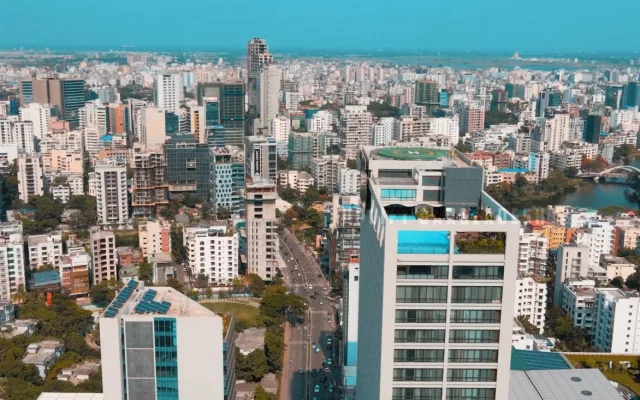
Dhaka is the capital of Bangladesh, home to the historic Lalbagh Fort and the Baitul Mukarram mosque. The city is also known for its countless rickshaws.
Chittagong
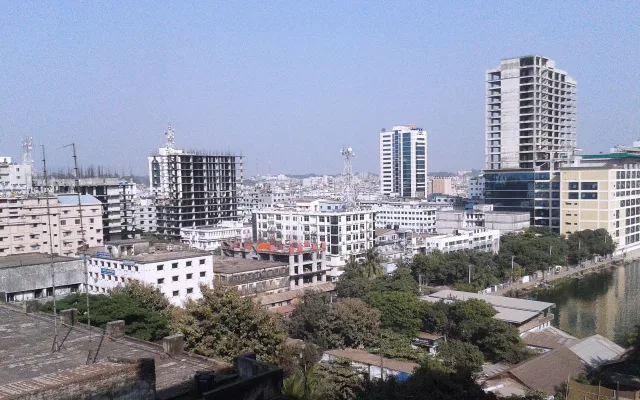
Chittagong is a major city in Bangladesh, known as the country's sea gateway. Nearby lie the shipbreaking yards and the tea plantations of Srimangal.
Cox's Bazar
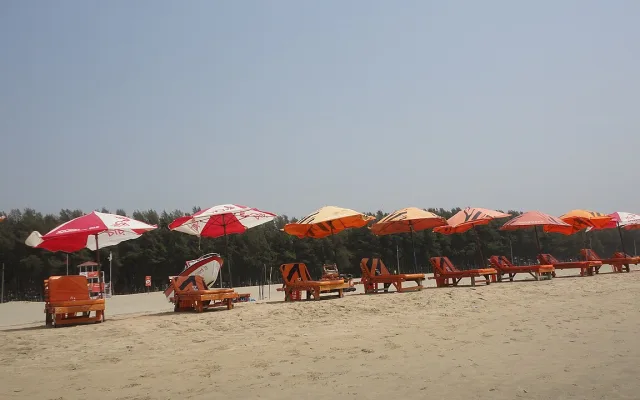
Cox's Bazar is known for its long natural beach stretching 120 kilometres along the coast of the Bay of Bengal.
What to see
#The Sundarbans: the mangrove forest where Bengal tigers and river dolphins still live wild. Multi-day organised boat tours are the only sensible way in, and they put you deep inside an emerald labyrinth of channels.
Shat Gombuj Mosque: the sixty-domed mosque at Bagerhat, a fifteenth-century masterpiece and a protected historic monument. Worth the trip for the sheer weight of the brickwork and the scale of the medieval city around it.
Old Dhaka: the Pink Palace and Lalbagh Fort preserve the Mughal era in the middle of the modern mess. Then take a boat across the Buriganga at Sadarghat, which gives you the most honest view of the city you will get.
St Martin's Island: the country's only coral island, with turquoise water and quiet, a long way from the noise of the mainland. Go for the seafood and the beach while it is still like this.
Paharpur: the ruins of a monastery in the north, the largest Buddhist monument south of the Himalayas. The eighth-century terracotta stupa justifies the long drive out to a genuinely remote district.
Panam City: an abandoned street of colonial mansions at Sonargaon that looks like a film set. You can wander the empty facades for hours picking out the details.
Prices
#Currency: the taka (BDT), at roughly 123 to the US dollar. Cash decides everything here, so change money at Dhaka airport on arrival or at the official bureaux in Gulshan.
Which notes: bring new 100 dollar bills, which always get a better rate than smaller denominations. Keep the exchange receipts, since you can be asked for them when leaving.
Cards: accepted rarely, mostly at expensive hotels and chain supermarkets. ATMs work with foreign cards but daily limits are often only a couple of hundred dollars, so withdraw regularly rather than relying on one big trip to a machine.
Small change: rickshaw drivers and tea stalls cannot break large notes. Break a big bill in a supermarket early and keep the small stuff for the street.
Tipping: a token 50 to 100 taka in restaurants, and rounding up for rickshaw pullers. It costs almost nothing and changes how you are treated.
| Item | Price (USD) |
|---|---|
| Street food (fuchka) | 0.50 |
| Biryani in a cafe | 2.00 |
| Street tea | 0.10 |
| Water, 1.5 l | 0.25 |
| Rickshaw, up to 2 km | 0.40 |
| CNG auto-rickshaw | 1.20 |
| SIM card with data | 3.00 |
| Train Dhaka to Sylhet | 4.00 |
| AC bus to Cox's Bazar | 6.00 |
| Domestic flight | 50.00 |
| Restaurant lunch | 8.00 |
| Guesthouse, per night | 12.00 |
| Lalbagh Fort entry | 1.50 |
| Boat at Sadarghat | 1.00 |
| Fruit, per kilo | 1.50 |
Getting around
#Rickshaws: the cycle rickshaw is the emblem of the country and the right tool for short distances through narrow lanes. For something faster, take a CNG, the three-wheeler running on gas behind a metal cage.
Buses: the backbone of intercity travel. Choose an air-conditioned coach from an established operator such as Green Line, which makes the state of the roads considerably more bearable.
Trains: the most atmospheric way to see the country from a window. First-class tickets sell out immediately, so buy three to five days ahead rather than turning up at the station.
River ferries: the overnight boat from Dhaka to Barisal, or a trip on one of the old paddle-wheel Rocket steamers, is a genuinely unusual experience. Book a private cabin so you can sleep and watch the delta go past.
Flights: internal services link Dhaka with Cox's Bazar and Chittagong in about an hour. If time matters more than money, this is the sane choice.
Apps: Pathao and Uber work well in the big cities for cars and motorbike taxis, which removes the haggling and fixes the fare in advance.
Traffic: Dhaka's jams are legendary and can lock the city solid for hours. Double every journey estimate, and accept that walking two kilometres sometimes beats sitting in the flow.
Where to stay
#Where to stay in Dhaka: Gulshan and Banani, the diplomatic districts, are the quietest and best served for restaurants. They are a long way in feel from the old city, which is exactly the point after a day out there.
Booking: international platforms cover only part of the market, so many guesthouses are found on local sites or arranged directly. Always get written confirmation, which immigration may ask to see.
Generators: ask whether the place has a backup generator before you commit. Power cuts are frequent, and a room without working air conditioning in this climate is uninhabitable.
Budget: dorm beds barely exist, but private guesthouse rooms run 10 to 15 dollars for a fan, a clean bed and basic comfort, which is enough for most nights.
Mosquito nets: check the windows and the bed before accepting a room. Mosquitoes are active all year and this is your first line of defence against dengue.
Chains: the international names in Dhaka start around 100 dollars and are poor value for an independent traveller. Local hotels with good reviews do the same job for a quarter of it.
Registration: your passport will be recorded at check-in. This is a standard control on foreign visitors and nothing to be concerned about.
What to eat
#Biryani: the dish to eat in Old Dhaka, spiced rice with mutton, cooked in enormous vessels over open fire. The legendary places such as Haji Biriani have been doing exactly one thing for decades.
Fuchka: crisp hollow shells filled with chickpea and sharp tamarind water, sold on every corner. Buy only where they are assembled in front of you, and never let anyone rinse anything in tap water.
Hilsa: the national fish, cooked in mustard sauce or baked in leaves. It is oily and full of fine bones, and worth ordering in a reputable restaurant in Sylhet or Chittagong rather than from a stall.
Mishti: Bengali milk sweets are genuinely world class. Roshogolla and sandesh come from dedicated shops, cost very little and belong with the evening tea.
Tea: milky, spiced and drunk everywhere from tiny glasses, and the centre of social life. Sugarcane juice is sold on the street but is a common source of stomach trouble.
Alcohol: the country follows strict Muslim rules, and drink is sold only at licensed bars in the larger hotels. Foreigners are served, at several times the usual price.
Right hand only: eat and pass food with it. Even using cutlery, keep to the convention out of respect.
Safety
#Traffic: the single biggest threat to you here is the roads, where rules are largely notional. Take real care crossing streets and think twice about open rickshaws on main highways.
Water: tap water is unsafe, including for brushing your teeth. Skip ice in drinks and pre-cut fruit, which is where most travellers' stomach infections come from.
Crowds: pickpocketing happens in busy parts of Dhaka and in markets, so hold your phone firmly. Expect also to be surrounded by curious people who simply want to look at you, which is harmless.
The Hill Tracts: visiting Bandarban and Rangamati districts requires a permit from the authorities, arranged in advance in Chittagong. Without it you will be turned back at the first checkpoint.
Insects: dengue and malaria are both present, particularly in rural areas and the forest. Use a strong repellent and sleep under a net.
Demonstrations: avoid political gatherings and rallies in the capital entirely, since situations escalate quickly. Follow the news and check your own government's travel advisory before and during the trip.
After dark: don't walk alone in unfamiliar areas at night. Use a ride-hailing app rather than flagging something down in the street.
Etiquette and culture
#Islam: religion sets the rhythm of the country, and the call to prayer sounds five times a day. During Ramadan many cafes close in daylight hours and behaviour is expected to be more restrained.
Dress: this is a conservative place. Men should avoid short shorts and vests in public, and women are strongly advised to cover shoulders and legs, including at the beach, however hot it is.
Attention: foreigners are still a novelty, so be ready for constant requests for photographs and conversation. People are overwhelmingly friendly and may follow you for a while out of pure curiosity.
The left hand: considered unclean, so hand over money and objects with your right. Public displays of affection are not done and attract disapproval, especially outside the capital.
Invitations: complete strangers will invite you for tea or to their home. This is real Bengali hospitality, but keep your judgement and decline politely if you are not comfortable.
Photography: always ask before photographing people, particularly women. Most men will happily pose, but military and government installations are strictly off limits.
Connectivity
#Grameenphone: the market leader, with masts even in remote villages and forest. If you are heading into the Sundarbans or the hills, this is the reliable choice.
Robi: often better value for data in the cities, and strong in Dhaka and Cox's Bazar, which is enough for maps and video calls.
Buying a SIM: you need your original passport with a valid visa, and your fingerprints are registered. The process takes about twenty minutes in an official shop and the line activates within a couple of hours.
eSIM: available from international providers and lets you land connected, skipping the queue. It costs more than a local bundle but is worth it for the first day.
Data prices: extremely cheap, with 10 to 20 GB for a month costing a couple of dollars. Top up at any street kiosk by giving the vendor your number.
Wi-Fi: rare and unreliable in budget guesthouses, and public hotspots barely exist. Plan to run everything from your own mobile data.
English: understood in the smarter districts of Dhaka and by anyone in tourism, much less so elsewhere. Download the Bengali pack for offline translation before you go.
Phrasebook
#| English | Bengali | Pronunciation |
|---|---|---|
| Peace be with you | আসসালামু আলাইকুম | as-sa-LAA-mu a-LAI-kum |
| Hello | হ্যালো | hel-LOH |
| Thank you | ধন্যবাদ | dhon-no-BAAD |
| Yes / No | হ্যাঁ / না | hyaa / naa |
| How much is it? | দাম কত? | daam KO-toh |
| That's expensive! | অনেক দাম! | o-NEK daam |
| Where is the hotel? | হোটেল কোথায়? | ho-TEL ko-THAI |
| Help | সাহায্য করুন | sha-HAJ-jo ko-RUN |
| Beautiful | সুন্দর | SHUN-dor |
| Very tasty | খুব মজা | khoob MO-jaa |
| Water | পানি | paa-NEE |
| Tea | চা | chaa |
| Let's go | চল | CHO-loh |
| Sorry | মাফ করবেন | maaf kor-BEN |
| Friend | বন্ধু | BON-dhu |
| Boss (slang) | মামু | maa-MOO |
| Brother (universal) | ভাই | bhai |
| I don't understand | আমি বুঝি না | AA-mi BOO-jhi naa |
| Stop | থামুন | thaa-MUN |
| OK / Fine | ঠিক আছে | thik AA-cheh |
Good to know
#Getting there: Dhaka is served from Europe and North America through the Gulf hubs, with Emirates via Dubai, Qatar Airways via Doha, Turkish via Istanbul and Etihad via Abu Dhabi, plus direct links from Singapore, Kuala Lumpur and Bangkok. Fares are lowest outside the winter high season.
Apps: Pathao or Uber for getting around safely, Shohoz for bus tickets, and offline Google Maps, which is what saves you in the lanes of Old Dhaka.
Plugs: a mixture of British and Indian socket types, so bring a universal adapter. Voltage spikes are common, and charging valuable kit through a power bank is safer.
When to go: winter, from November to February, when there is no rain and no extreme heat. Summer brings the monsoon and flooding, and spring pushes past forty degrees.
Health: pharmacies are everywhere but bring anything specific with you. A dust mask is genuinely useful in Dhaka, where air quality in the dry season is poor.
Water: drink bottled water constantly, with electrolytes in this climate. Check the seal on the cap every time and never accept a drink from an open container at a street stall.
Consular contacts: save the address and number of your own country's mission in Dhaka before you travel, since many embassies are concentrated in Gulshan.
Frequently asked questions
#Most nationalities do. Visa on arrival at Dhaka airport costs about 51 US dollars and takes 30 to 60 minutes, and you must show a return ticket and confirmed accommodation. Rules vary by passport, so check whether yours qualifies or needs a visa arranged in advance.
November to February, when the weather is dry and warm. The monsoon brings rain and flooding from summer, and spring temperatures climb above forty degrees.
Around 300 to 400 US dollars per person excluding flights. That covers simple hotels, buses and trains between cities and eating in local restaurants, which is where the food is best anyway.
It suits experienced travellers who take hygiene seriously and stay alert in crowds. The genuine risks are the traffic and political demonstrations, both of which are avoidable.
Grameenphone has the best rural and forest coverage; Robi offers better value in the cities. Either must be registered officially with your passport and fingerprints.
Dhaka, the Sundarbans mangroves, the tea gardens around Srimangal and the beach at Cox's Bazar make the standard route. Add the Buddhist ruins at Paharpur and the mosques of Bagerhat if the pace allows.
No, not even for brushing your teeth. Buy sealed bottled water and check the cap seal before paying.
Air-conditioned coaches from operators such as Green Line or Hanif are the practical default, with trains a more atmospheric alternative. Buy rail tickets several days ahead online or at the station.
Yes, but with restrictions. Registration is mandatory for a drone of any weight. You need CAAB approval; importing without it ends in confiscation. Rules for other countries are in the drone ranking by country.
Updated
The data on this page goes out of date. Visa rules and permitted stays, border requirements, prices and budgets, transport and local conditions all change fast, and we do not re-check every page every day. We show the date of our last check where we have one, but before you travel, verify with official sources: the country’s consulate, its immigration service, its e-visa portal and your carrier.