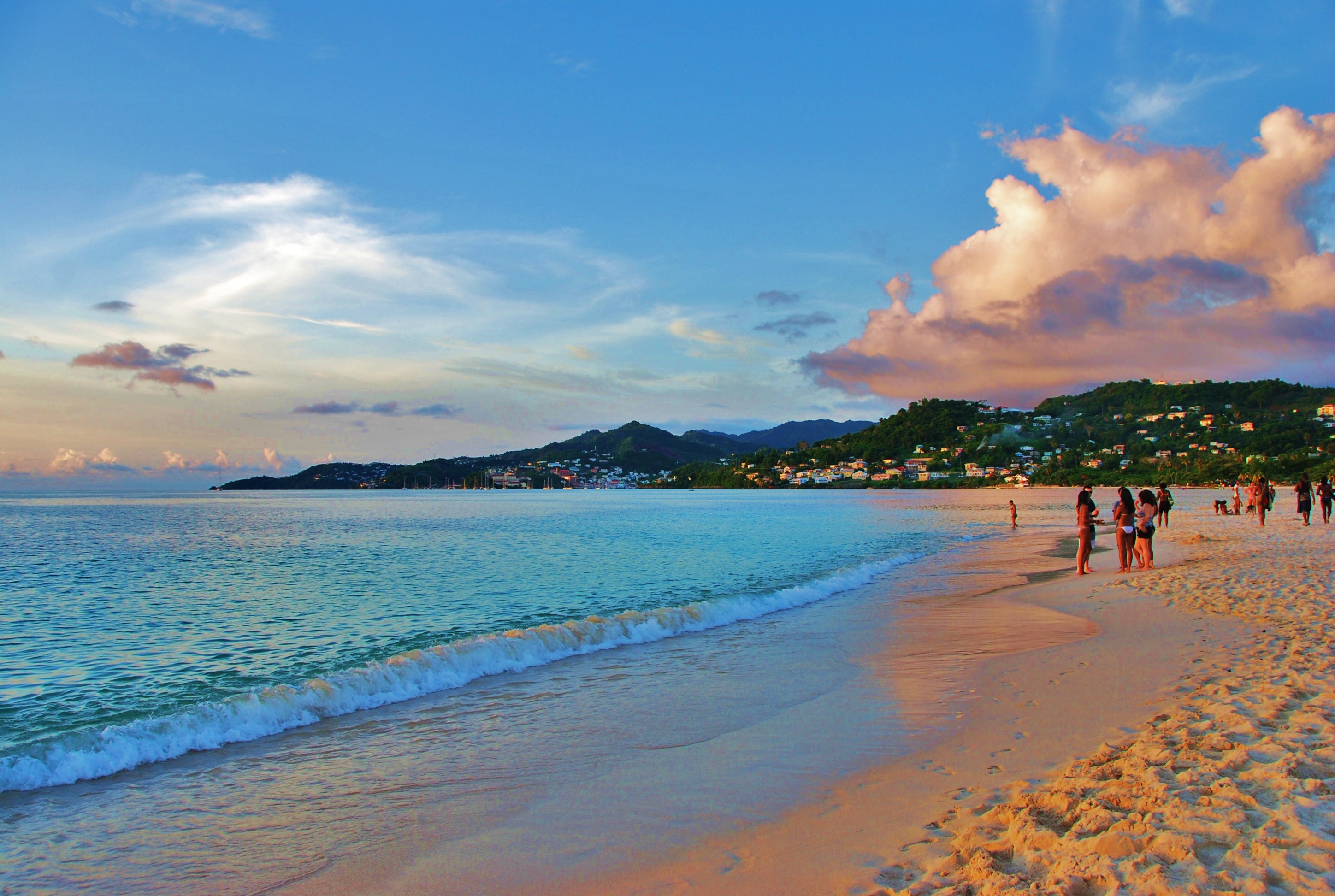

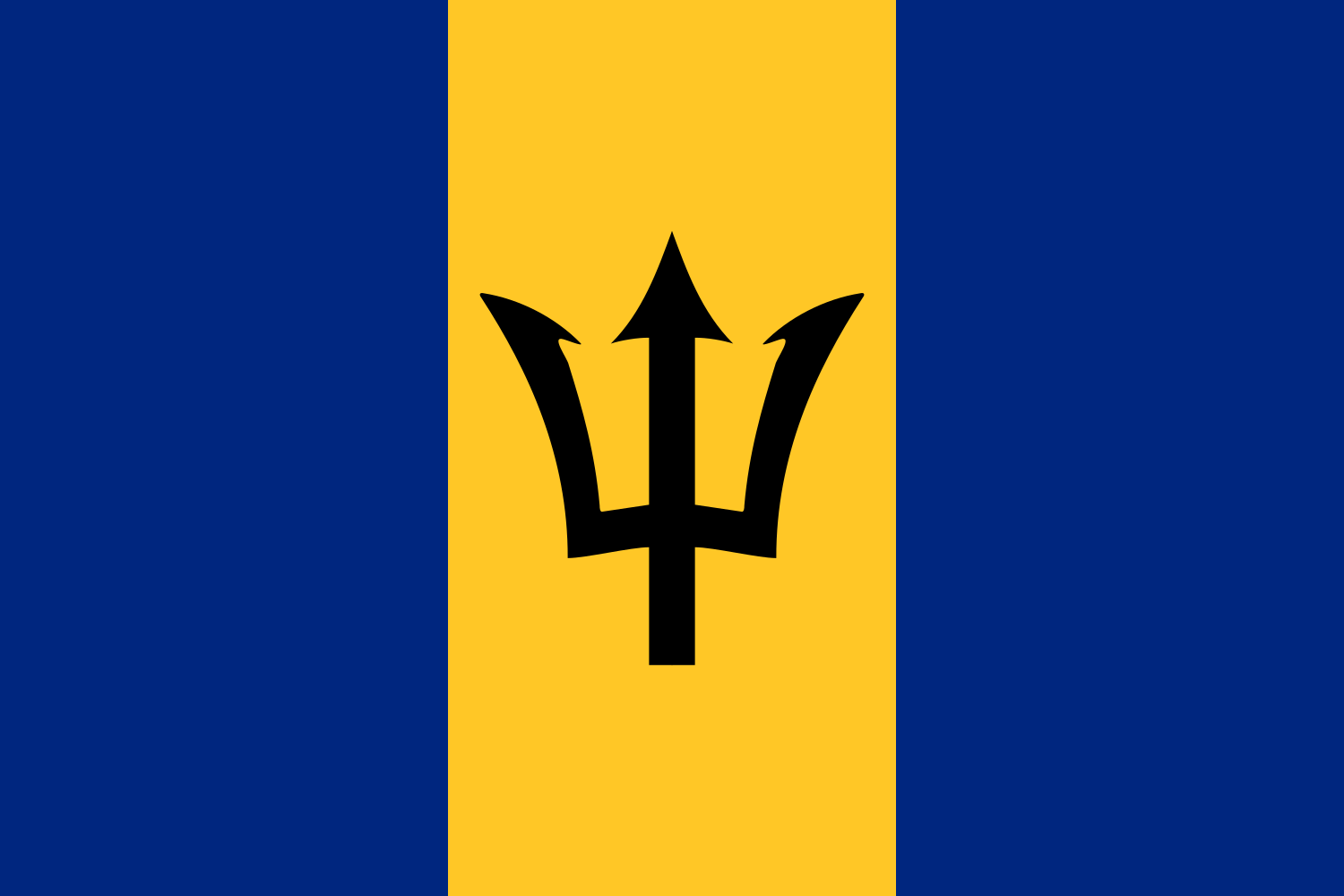
The easternmost island in the Caribbean — small but extraordinarily full. Barbados combines pink beaches on the south coast, dramatic Atlantic cliffs in the east and the colonial charm of Bridgetown. The island is known for Mount Gay rum, the oldest in the world, for cricket, for the Crop Over carnival and for an impeccable British inheritance. It is Rihanna's birthplace and one of the safest islands in the region.
Where to go
#Bridgetown
The capital and the island's front door, worth a day for its historic centre and the old Garrison, together inscribed on the UNESCO list. The Kensington Oval cricket ground is here, and the Careenage inlet is lined with boats, bars and the working end of the harbour.
Holetown
The heart of the west coast in Saint James parish. The first English settlers landed here in 1627, and today people come for calm water, snorkelling with sea turtles and the best sunsets on the island.
Speightstown
An old port town in the north, in Saint Peter. Where to go for Barbados without the resort polish: weathered shopfronts, a fish market and almost nobody else around.
Oistins
A fishing village on the south coast, famous for its Friday night fish fry. The day's catch is grilled on the street, music plays, and locals and visitors end up at the same table.
Bathsheba
A village on the wild Atlantic side, where huge boulders stand in the surf. Come for the landscape and the surfing, but do not swim: the currents here are genuinely dangerous.
St Lawrence Gap
A compact strip on the south coast holding the bars, restaurants and nightlife. It makes the best base for independent travellers, with cheaper rooms, buses in both directions and beaches within walking distance.
What to see
#Historic Bridgetown and its Garrison: the UNESCO-listed core of the capital. Walk from the parliament buildings and the Careenage out to the Garrison Savannah with its old barracks and parade ground, and the whole thing fits into a morning.
Harrison's Cave: the island's headline natural sight, a limestone system with underground waterfalls and streams. You see it from a small electric tram, and in high season tickets are worth booking ahead.
Mount Gay: the distillery tour shows how one of the oldest rums in the world is made, and finishes with a tasting. Buy the bottle here or in a supermarket rather than at the airport, where it costs considerably more.
The Atlantic coast: Bathsheba and the east look like the exact opposite of the postcard beaches on the other side. Boulders, spray and wind make it a place for walking and photographs rather than swimming.
Swimming with turtles: boats run from Holetown and Bridgetown out to the sea turtles off the Saint James coast, where the water stays calm nearly all year. It is the one excursion almost everyone rates.
Animal Flower Cave: at the northern tip, a cave that opens directly onto the ocean. You watch the waves hit the rocks through its openings, and there is a viewpoint above it.
Hunte's Gardens: a tropical gully in the middle of the island, planted and maintained with real care. Quiet, uncrowded and a good breather between longer drives.
Green monkeys: the wildlife reserve lets them roam freely and they are easiest to see at feeding time. Arrive at opening, before the cruise-ship coaches and while the animals are still active.
Prices
#Currency: the Barbadian dollar, pegged hard to the US dollar at exactly two to one. The mental arithmetic could not be simpler: halve the local price and you have the dollar figure.
US dollars: accepted essentially everywhere, in shops, cafes, taxis and on tours. Expect your change to come back in Barbadian dollars, which is normal practice rather than a trick.
Cards: Visa and Mastercard work in supermarkets, hotels and restaurants along the tourist coasts. Buses, rum shops, markets and the Friday fish fry at Oistins are cash only, so always carry small notes.
ATMs: bank machines are easy to find in Bridgetown, Holetown and along the south coast. Withdrawal fees are noticeable, so take out a larger amount less often rather than visiting a machine daily.
Tipping: a ten percent service charge is often already on the restaurant bill. If it is not, ten percent is the convention, and for taxi drivers and guides most people simply round up.
| Item | Price (USD) |
|---|---|
| Lunch at a local cafe | 12 |
| Dinner for two | 80 |
| Flying fish with cou-cou | 15 |
| A plate at the Oistins fry | 12 |
| Banks beer, 0.33 l | 3 |
| Bottle of Mount Gay rum | 15 |
| Water, 0.5 l | 1.5 |
| Coffee | 4 |
| Bus fare | 1.75 |
| Taxi from the airport | 30 |
| Car hire, per day | 60 |
| Petrol, per litre | 1.6 |
| Guesthouse, per night | 70 |
| Harrison's Cave entry | 30 |
| Mount Gay tour | 25 |
| Sun lounger with umbrella | 15 |
| Fridge magnet | 5 |
Getting around
#Blue buses: the government service covers the whole island at a single flat fare regardless of distance. Payment is cash only and drivers do not give change, so keep the exact amount ready.
Yellow ZR vans: the private minibuses with the bright stripe are the fastest and by far the loudest way to travel. They stop anywhere on request, fill well past comfortable and play music at volume.
Routes: almost every line runs through Bridgetown, so getting from the south coast to the west usually means changing in the capital. Travel in daylight, since services thin out considerably in the evening.
Taxis: there are no meters, so agree the price before getting in. Fares are regulated, and the simplest move is to ask your host what the run you want should cost.
Car hire: traffic keeps to the left, and a visitor needs a temporary local driving permit. The rental company normally issues it on the spot for a small fee, alongside your own licence.
Roads: the coastal routes are decent, but inland the lanes are narrow, winding and unmarked. Signposting is sparse, so download offline maps before setting off.
On foot: you can walk between neighbouring settlements along the south and west coasts. Elsewhere the distances and the heat make it hard work, and there are few pavements beside the main roads.
Where to stay
#The west coast: Saint James and the area around Holetown is the expensive end, full of villas and high-end hotels. For an independent traveller it is a better place to spend the afternoon than the night.
The south coast: Christ Church and St Lawrence Gap give the best balance of price and convenience, with buses running both ways and a far wider choice of rooms and places to eat.
Guesthouses: small family-run places are the sweet spot here, often a self-contained floor of a house with a kitchen, a fan or air conditioning and breakfast by arrangement.
Apartments: renting somewhere with a kitchen saves a serious amount, because supermarket prices are far below restaurant ones. For anything longer than a week it almost always beats a hotel.
Seasons: winter and the Crop Over period in late July and early August push prices up and rooms go months ahead. In the autumn rains, the same places cost a third to a half less.
Booking: the international platforms work normally, though many small guesthouses do not list live prices. Writing to the owner directly is often cheaper than going through an aggregator.
What to ask: confirm air conditioning, mosquito screens and the distance to the nearest bus stop. On this island those three matter more than a star rating or a sea view.
What to eat
#Flying fish and cou-cou: the national dish, served with a cornmeal and okra mash. You will find it in plain canteens and in expensive restaurants alike, and the plain canteens generally do it better.
The Friday fry: at Oistins, marlin, mahi-mahi and flying fish are grilled outdoors every Friday evening. It is simultaneously dinner and the social event of the week, and around seven is the time to arrive.
Sides: fish nearly always comes with macaroni pie, the local baked macaroni cheese, and fried plantain. Portions are large enough that one main course frequently does for two people.
Street food: buy where there is a queue of locals and where the fish is grilled in front of you. That is safe; pre-cut fruit sitting out in the heat is the thing to avoid.
Rum shops: tiny drinking shops are scattered across the island and function as village clubs. They serve rum, sell snacks and argue about cricket, and anyone is welcome to walk in.
Drinks: Banks beer goes down well in the heat and Mount Gay rum is the souvenir to take home. For something soft, try fresh sugarcane juice or coconut water straight from the nut.
Saturdays: many places cook pudding and souse, pickled pork with a local blood sausage. It is a distinctive dish and worth trying once, whatever you conclude afterwards.
Safety
#The general picture: Barbados is among the calmest islands in the Caribbean. Street crime is low and visitors are treated with warmth rather than hustle.
The Atlantic coast: around Bathsheba and along the whole east shore the currents and surf are severe. Swimming there is dangerous even for strong swimmers, so keep to walking the beach.
Sun: the tropical sun burns quickly, especially on the water and during your first days. High-factor cream, a hat and plenty of water are the minimum for any day out.
Camouflage: wearing camouflage-patterned clothing or accessories is prohibited for civilians in Barbados, and the rule applies to tourists. Items can be confiscated and a fine issued, so leave that print at home.
At night: central Bridgetown empties once the shops close, and it is not somewhere to wander alone. The south coast stays busy late, but even there a taxi beats walking back along an unlit road.
On the beach: do not leave bags or electronics unattended while you swim. Opportunistic theft happens on the busier stretches, particularly in high season.
Hurricanes: the official season runs June to November, peaking in late summer and September. If you travel then, follow the forecasts and take insurance that covers cancellation.
Etiquette and culture
#Bajan: islanders call themselves Bajan and you will hear the word constantly. People are courteous and unhurried, so open any exchange with a greeting rather than launching straight into a question.
Cricket: not merely a sport but part of the national identity, and the Kensington Oval in Bridgetown is close to sacred ground. Raising the subject will win you a conversation faster than anything else.
Crop Over: the festival marking the end of the sugar cane harvest runs through the summer and finishes with the Grand Kadooment carnival in early August. It is the event of the year and people prepare for months.
Sunday: a day for church and family lunch, with many shops and businesses shut. Plan a beach or a drive rather than shopping or anything that needs an office to be open.
Dress: swimwear and bare chests belong on the beach only. In town, in a shop and above all in a church, dress properly; doing otherwise draws visible disapproval.
Rum shop etiquette: these places are for conversation rather than for getting drunk. Behave calmly and show respect to older regulars and you will be treated as a guest rather than a tourist.
Music: beyond calypso and soca, the island is fiercely proud of Rihanna, who is a national figure here. Bridgetown has a street named after her, and locals will happily point you to it.
Connectivity
#Language: English is the official language, so there is no barrier for visitors. Among themselves islanders speak Bajan creole, which takes a while to tune into even if every word is technically English.
Operators: Flow and Digicel are the two networks, with shops at the airport and in the malls. You need your passport to register a SIM and the process takes about fifteen minutes.
Coverage: mobile signal is solid across the whole island, including the east coast and the inland parishes. A couple of gigabytes covers maps, messaging and calls home for a typical trip.
eSIM: if your phone supports it, activate a package before you fly and step off the plane already connected. It costs more than a local SIM but saves the queue.
Wi-Fi: free and generally decent in cafes, guesthouses and shopping centres. For working on the move, your own mobile data is simpler and more reliable.
Plugs: the island runs on 115 volts with US-style flat-pin sockets. Travellers from Europe, the UK and Australia need an adapter, and anything without a dual-voltage power supply needs a converter too.
Phrasebook
#| English | Bajan | Pronunciation |
|---|---|---|
| What's going on? | Wuh gine on? | wuh GINE on |
| Good morning | Good mornin' | good MOR-nin |
| Everything's fine | Everyting cool | EV-ry-ting cool |
| Thanks | Thanks | thanks |
| Please | Please | pleez |
| Yes / No | Yeah / Nah | yeah / nah |
| How much is that? | How much dat? | how much DAT |
| Where is...? | Wuh part is...? | wuh PART is |
| That's expensive | Dat dear | dat DEER |
| It's delicious | It sweet | it SWEET |
| Hanging out, relaxing | Limin' | LIME-in |
| You (plural) | Wunna | WUH-nah |
| Mate, friend | Muh partner | muh PART-nah |
| Good grief! | Cheese on bread! | cheez on BREAD |
| What a shame! | Wuhloss! | wuh-LOSS |
| Soon (meaning not soon) | Soon come | soon COME |
| Minibus | ZR van | zed-ar VAN |
| Drinking shop | Rum shop | RUM shop |
| Flying fish | Flying fish | FLY-ing fish |
| Help! | Help! | help |
| See you later | Later | LAY-tah |
Good to know
#Getting there: Grantley Adams International is well connected, with direct flights from London, Manchester, Miami, New York, Toronto and Panama City, plus regional hops around the eastern Caribbean. Fares are highest from December to April and drop sharply in the autumn.
When to go: the dry season from December to May is the best window. June to November brings rain and the official hurricane season, but also noticeably cheaper rooms.
Tap water: filtered naturally through coral limestone and considered very clean, and locals drink it straight from the tap. There is no need to buy bottled water here.
Driving permit: to hire a car you need a temporary local permit, which the rental company arranges. Bring your own licence, and remember that traffic keeps to the left.
Electricity: 115 volts and US-style sockets, so an adapter is essential for most visitors. Check that your chargers accept that voltage before plugging anything in.
Cash: always keep small notes for buses, rum shops and the fish fry. A small shop frequently has nothing with which to break a large bill.
Shopping: Mount Gay rum, the local yellow pepper sauce and Barbadian coffee cost far less in an ordinary supermarket than in the souvenir shops by the cruise terminal.
Planning: the island is small and it takes about ninety minutes to cross from south to north. A week is plenty, though allow extra time for journeys if you are relying on buses.
Frequently asked questions
#Many nationalities, including British, American, Canadian, Australian and most European passport holders, are admitted without a visa arranged in advance, with the length of stay set by the immigration officer on arrival. Check your own passport's position first, and be ready to show a return ticket and confirmed accommodation.
The Barbadian dollar, pegged to the US dollar at exactly two to one. US dollars are accepted almost everywhere, though your change will nearly always come back in Barbadian dollars.
Grantley Adams International has direct flights from London, Manchester, Miami, New York, Toronto and Panama City, along with regional connections across the eastern Caribbean. It is one of the easiest islands in the region to reach.
Blue government buses and yellow private ZR minibuses cover the island at a single flat fare. Payment is cash only, and since almost all routes pass through Bridgetown, a change in the capital is often unavoidable.
The calm water is on the west coast in Saint James and along the south coast. The Atlantic east coast around Bathsheba is spectacular to look at but dangerous to swim, because of strong currents.
December to May, the dry season, gives the most reliable weather. June to November is hurricane season, with cheaper accommodation and less predictable conditions.
Yes. The water is naturally filtered through coral limestone and is considered safe, and locals drink it unboiled. Buying bottled water is unnecessary.
Order flying fish with cou-cou, the national dish, and go to the Friday night fish fry at Oistins. For souvenirs, take Mount Gay rum and the local hot pepper sauce, and buy both in a supermarket rather than at the port.
Yes, but with restrictions. Registration is mandatory for a drone of any weight. Drone imports are suspended: you need an exemption, a customs declaration and a Telecommunications Unit licence (BBD 30). Rules for other countries are in the drone ranking by country.
Neither a national nor an international licence is enough — you need a local permit. Traffic drives on the left. Car rental starts at 21. A local driving permit is required, issued by rental firms or the police for a small fee. Rules for other countries are in the driving and rental table.
A foreign licence will not do for a bike — you need a local permit. Crucially, your licence must include category A. Category B is not enough — this is what catches most riders out. A helmet is compulsory. Bike rental usually starts at 18. Rules for other countries are in the driving and rental table.
Updated
The data on this page goes out of date. Visa rules and permitted stays, border requirements, prices and budgets, transport and local conditions all change fast, and we do not re-check every page every day. We show the date of our last check where we have one, but before you travel, verify with official sources: the country’s consulate, its immigration service, its e-visa portal and your carrier.