
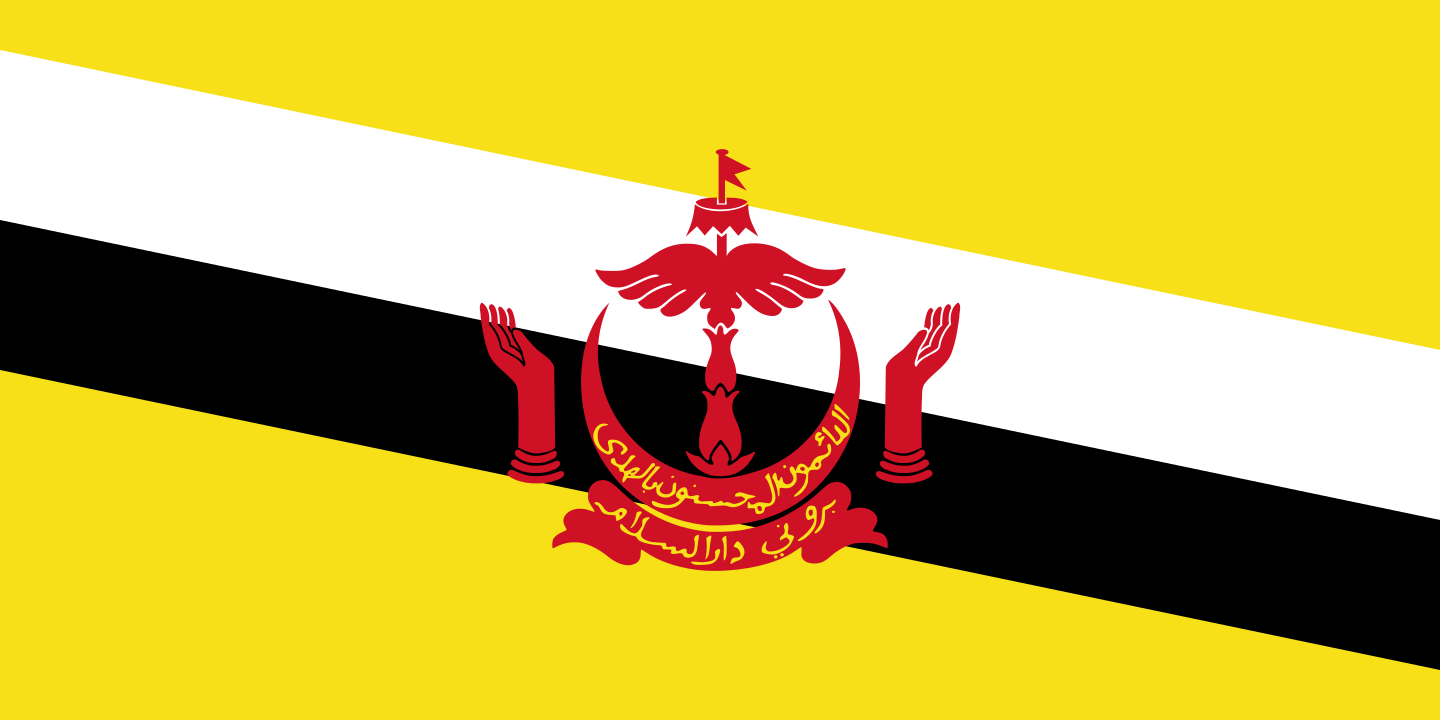
Safety in Brunei
A rating built from four independent indices, plus scams, laws and what to do when something happens
Rating calculated from the indices below
Indices checked on 10.08.2026
Position in global indices
Save these before you fly
The general picture
The general picture. Brunei is one of the safest countries in the world for an independent traveller. Street crime is essentially absent and evening walks are entirely comfortable.
Sharia law. The rules are strict and apply to visitors as well. Public displays of affection or disrespect towards religion can bring fines or immediate deportation.
Traffic. Drivers are courteous and actually stop for pedestrians, which is unusual for the region. The hazard is the absence of pavements in many places, leaving you walking on the verge.
Wildlife. Snakes and crocodiles live in the jungle and the mangroves. On boat trips keep your hands out of the water and follow the guide's instructions exactly.
Heat. The tropical sun is fierce, so sunscreen and a hat are not optional. Drink far more bottled water than feels necessary to stay ahead of dehydration.
Police. Patrols are rare because public order simply holds. If you need help, Bruneians are exceptionally willing and will often offer it before you ask.
Before you travel. Check your own government's advisory for the current legal position, particularly on conduct and prohibited items, and take out insurance that covers jungle excursions.
How tourists get scammed
Brunei is a quiet, wealthy and heavily regulated sultanate. Street crime is nearly absent, tourists are few, and there is nobody to cheat you.
Taxis. There are very few in the country, which is the main logistical difficulty. No meters; prices are agreed. The Dart app operates. Most visitors hire a car — getting around without one is hard.
Currency exchange. The Brunei dollar is firmly pegged to the Singapore dollar and accepted alongside it. There is nothing to cheat on.
Markets. The Gadong night market and the water village of Kampong Ayer — haggling is fine, but prices are low anyway.
Boatmen at Kampong Ayer. They offer a tour of the water village at a verbally quoted price. Agree in advance; the benchmark is low.
Brunei's defining feature for a visitor is not fraud but the fact that there is simply nothing to do in the evening: entertainment in the usual sense does not exist.
What gets you fined or jailed
The Sharia penal code. Since 2019 Brunei has applied Sharia criminal law in full. The code provides for extremely severe punishments, including death by stoning for adultery and same-sex relations. A moratorium on the death penalty is in place and no such sentences have been carried out, but the provisions remain in force. Some apply to non-Muslims too. This is not an abstraction but the framework within which to plan your behaviour.
Alcohol. Sale is prohibited entirely. A non-Muslim may import a limited quantity for personal use — normally two litres of spirits and twelve cans of beer — declared at the border. It may be consumed only in private, never in public.
Same-sex relations are criminalised with extremely severe penalties.
Dress. Modest everywhere. Women should cover shoulders and knees; mosques provide robes.
Ramadan. Strictly observed; eating in public during daylight is an offence for non-Muslims too.
Drugs. The death penalty for trafficking.
Photography. The Sultan's palace, military installations and people without permission are off limits.
Drones. Permission is required.
Health: vaccines, medicines, care
Vaccinations. None mandatory; a yellow fever certificate is required from arrivals out of endemic countries.
Water. Tap water in Bandar Seri Begawan is treated and broadly safe, though many people drink bottled.
Dengue. Present, with outbreaks. The mosquito bites by day and repellent is needed.
Heat and humidity. An equatorial climate: 32°C at over 85 percent humidity year-round. Dehydration arrives quickly.
Jungle. Ulu Temburong National Park is genuine rainforest: leeches, snakes and sudden downpours. Guided visits only, and rightly so.
Haze. During Indonesia's fire season, smog reaches Borneo and readings worsen for weeks.
Healthcare. Good standards, with the modern RIPAS hospital in the capital. Treatment for foreigners is chargeable. Serious cases go to Singapore. Insurance is needed.
Emergency numbers: 993 police, 991 ambulance, 995 fire.
Police: how to handle them
Brunei is a very safe country with near-zero street crime. It is calm at night everywhere.
Police. Correct, and English is widely spoken — it is the second official language.
Sharia police. A separate body enforcing religious norms: dress, conduct, Ramadan, and the closure of venues during Friday prayers. They are generally lenient with tourists, but do not count on it.
Reporting theft. Reports are taken; cases are rare.
Traffic police. Cameras exist and fines are issued. Petrol in Brunei is among the cheapest in the world and there are many cars.
What actually matters. Physical safety in Brunei is complete. All the risks for a foreigner are legal: alcohol in public, conduct during Ramadan, public displays of affection. The country is quiet but strict.
What else to check
The rating is built from open international indices and foreign-ministry advisories; links to the primary sources are in the cards above. Conditions change faster than annual reports come out — check current travel advice before you go.