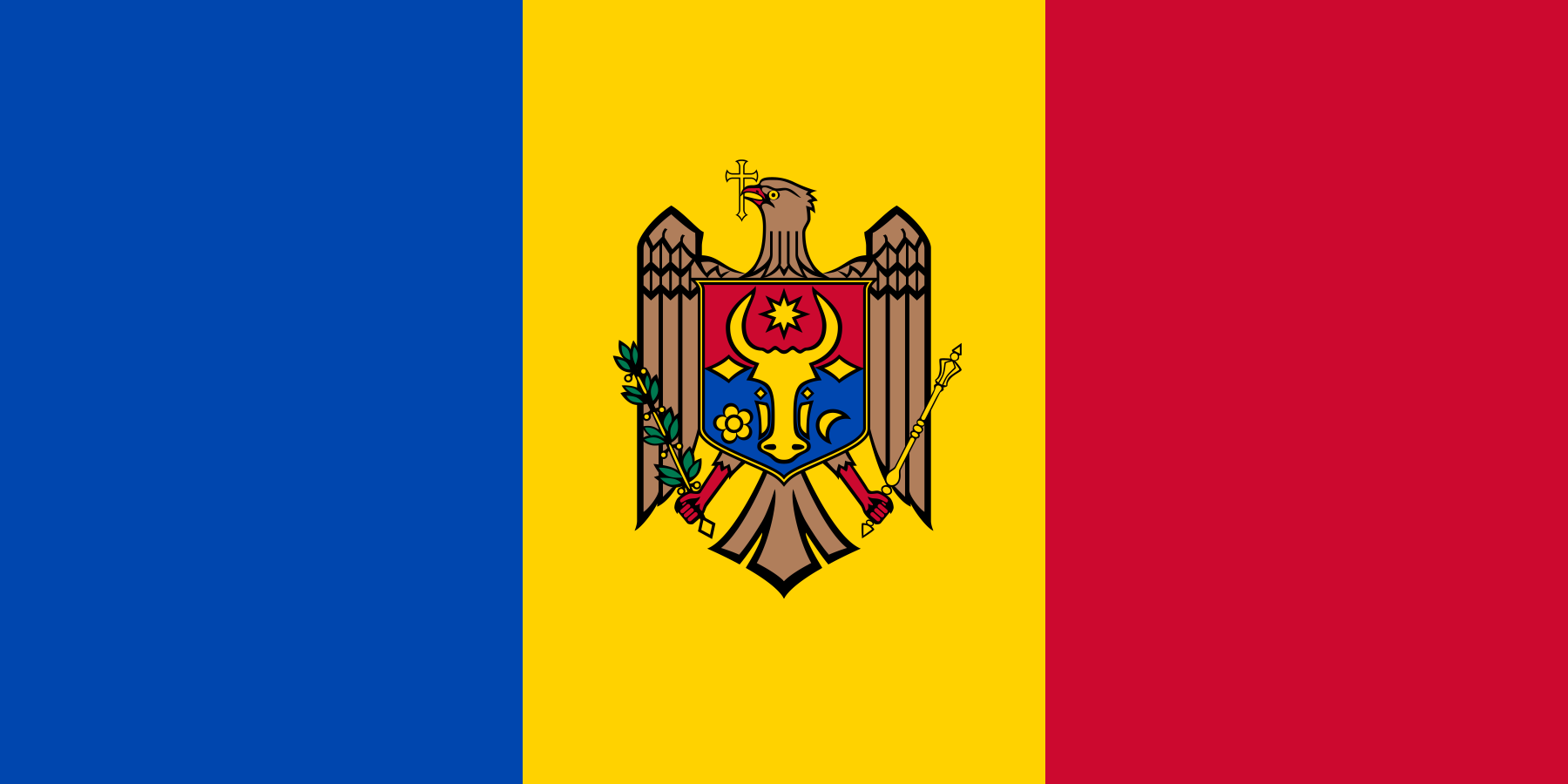
Moldova
MDThe least known country in Europe and one of the cheapest — Moldova surprises with vast wine cellars, Soviet heritage and remarkable hospitality. The underground galleries of Cricova and Mileștii Mici hold the largest wine collections in the world. Transnistria, an unrecognised republic with its own roubles and a Lenin on the main square, is a genuine trip back into the USSR. Russian is understood almost everywhere.
Where to go #
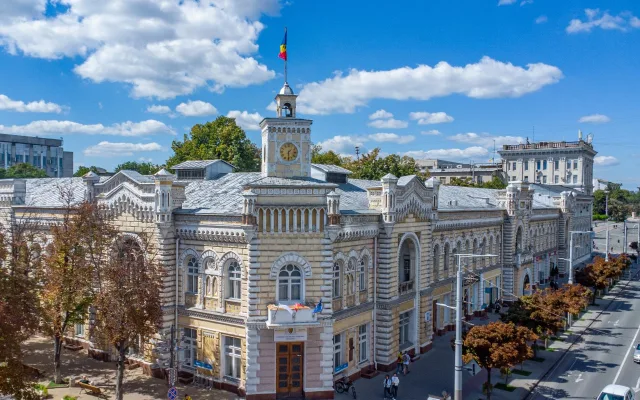
Chișinău
An underrated capital: Moldovan wine cellars within an hour of the centre, broad Soviet-era avenues, low prices and warm hospitality off the tourist trail.
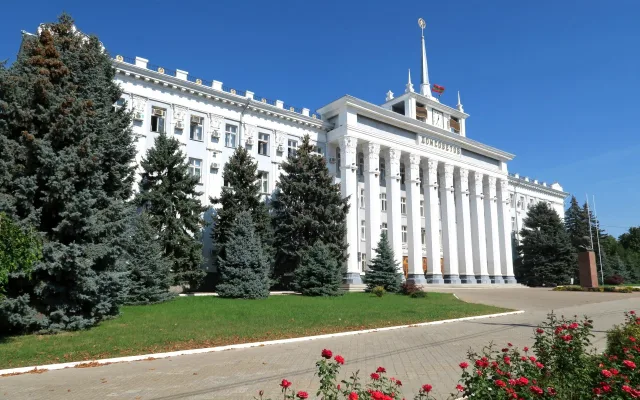
Tiraspol
The capital of the Pridnestrovian Moldavian Republic — Soviet-era monuments and the Kvint distillery.
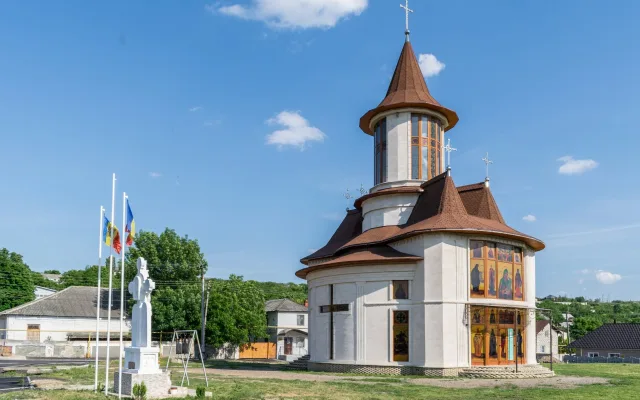
Orhei
Old Orhei is a cave monastery cut into a limestone cliff above a loop of the river Raut, alongside the ruins of a Golden Horde town, 55 km from Chisinau.
What to see #
Wine cellars: Cricova is a genuine underground city, with streets named Cabernet and Chardonnay that you drive along in a car. The scale of the collections eighty metres below ground impresses even people who do not much care about wine. Tours must be booked in advance.
A world record: The cellars at Milestii Mici are the longest in the world, running to some two hundred kilometres. Come for a tasting in the limestone galleries and a photograph beside the famous underground wine fountains. It is about half an hour from the capital.
Cave monastery: Orheiul Vechi is the country's signature sight, a thirteenth-century cave church cut above a bend in the Raut river. The atmosphere here is remarkable, with ancient ruins sitting alongside a living Moldovan village. Give yourself a full day.
Medieval fortress: Soroca citadel, perfectly circular, survives from the time of Stephen the Great. Seeing it in person is the only way to appreciate the mass of the stone walls that once guarded a key crossing of the Dniester.
Transnistria: A trip to Tiraspol and Bender drops you into 1990s aesthetics and Soviet monumentalism. In Bender, visit the restored Ottoman fortress, which looks like a set built for a historical film. Both are easy to combine in one day.
Village life: In Butuceni and Trebujeni, traditional farmsteads still make wine in their own cellars. Stay for lunch to eat food from a wood-fired oven in a real peasant courtyard under a grapevine. This is where you find the hospitality people talk about.
Prices #
Currency: The country runs on Moldovan lei (MDL). Transnistria uses its own rouble, which cannot be exchanged outside the region, so spend or convert it before you leave. Euros and dollars change easily at any bank or at the round-the-clock exchange booths in the city centre.
Cards: Visa and Mastercard work in supermarkets, chain restaurants and hotels in Chisinau without any trouble; American Express is rarely accepted. ATMs are plentiful in cities and Wise or Revolut cards work fine in them. Transnistria is largely cash-only.
Exchange: The best rates for cash euros are usually at branches of Moldova Agroindbank. Markets and anywhere outside the big towns take cash only, so keep a supply of small notes for buses and village shops.
Tipping: Around ten per cent is normal if you enjoyed the service. Some larger restaurants add service to the bill, so check the total before adding anything.
Budget: Moldova is one of the cheapest countries in Europe to travel in. Eating in local canteens and using trolleybuses keeps daily costs remarkably low, and even the wine tastings are modestly priced by Western standards.
| Item | Price (USD) |
|---|---|
| Cafe lunch | 4.50 |
| Dinner for two | 22.00 |
| Placinta from a street stall | 0.80 |
| Cappuccino | 1.60 |
| Bottle of wine in a shop | 5.50 |
| Local beer | 1.20 |
| Water 1.5l | 0.40 |
| Hostel bed | 11.00 |
| Guesthouse room | 28.00 |
| Trolleybus ride | 0.35 |
| Taxi across town | 3.80 |
| Litre of petrol | 1.45 |
| Economy car hire per day | 25.00 |
| Museum ticket | 2.50 |
Getting around #
Minibuses: Intercity minibuses are the workhorse of Moldovan travel, running frequently and roughly to timetable. Chisinau has three bus stations, North, South and Central, each serving different directions, so check which one your route leaves from before setting off.
City transport: The capital has an extensive trolleybus network and fares are almost nothing. Pay the conductor in cash or tap a contactless bank card on the validator, which makes it easy for visitors.
Car hire: For touring the wineries independently, a car is the obvious choice. Local agencies are considerably cheaper than the international chains and several will rent without holding a large deposit if you book online in advance.
Road conditions: Highways between the main cities are in reasonable shape, but village asphalt often turns to gravel without warning. Take care driving at night, since rural roads have essentially no lighting.
Taxi apps: Yandex Go operates reliably in the cities, and local apps such as iTaxi cover Chisinau too. A ride across the capital rarely costs more than a few dollars, and you can select cash payment if you prefer.
Trains: Domestic trains are infrequent and very slow, which makes them a charming period experience rather than a practical option. If you want to fit several places into one trip, take the minibus.
Where to stay #
Apartments: For longer stays, renting an apartment through local classified sites such as 999.md or makler.md is the best value going. You can find excellent flats in central Chisinau for considerably less than a chain hotel.
Rural guesthouses: Agritourism is thriving in the countryside, particularly around Orheiul Vechi. Staying in a traditional house with home-cooked breakfasts is the single best way to experience Moldovan hospitality and the quiet.
Booking: If you reserve through an international platform, read the most recent reviews. Some owners change check-in arrangements at short notice or ask to be paid in cash lei on arrival.
City hotels: The capital has a good number of boutique hotels in restored historic buildings, with proper service and very good breakfasts. Prices there sit at mid-range European capital level, which is high relative to everything else in the country.
Transnistria: Accommodation in Tiraspol is thinner, mostly older hotels and private flats. Note that registration in the region requires you to give the exact address where you are staying at the entry checkpoint.
Cheaper districts: Budget travellers should look at the Botanica or Buiucani districts of Chisinau. Both are leafy, well connected by trolleybus, and noticeably cheaper than the central blocks.
What to eat #
The staple: Mamaliga is a firm cornmeal polenta, traditionally cut with a thread and served with sheep's brinza cheese. It is the standard partner to meat and is best eaten in a village tavern rather than a city restaurant.
Pastries: Placinte and vertute are flatbread pastries filled with curd cheese, greens, potato or sour cherry. They are sold on every corner and make the cheapest and most satisfying snack in the country.
Soup: Try zeama, a light chicken soup with home-made noodles, soured with fermented bran kvass. It has a sharpness that catches people off guard, and it is regarded locally as the definitive restorative after a long day or a long tasting.
Grilled meat: Mititei are small skinless grilled sausages, heavy with garlic and spices. They arrive with hot mustard and fresh bread and are honest, simple food.
Wine: Wine here is part of the national identity rather than just a drink, and a great many families still make their own. In shops look for Feteasca Neagra or Rara Neagra to understand what the local grapes actually taste like.
Brandy: Moldovan divin is a high-quality oak-aged brandy. Kvint is the best-known producer, and a bottle makes a serious souvenir that will not embarrass you at home.
Safety #
Overall: Moldova is a calm country and visitors are treated warmly. You can walk the central streets of Chisinau late in the evening without concern, observing the usual basic precautions.
Roads: The biggest genuine risk here is the state of the road surface combined with unpredictable driving. Avoid night-time drives between towns, where deep potholes and missing road markings are common.
Transnistria: Despite its unrecognised status, the region is safe for ordinary visitors. Photographing soldiers or checkpoints is strictly forbidden; otherwise behave as you would in any other town. Keep the registration slip you receive at the checkpoint.
Pickpockets: Watch your wallet and phone on crowded minibuses and in the Chisinau markets. Robbery is rare, but petty theft in busy places is common enough to be worth thinking about.
Water: Tap water is not recommended for drinking; buy bottled water in supermarkets. Village wells are plentiful but their safety for an unaccustomed stomach is another matter.
Police: Officers are generally polite, though document checks do happen and the country has been under a state of emergency at various points. Carry your passport, avoid political arguments, and check your own government's travel advisory before travelling, particularly regarding the eastern border.
Etiquette and culture #
Hospitality: Moldovan hospitality is a real feature of daily life rather than a marketing line. An invitation into a home means an endless procession of dishes and home-made wine, and declining it too firmly can genuinely offend.
Wine Day: The first weekend of October is National Wine Day, when the whole country turns into one large fair. It is the best time to visit if you want folk dancing and access to rare bottlings in one place.
Martisor: On the first of March people give each other small red-and-white tokens to mark the start of spring. Moldovans wear them on their clothes all month, then tie them to the branches of flowering trees for luck.
Religion: Orthodoxy carries real weight, and the monasteries are living cultural centres rather than museums. Observe the dress code: women should cover their heads, and men should wear trousers rather than shorts.
Language: The official language is Romanian, and Russian is understood by almost everyone, especially in the cities. English is increasingly common among younger people in Chisinau but much less so with the older generation and in villages. A translation app is worth having.
Music: Moldovan folk music runs from the fast rhythms of the hora to the melancholy of the pan flute. Book a restaurant with live music at least once to see how thoroughly and cheerfully people here enjoy themselves.
Connectivity #
eSIM: The easiest way to stay online is to install an eSIM from Airalo or a similar provider before you fly. You land already connected, with no need to find a kiosk at the airport.
Local operators: For a local number, choose Orange or Moldcell. You need your passport to buy a SIM, data bundles are inexpensive, and 4G coverage is excellent across almost the whole country.
Transnistria: The region runs its own networks, so a Moldovan SIM may drop into expensive roaming or lose service entirely. If you plan to stay in Tiraspol more than a day, buy a temporary local card.
Internet speed: Moldova consistently ranks among the world leaders for internet speed and affordability. Free Wi-Fi is available in practically every cafe and hotel and in the central parks of the larger cities.
Apps: Download offline maps, because signal drops in the deep river canyons and underground in the wine cellars. Yandex Go covers taxis, and the local classified sites are where you find apartments.
Topping up: You can top up a local number at the payment terminals found in every supermarket. They take cash lei, so keep some notes aside for it.
Phrasebook #
| English | Romanian | Pronunciation |
|---|---|---|
| Hello (formal) | Buna ziua | BOO-nuh ZEE-wa |
| Hi / Cheers (slang) | Noroc | no-ROK |
| Thank you | Multumesc | mool-tsoo-MESK |
| Please | Va rog | vuh ROG |
| Yes / No | Da / Nu | da / noo |
| Sorry / excuse me | Scuzati | skoo-ZATS |
| How much is it? | Cat costa? | kut KOS-tuh |
| Expensive | Scump | skoomp |
| Delicious | Delicios | de-lee-CHOS |
| Where is the toilet? | Unde e toaleta? | OON-de ye twa-LE-ta |
| The bill, please | Nota, va rog | NO-ta vuh ROG |
| Wine | Vin | veen |
| Water | Apa | AH-puh |
| Good health! (toast) | Sanatate | suh-nuh-TA-te |
| Good | Bine | BEE-ne |
| I don't understand | Nu inteleg | noo un-tse-LEG |
| Goodbye | La revedere | la re-ve-DE-re |
| Help | Ajutor | a-zhoo-TOR |
| In a minute (slang) | Acus | a-KOOSH |
| Mate / bro (slang) | Frate | FRA-te |
| Do you speak English? | Vorbiti engleza? | vor-BEETS en-GLE-za |
| One more, please | Inca unul, va rog | UN-ka OO-nool vuh ROG |
Good to know #
Consular help: A number of countries keep embassies in Chisinau, mostly clustered along and around Stefan cel Mare boulevard, while others cover Moldova from Bucharest or Kyiv. Look up who represents your passport and save the contact details offline before you travel.
Power: Standard European type C and F sockets at 220 volts. Travellers from continental Europe need no adapter; visitors from the UK, US or Australia should pack one.
Opening hours: Most shops stay open until nine or ten in the evening and the larger supermarkets run around the clock. Museums generally close on Mondays, so plan gallery visits for midweek.
Shopping: The best souvenirs are wine, hand-thrown ceramics and embroidered ie shirts. Head for the Central Market or the specialist shops around the pedestrian street in the middle of Chisinau.
Pharmacies: Medicines here are good quality and many familiar drugs are available without prescription. The Felicia and Farmacia Familiei chains are everywhere and staff are usually helpful.
Weekend markets: Farmers' fairs open in many towns at weekends. This is the best chance to buy real home-made cheese, fresh honey and walnuts direct from the producers at proper local prices.