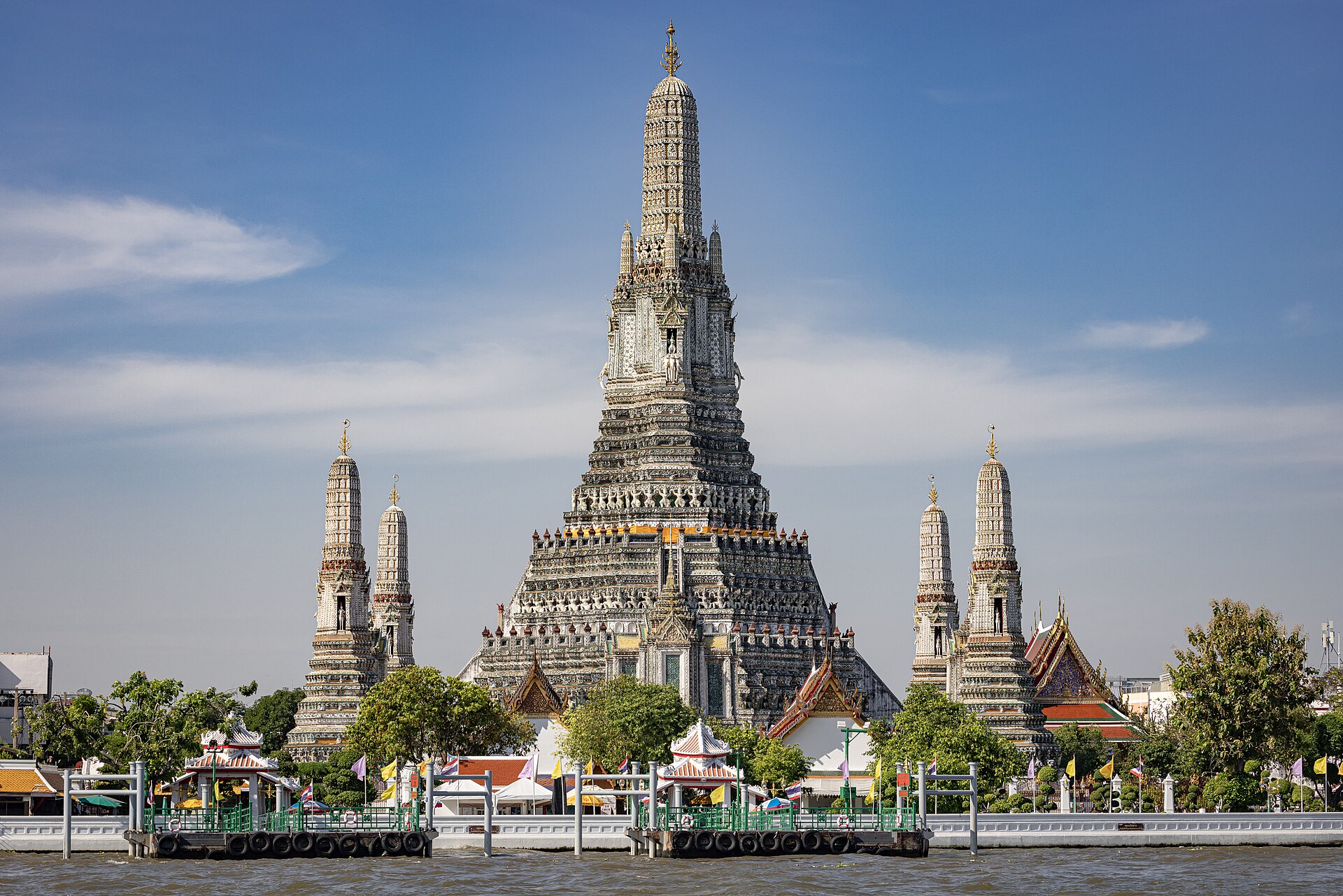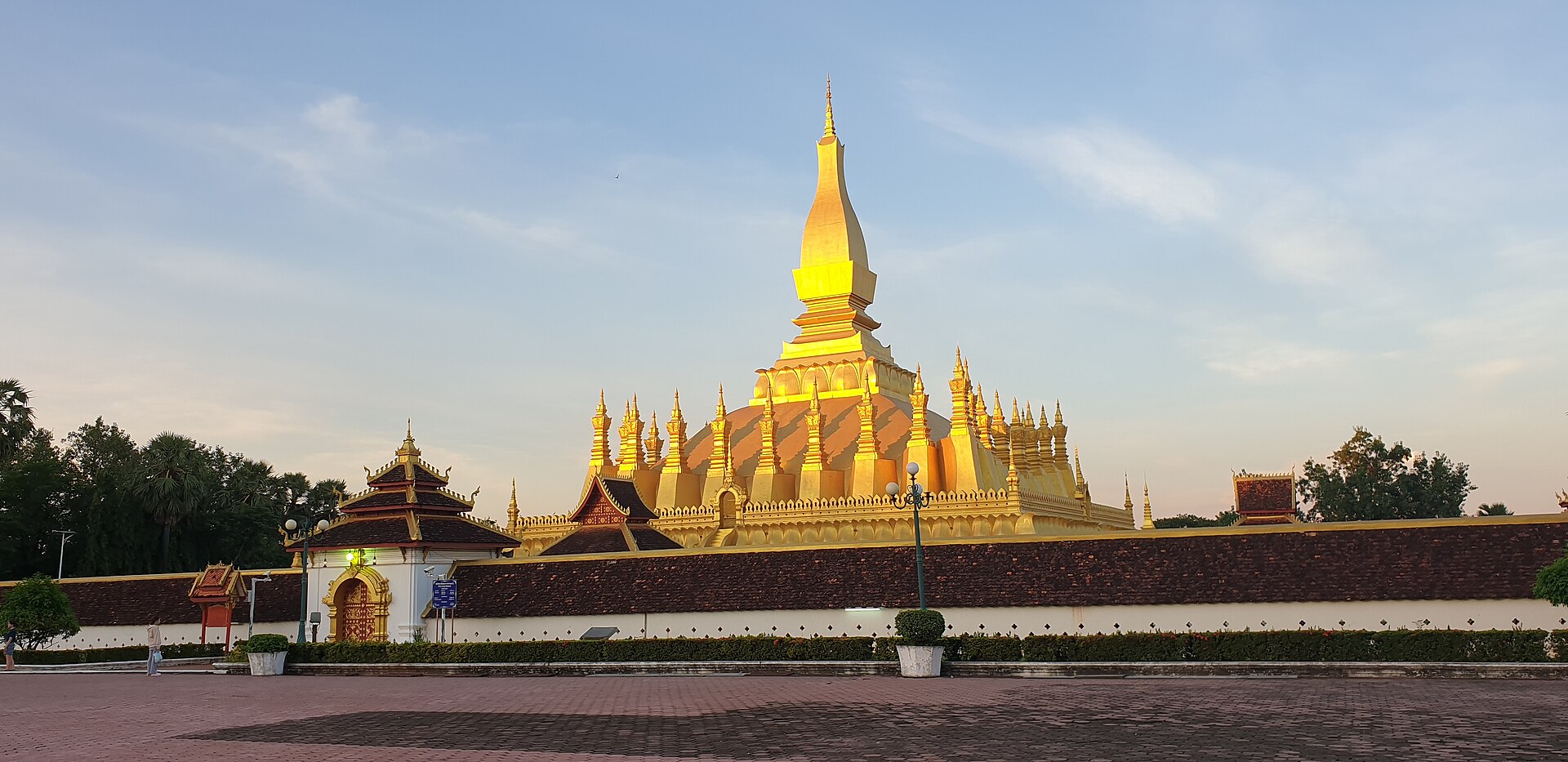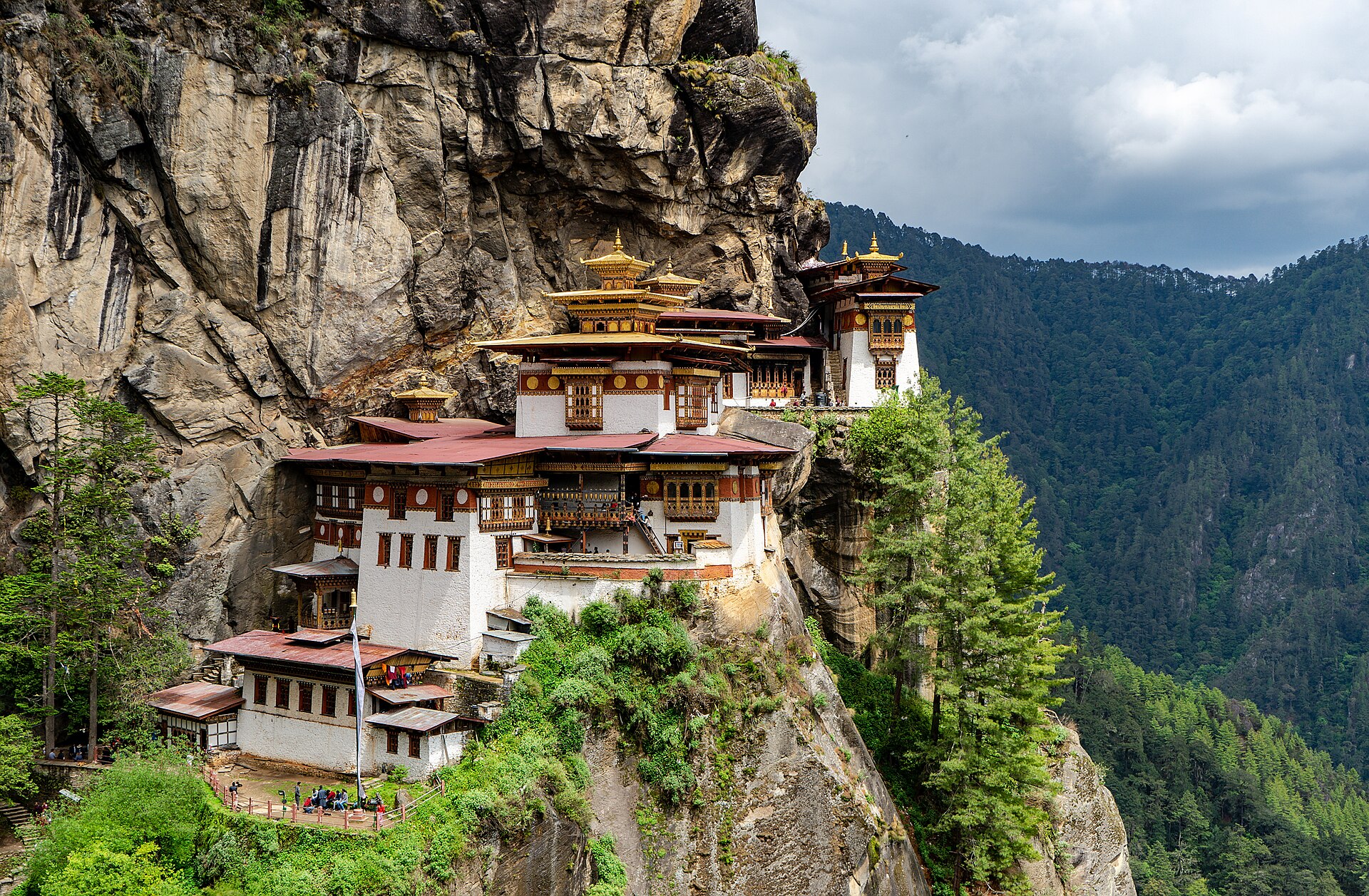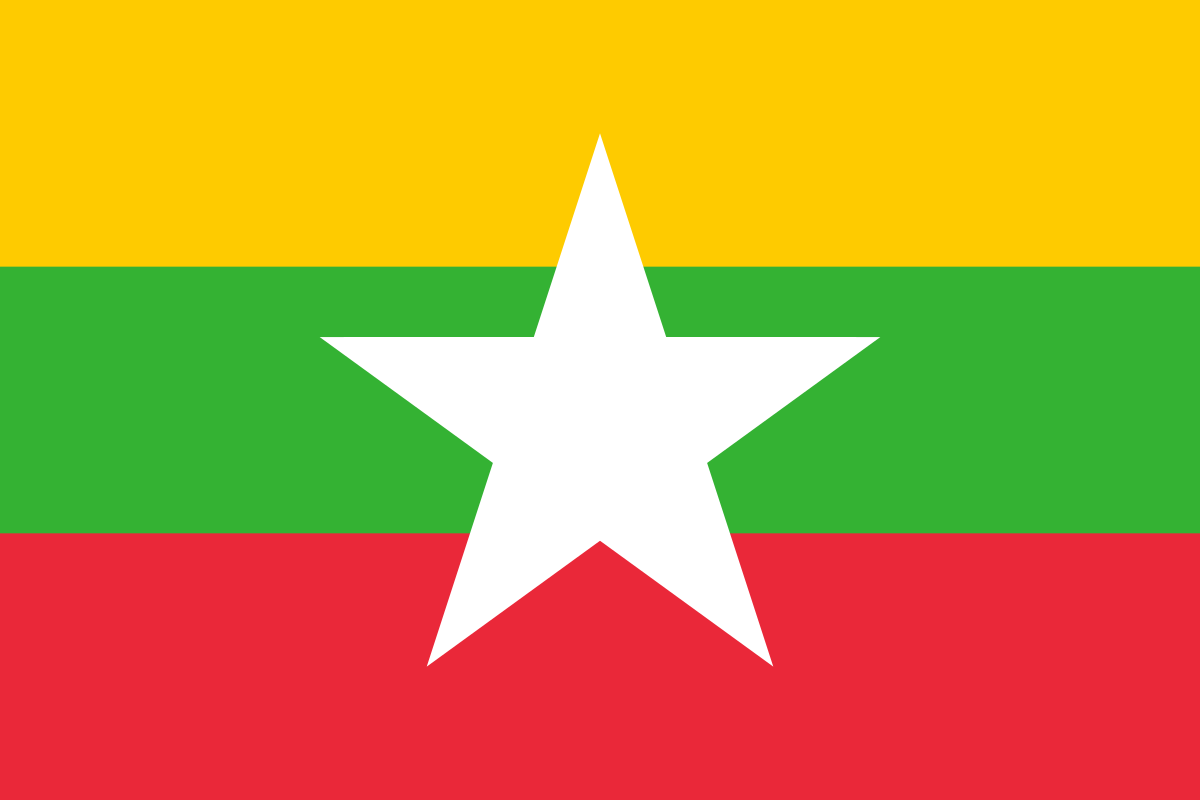
Myanmar
MMA country of golden pagodas, ancient temples and some of the most hospitable people in South-East Asia. Bagan with its thousands of Buddhist temples, Inle Lake with its floating villages and the great Shwedagon in Yangon make up a world suspended between past and present. Myanmar is among the cheapest destinations in the region, but it needs careful preparation because of the unstable political situation.
Where to go #
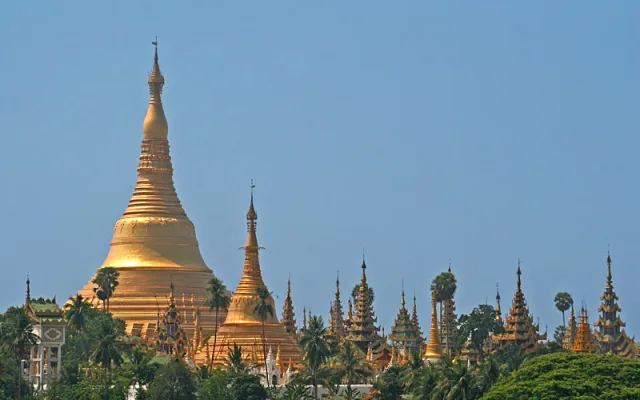
Yangon
Yangon is Myanmar's largest city: the Shwedagon Pagoda, the colonial downtown of old Rangoon, Bogyoke Aung San Market and the circular railway.
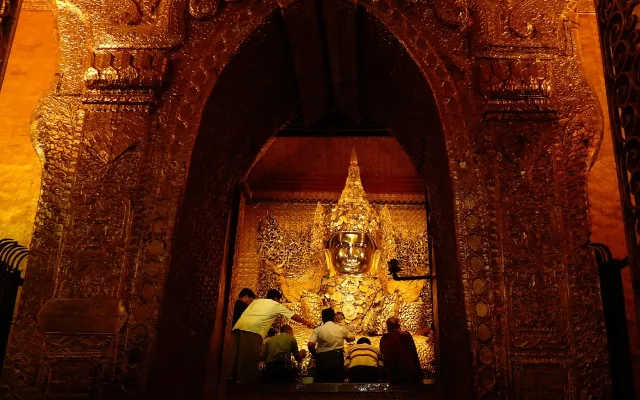
Mandalay
Myanmar's cultural capital: the royal palace, Mandalay Hill, craft workshops and the former capitals of Inwa, Sagaing and Amarapura.
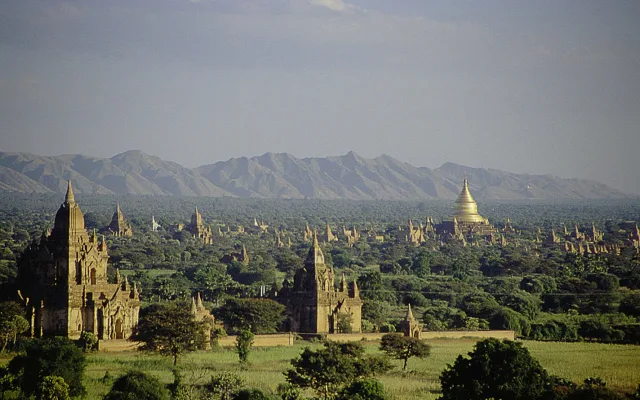
Bagan
The plain of temples — more than 2,200 Buddhist stupas among the scrub, and balloons over the mist at sunrise.
Ngapali
Myanmar's quietest beach — seven kilometres of white sand on the Bay of Bengal, with working fishing villages at either end.
What to see #
Shwedagon Pagoda. The country's principal shrine, best seen at sunset when the 99-metre gilded stupa starts to glow. Entry is around $6 and you go in barefoot, like everyone else.
Ancient Bagan. An archaeological zone spread over 40 square kilometres where you can visit dozens of brick temples in a day. An e-bike gives you complete freedom, and a balloon flight reveals just how vast the plain really is.
U Bein Bridge. A 1.2-kilometre teak walkway across Taungthaman Lake, and the source of the classic backlit photographs. A boat at sunset is effectively compulsory on any Mandalay itinerary.
Inle Lake. A whole world built on water, with floating vegetable gardens and monasteries on stilts. Book a boat for the full day out to Indein, passing through bamboo forest to reach the old pagodas.
The Golden Rock. The Kyaiktiyo boulder balances on the edge of a drop in apparent defiance of physics and is one of the country's most important pilgrimage sites. It is about five hours from Yangon, and the final climb is in the open back of a truck.
Mount Popa. An extinct volcano with a monastery on top of a sheer rock plug, reached by 771 steps. It is considered the home of the nat spirits, and on the road out from Bagan you can watch palm liquor being distilled.
Prices #
Currency: the local money is the kyat, and it comes with the defining oddity of the Burmese economy. The gap between the official rate and the real market rate has run to a factor of two or more.
Cash dollars: bring only crisp hundred-dollar bills issued after 2006. Any mark, stain or fold can get a note refused outright or exchanged at a punishing rate.
Cards: foreign Visa and Mastercard do not work here, because the banking system is cut off from international networks. There is no realistic ATM option either, so you must arrive with all the cash you intend to spend, which is a genuine planning constraint rather than an inconvenience.
Exchange: the best rates come from money changers in jewellery shops and the tourist districts of Yangon. Count every bundle on the spot, because 10,000 kyat notes add up to an enormous physical volume of cash.
| Item | Price (USD) |
|---|---|
| Meal at a food stall | 2.00 |
| Dinner in a café | 12.00 |
| Cup of tea | 0.20 |
| Bottle of beer | 1.00 |
| Litre of petrol | 1.10 |
| Night in a guesthouse | 20.00 |
| Night in a hotel | 45.00 |
| Grab taxi ride | 3.00 |
| Motorbike hire per day | 8.00 |
| Bagan zone entry | 7.00 |
| Balloon flight | 320.00 |
| Compulsory local insurance | 1.00 |
| SIM card | 4.00 |
| Kilo of mangoes | 1.50 |
| Local bus fare | 0.10 |
Getting around #
Getting in: Yangon is reached through the regional hubs, principally Bangkok, Singapore, Kuala Lumpur, Hanoi and Kunming, and there is no long-haul service from Europe or North America. Build the connection into your plan and expect a full travel day at each end.
VIP buses: the most comfortable way to move between cities, with JJ Express the best-known operator. Wide seats, blankets and snacks are standard, and an overnight run saves you the cost of a room.
Domestic flights: if time is short, Air KBZ or MAI fly the main routes. Yangon to Bagan is around $100, but it replaces ten hours on the road with one in the air.
Grab: in Yangon the app is indispensable for taxis at a fixed price. It removes the haggling entirely, and you can still pay the driver in cash.
E-bikes: in Bagan, petrol scooters are off limits to visitors, so everyone rides silent electric ones instead. A charge lasts a full day of temples and you can park right at the walls.
Trains: the rolling stock is old and extremely slow, lurching along broken track. It is worth doing for the experience alone, or for the run across the famous Gokteik viaduct in the north.
Boats and city buses: on Inle Lake a longtail boat is the only link between villages, and hiring one for a day costs $15-20 for the whole boat. In Yangon the YBS bus network costs almost nothing but is hard to decode; elsewhere tuk-tuks and bench-seat pickups do the job.
Where to stay #
Registration: by law visitors may only stay in licensed accommodation, which reports guest details to the police. Private rentals through the familiar Western platforms are often simply unavailable.
Guesthouses: the budget standard, where $15-20 gets a clean room with a fan and a simple breakfast. The shower may be down the corridor, but the hospitality generally outweighs the plumbing.
Hotels: in the bigger centres, $30-50 buys air conditioning and, crucially, a generator. That generator matters, because mains power is cut for six to eight hours a day on a rota.
Where to base yourself: in Yangon look at Chinatown or the area around Sule Pagoda, both walkable to food. In Bagan, Nyaung-U has the cheap cafés while Old Bagan puts you among the ruins.
What to expect: cheap rooms sometimes have no window at all, and colonial buildings have ceilings you could fly a kite in. Always check the mosquito net, since tropical mosquitoes here carry real diseases.
Booking: the Asian booking platforms list far more Myanmar properties than the global ones. Turning up and negotiating in cash on the spot is frequently cheaper still.
On the water: Inle Lake has hotels built on stilts over the water itself. They are expensive, but you watch the fishermen and the sunset from your own terrace.
What to eat #
Mohinga: a thick fish soup with rice noodles, and the national breakfast. Be careful buying it on the street, because in the heat and with unreliable refrigeration, ingredients spoil quickly.
Shan noodles: hugely popular, from Shan State, served either dry or in broth. They come with marinated chicken or pork, peanuts and herbs, and they are among the safest things you can order.
Tea leaf salad: laphet thoke is a genuinely unique dish of fermented tea leaves, fried garlic and beans. It has a stimulant effect, so it is a poor choice late in the evening if you want to sleep.
Burmese curry: quite unlike the Indian or Thai versions, less spicy and much oilier. A small portion of meat arrives with a mountain of rice, fresh vegetables and a dish of fermented fish paste.
Street food: in Yangon, 19th Street in Chinatown grills skewers of more or less everything in the evenings. It is the place to sit on a tiny plastic stool with a glass of draught beer.
Tea houses: the real centre of social life, where you order thick sweet tea with condensed milk. Free Chinese tea usually appears alongside it, plus a plate of snacks from which you pay only for what you eat.
Safety #
The overall situation: the political situation remains unstable, so keep your route to the established tourist areas. Avoid Rakhine and Kachin states, where armed conflict continues, and check your own government's travel advisory before booking anything.
Theft: street crime is low, but keep an eye on your pockets in crowded parts of Yangon. Do not pull out a thick wad of cash in an ordinary shop.
Checkpoints: travelling between cities by bus means document checks at military posts. Foreigners are generally treated politely; they look at the passport and the entry stamp and wave you on.
Health: medical care is weak and anything serious means flying to Thailand. Carry a reliable supply of rehydration salts, antidiarrhoeals, painkillers and dressings.
Mosquitoes: dengue is carried here, especially in the rainy season. Use high-DEET repellent and sleep under a net wherever one is provided.
Water: never drink from the tap, and do not use it for brushing your teeth either. Bottled water with an intact factory seal is sold everywhere and costs almost nothing.
Power cuts: rolling blackouts leave city streets very dark at night. Carry a torch or use your phone so you do not put a foot into a broken pavement or an open storm drain.
Etiquette and culture #
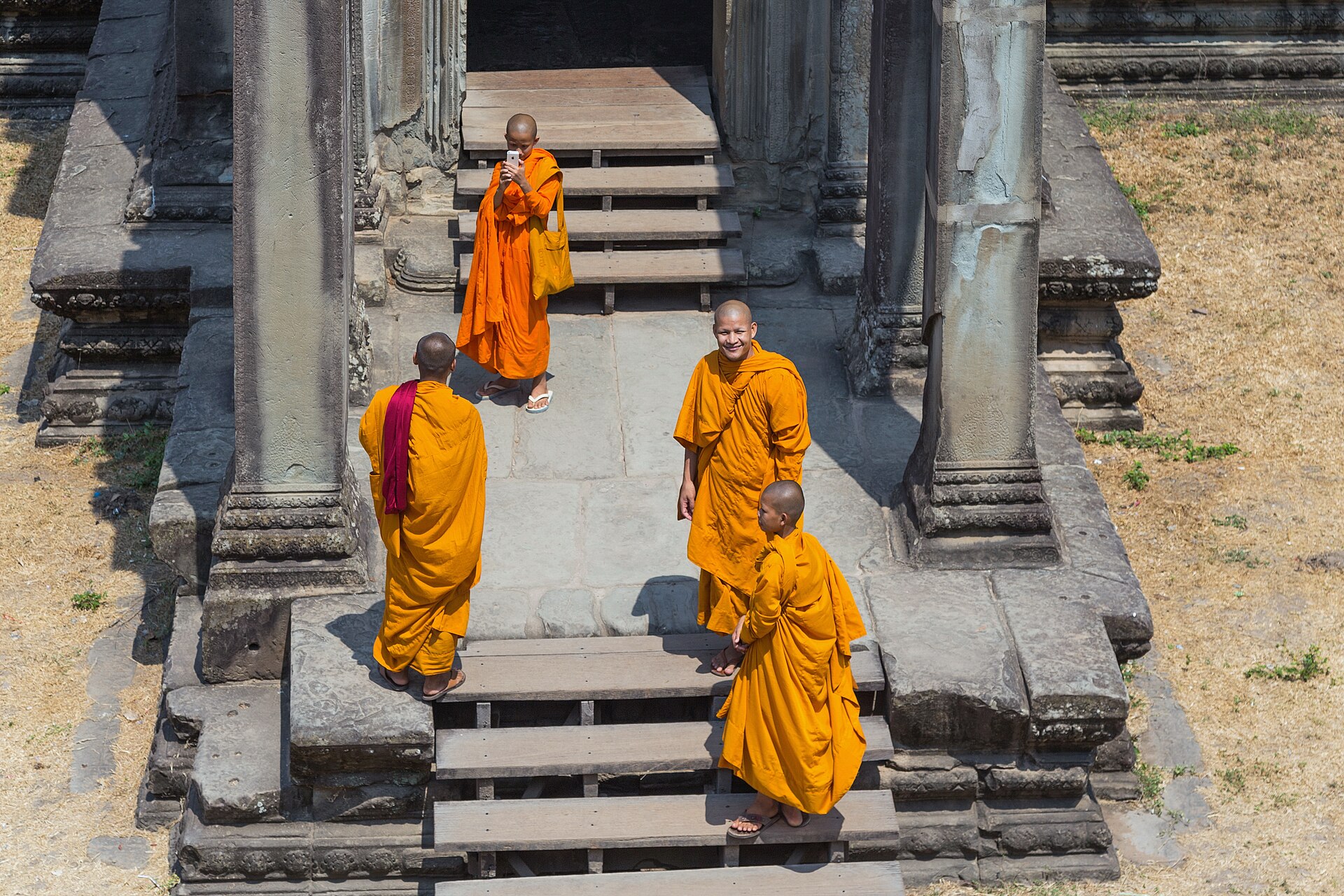
Religion: Buddhism runs through every part of life here, so treat the shrines with care. Never sit with your back to a Buddha image or point your feet at one, both of which cause real offence.
Shoes: you remove footwear completely, socks included, to enter any temple, pagoda or private home. Wear flip-flops that come off easily and carry wet wipes for your feet afterwards.
Dress: shoulders and knees must be covered in sacred places, men included. The easiest solution is to buy a longyi, the local wrap skirt, which is cooler than trousers and looks entirely appropriate.
Head and feet: the head is the most sacred part of the body, so do not pat children on the head. Feet are the opposite, so never put them on furniture or aim your soles at anyone.
Thanaka: the yellow paste you see on people's faces is ground bark used as both cosmetic and sunscreen. Put some on yourself if it is offered; Burmese people appreciate the interest.
Monks: every morning you can watch the alms round, with monks walking the streets carrying bowls. Photograph discreetly, do not block their path, and if you are a woman, do not touch their robes.
Tea and hospitality: Burmese people are remarkably open and will invite you to tea. If you are offered something, at least take a sip rather than refusing outright.
Connectivity #
SIM cards: buy an MPT or Ooredoo card at the airport on arrival. You need your passport, registration takes minutes, and a month's data package costs around $5.
Internet: the mobile network is reliable only in the cities and drops out repeatedly on the road. Guesthouse wifi is slow and depends entirely on whether the power is on.
Phone registration: the CEIR system limits foreigners to bringing in two devices. If you plan to use a local SIM for more than 30 days, the handset needs declaring at customs on entry.
Access: many familiar social networks are restricted inside the country. Install a couple of trusted VPN services before you fly, because their websites may be unreachable once you arrive.
Language: English is understood in tourist places and the larger Yangon hotels and almost nowhere else. In the provinces you will be communicating with gestures and an offline translator, so download the language pack in advance.
Offline maps: Maps.me works well in Myanmar and includes even minor pagodas in Bagan. It will get you around when there is no mobile data and point you towards temples nobody else is visiting.
Useful apps: install Grab for taxis and the bus operators' own apps, such as JJ Express, for tickets. It saves time and keeps you away from the middlemen at the bus stations.
Phrasebook #
| English | Burmese | Pronunciation |
|---|---|---|
| Hello | မင်္ဂလာပါ | min-ga-la-BAH |
| Thank you | ကျေးဇူးတင်ပါတယ် | cheh-ZOO tin-ba-DEH |
| Yes | ဟုတ်ကဲ့ | HOTE-keh |
| No | မဟုတ်ဘူး | ma-HOTE-boo |
| How much is it? | ဘယ်လောက်လဲ | beh-LOWK-leh |
| That's expensive! | ဈေးကြီးတယ် | zay-JEE-deh |
| Can you give a discount? | လျှော့ပေးပါဦး | shaw-PAY-ba-ohn |
| Where is the toilet? | အိမ်သာဘယ်မှာလဲ | ein-THA beh-MA-leh |
| Not spicy | မစပ်ဘူး | ma-SAT-boo |
| Delicious | အရသာရှိတယ် | a-ya-THA shi-DEH |
| Beer | ဘီယာ | bee-YAH |
| Water | ရေ | yay |
| Help! | ကူညီပါ | ku-NYEE-ba |
| Dangerous | အန္တရာယ်ရှိတယ် | an-da-YEH shi-DEH |
| Good-looking (slang) | လူချော | lu-CHAW |
| Friend | သူငယ်ချင်း | tha-nge-JIN |
| Where are we going? | ဘယ်သွားမလဲ | beh-TWA-ma-leh |
| Stop here | ဒီမှာရပ်ပါ | dee-MA yat-BA |
| OK, fine (slang) | ကောင်းပြီ | KOWN-bee |
| I don't understand | နားမလည်ဘူး | na-ma-LEH-boo |
| Sorry | တောင်းပန်ပါတယ် | town-BAN-ba-deh |
| Goodbye | သွားတော့မယ် | thwa-DAW-meh |
Good to know #
IMEI registration: a strict recent rule requires you to declare your phone's IMEI on entry. Skip it and the device can be blocked after a month of using a local SIM.
Blackout schedules: the energy crisis has taught Burmese people to live by a timetable. Ask your hotel when the power is on so you can charge phones and power banks before it goes off again.
Overrated and unwise: Ngapali beach currently sits in a risk area and should not be on your itinerary. Ngwe Saung is easier to reach, safer, and every bit as good for a few days by the sea.
Fuel: petrol shortages happen, which cancels buses and pushes taxi prices up. Keep a spare day in the plan for exactly this kind of disruption.
Temple floors: because everyone walks barefoot in the pagodas, skin infections are a real risk. Use antiseptic gel on your feet afterwards and avoid the wet patches of floor.
Balloons: flying over Bagan is expensive and books out months ahead. If the budget will not stretch, climb one of the viewing mounds instead, because watching the balloons go up is arguably the better picture.
Medical kit: local pharmacies frequently stock counterfeit or expired medicine. Bring your own rehydration salts, painkillers and plasters, since in this climate even a small cut takes a long time to heal.