 Города и дороги
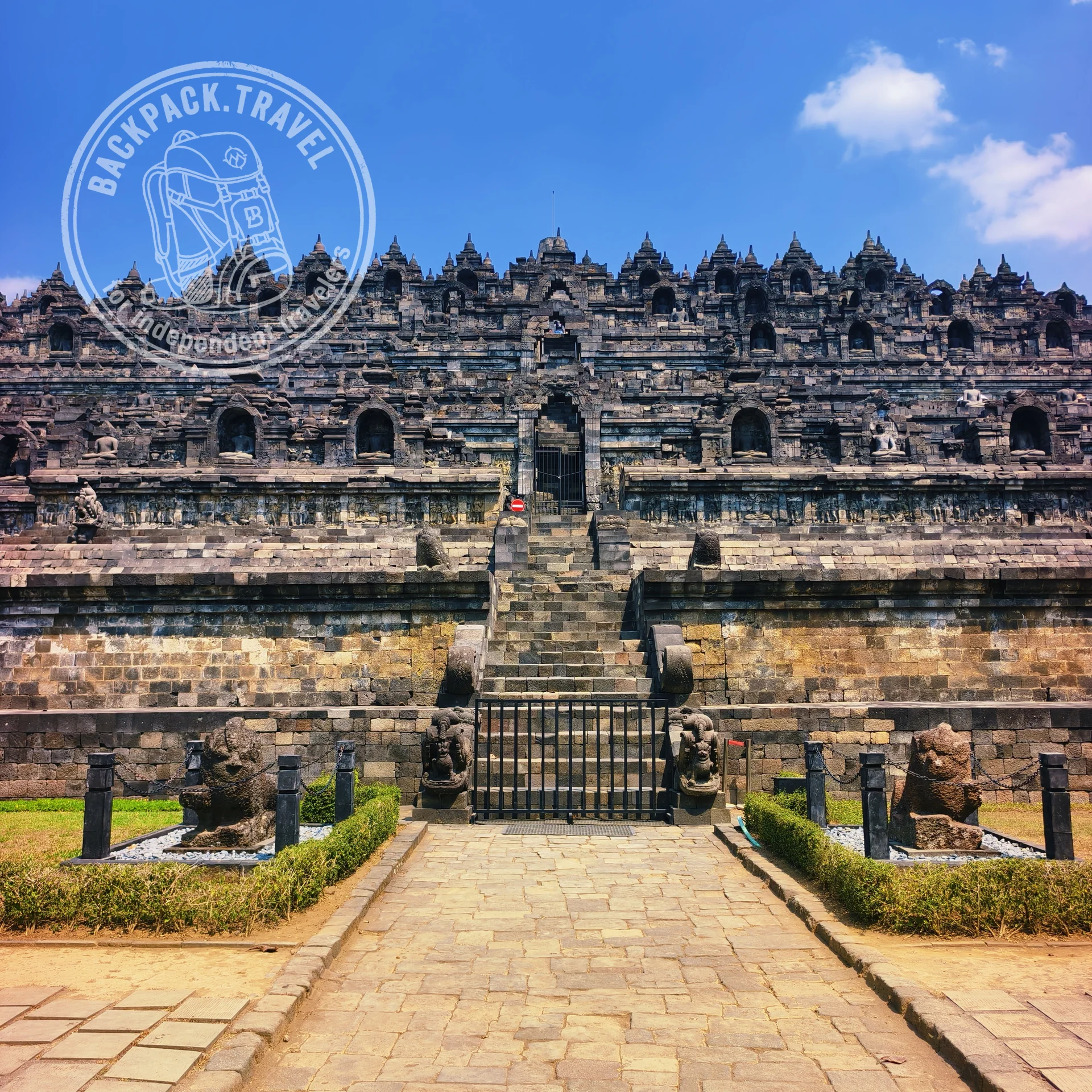
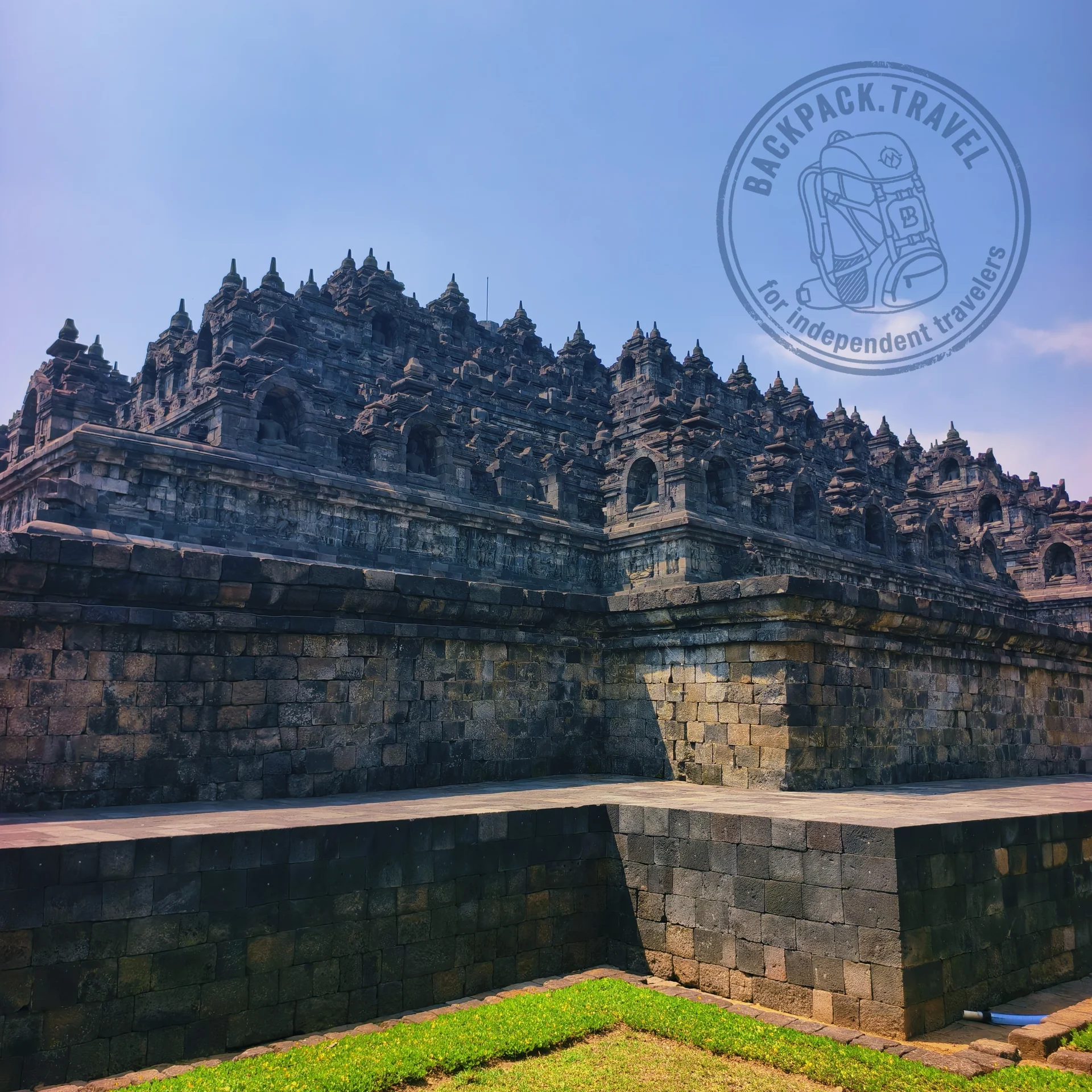
Borobudur is a Buddhist temple complex in the Kedu Valley of Central Java. It was built in the 8th and 9th centuries under the Sailendra dynasty, and the compound was inscribed on UNESCO’s World Heritage List in 1991. At its centre is not a conventional building with an interior hall but a monumental stone structure shaped like a stepped mountain. Visitors move upward from square terraces to circular platforms and, finally, the central stupa.
Five square terraces form the lower levels, with galleries and balustrades carved in relief. UNESCO estimates the total surface of this sculpture at about 2,500 square metres. The scenes draw on Buddhist teachings, the life of the Buddha and the consequences of human actions. Part of the original base is now enclosed by masonry, while exposed sections preserve a glimpse of the scale of the original sculptural programme.
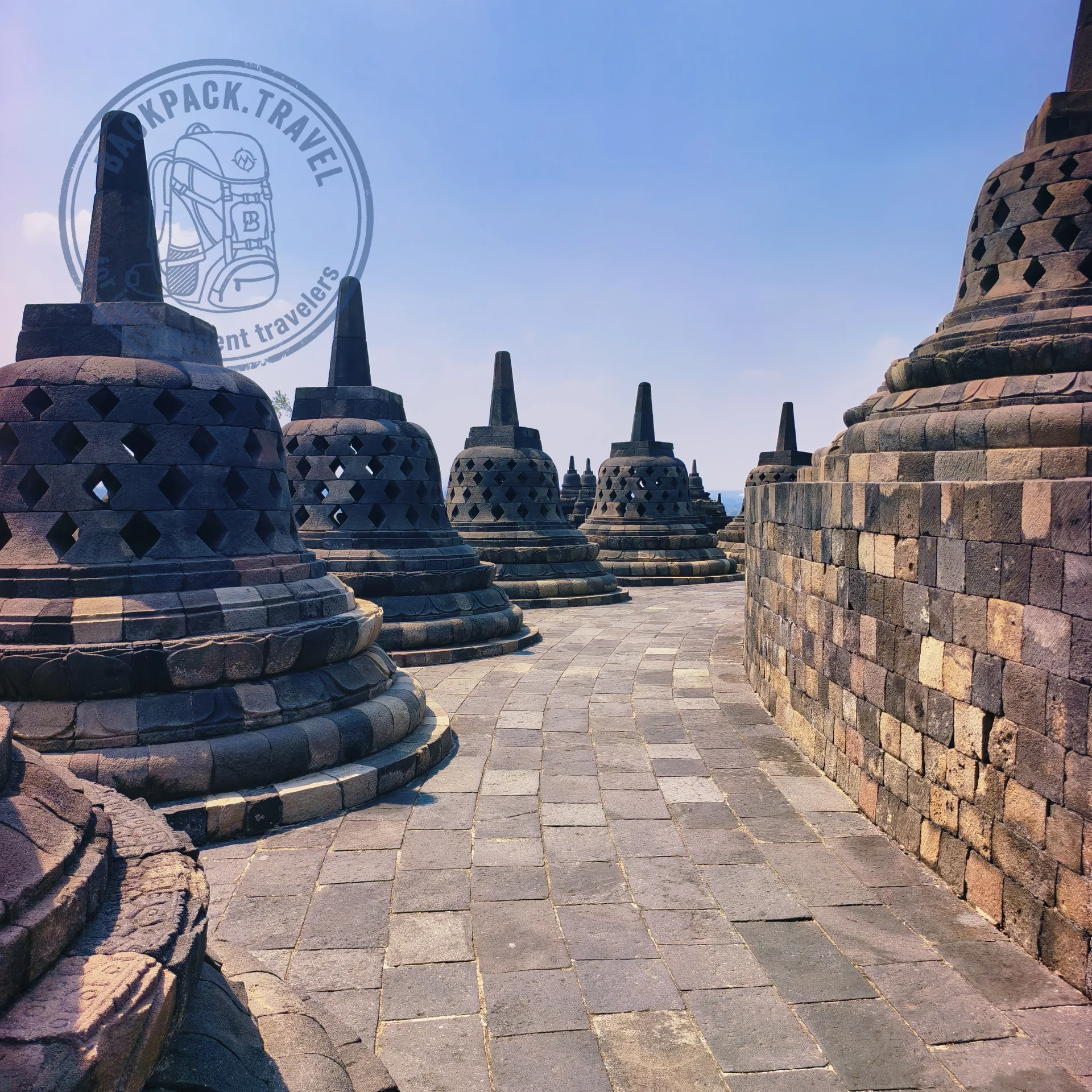
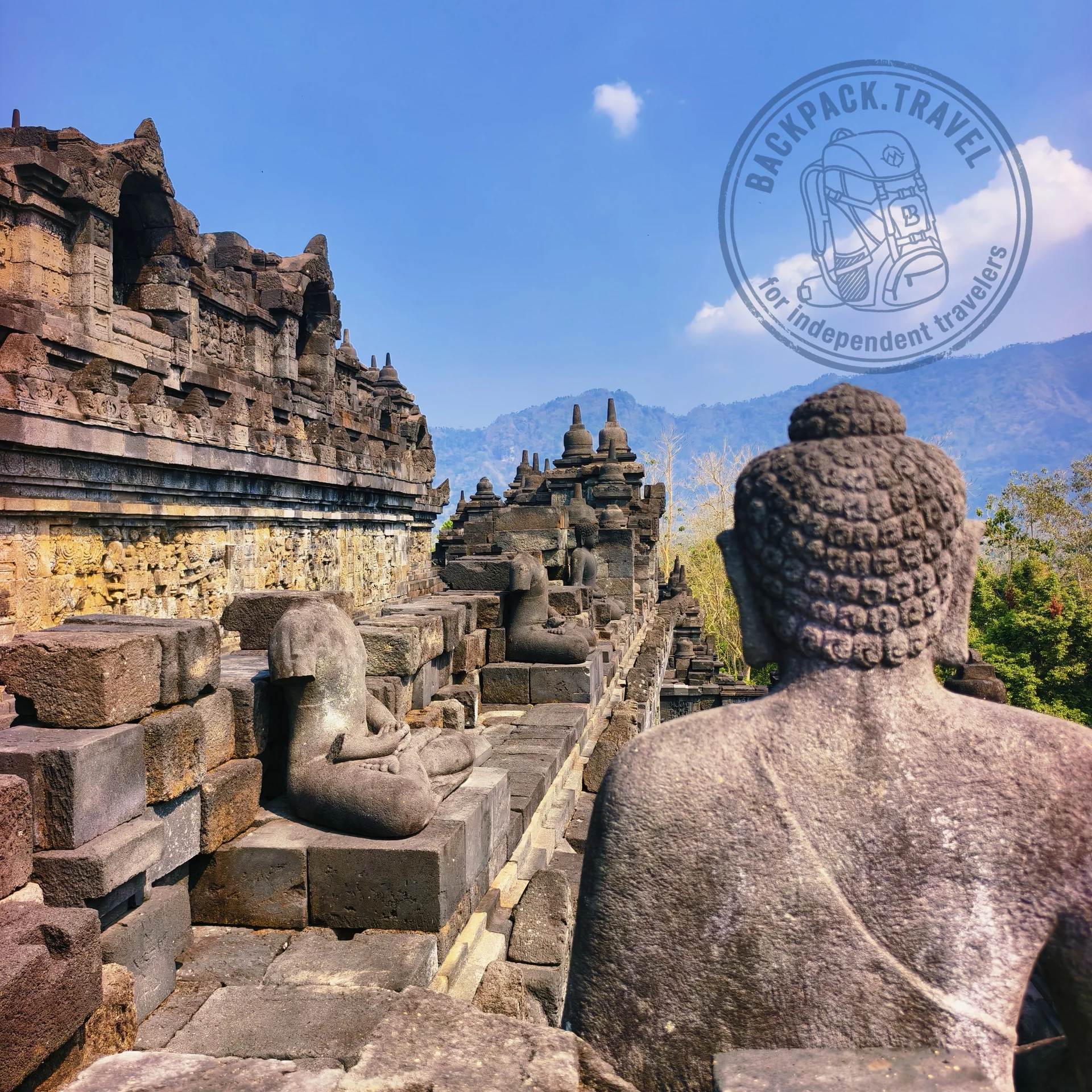
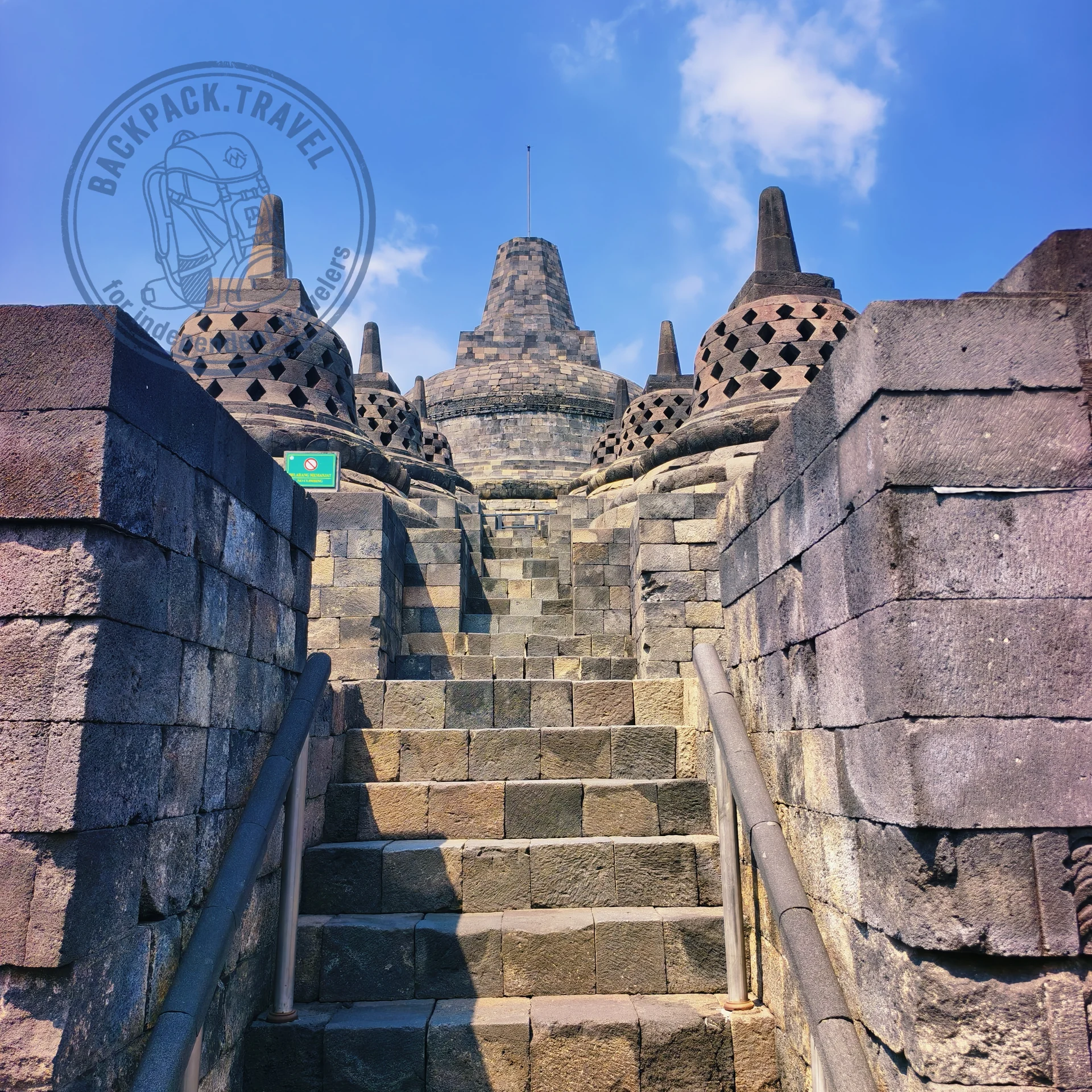
Above the square galleries are three circular terraces. They hold 72 perforated, bell-shaped stupas, each enclosing a Buddha statue, arranged around a larger central stupa. The atmosphere changes as the walls give way to open views, repeated stone silhouettes and the surrounding plain. The combination of stupa, temple and sacred-mountain form sets Borobudur apart even among the major Buddhist monuments of Southeast Asia.
UNESCO interprets the vertical arrangement through Buddhist cosmology: the square and circular levels are associated with different realms of existence and a progression toward liberation. The idea is expressed in the visitor’s route as well as in the architecture. Moving upward brings the relief galleries, Buddha niches, openwork stupas and central dome into view in sequence, so the monument rewards a slower visit focused on each level rather than a single look from the ground.
The World Heritage property also includes Mendut and Pawon temples, east of Borobudur. The main monument underwent major restoration, including an international campaign under UNESCO auspices in the 1970s. Today it serves both as an archaeological site and an active Buddhist pilgrimage destination. Check current access rules and visiting hours before travelling, especially if you plan to climb the upper terraces: entry arrangements can change, and the stone steps call for comfortable shoes and enough time.
- Address
- Magelang, Central Java, Indonesia
On the map
Reviews (0)
No reviews yet. Be the first!
Updated