 Города и дороги
Description
A city in eastern Anatolia below Harput, whose castle on a cliff edge goes back to Urartian times and looks out over the Keban reservoir on the Euphrates. The town itself dates only from the 1860s.
Wiki
Elazığ is a city in eastern Anatolia, about four hundred thousand people, standing on a plain between the Taurus ranges and the Keban reservoir. The city itself is new: it was founded in the 1860s, when the people of old Harput started being resettled down from the mountain, and it was named Mamuretülaziz after Sultan Abdülaziz, later shortened to its present name. Everything of interest stayed up above, in Harput, five kilometres from the centre.
Why come and what to actually see
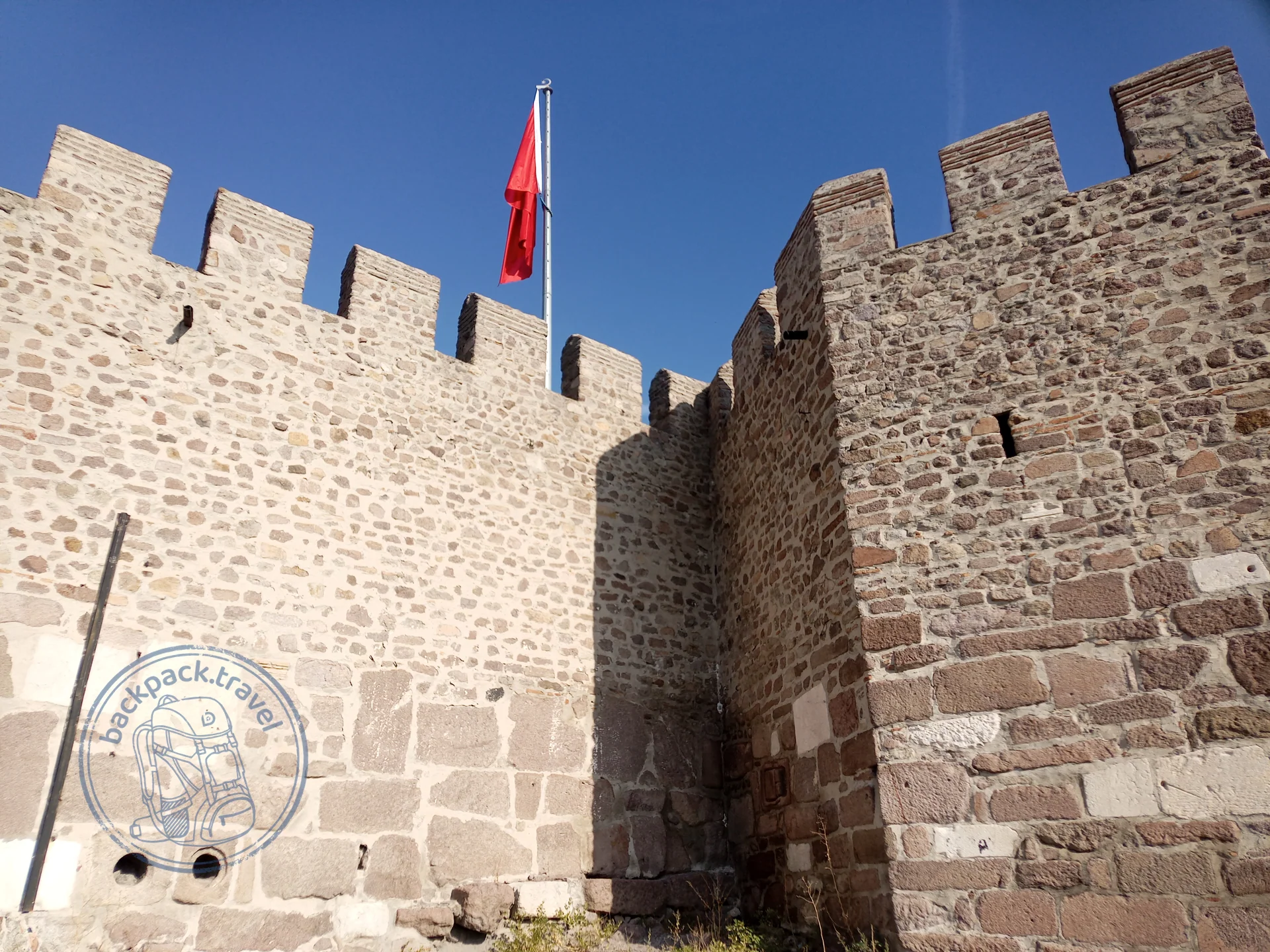
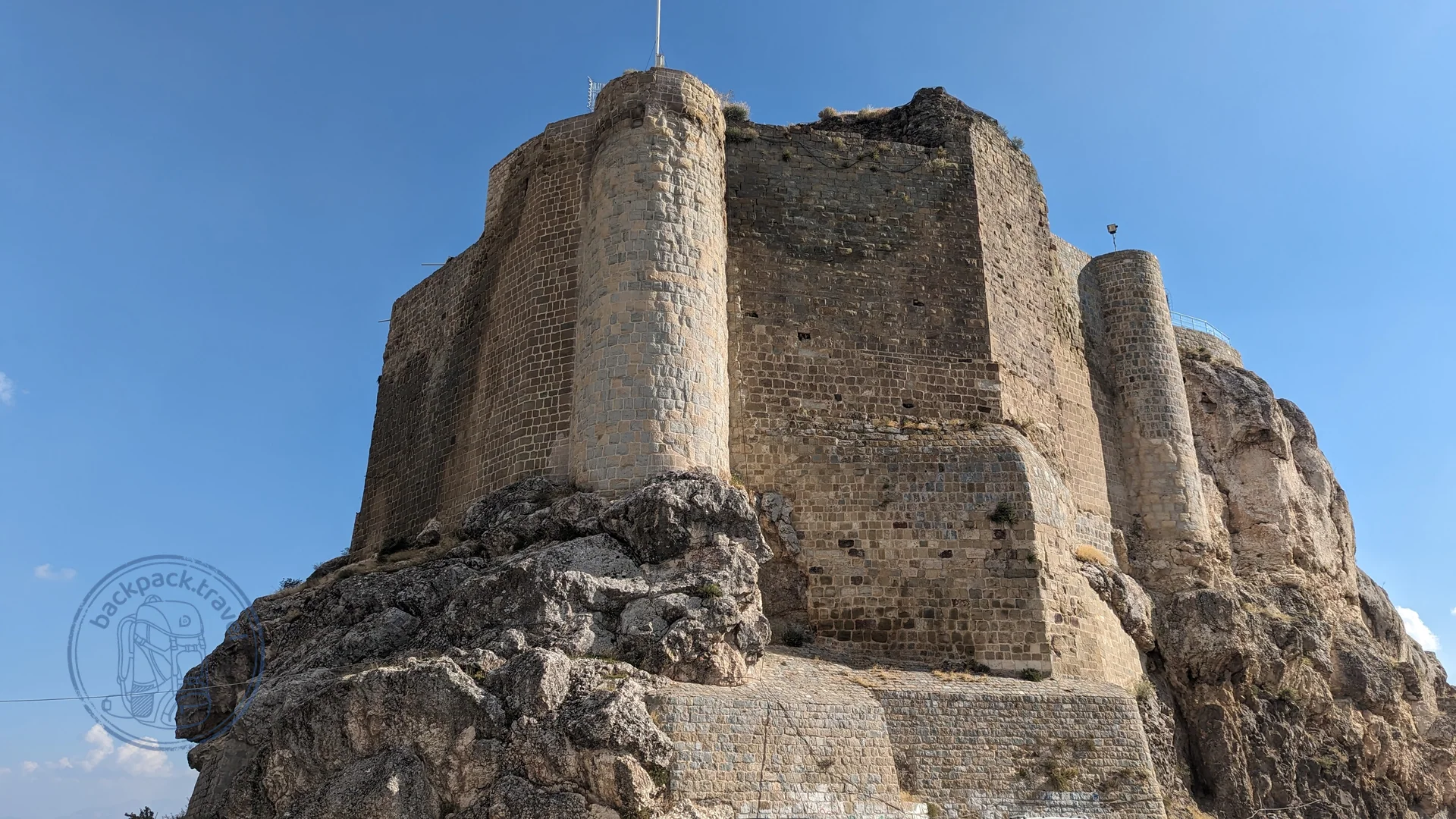
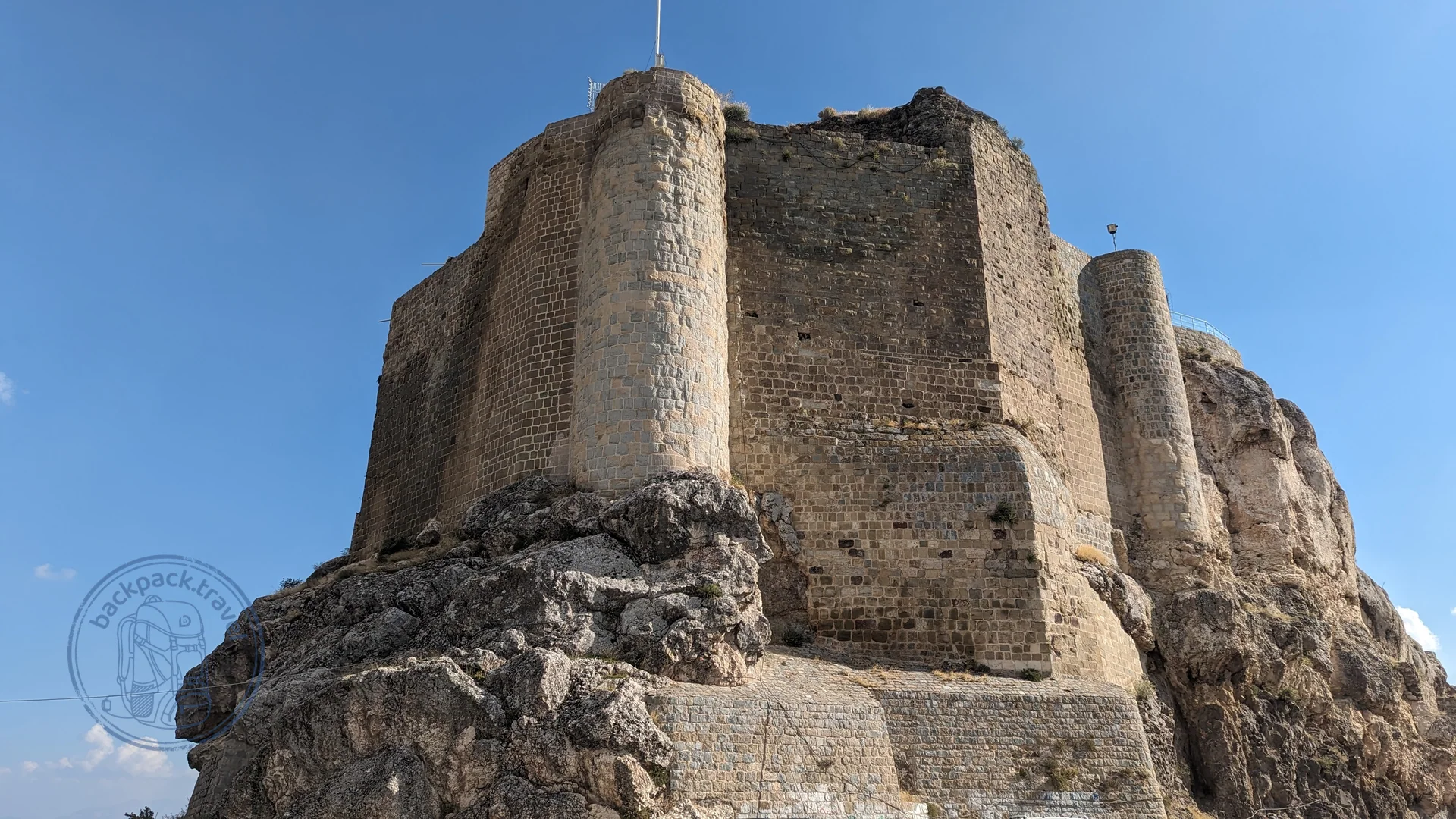
Harput castle sits on a rock massif above the plain. Its foundation is put in the Urartian period, roughly the eighth century BC; after that it was rebuilt by the Romans, the Byzantines, the Artuqids and the Ottomans. Its second name is Süt Kale, the "milk castle": the story goes that the mortar was mixed with milk because there was no water on the rock. The walls are set right along the edge of the drop and from a distance read as a continuation of the stone. The terrace looks out over the whole of Elazığ and the Keban reservoir.
Beside it stands the Ulu Camii, built in 1156 in Artuqid times, one of the oldest mosques in Anatolia, with a brick minaret that leans noticeably off vertical. The reason for the lean is explained in different ways: settling ground, an earthquake, or a mistake by the builders from the start.
Harput itself has kept mausoleums of the twelfth to fifteenth centuries, the Armenian church of St Mary, which is dated to the sixth century, and several medreses. Down in Elazığ, the archaeological museum of Fırat University shows finds from the settlements that went under water when the Keban reservoir was filled.
Keban is a destination of its own: the dam of the late 1960s blocked the Euphrates and created a body of water of nearly seven hundred square kilometres. The roads along the shore give views, and the villages by the water have fish restaurants.
Getting there and getting around
Elazığ airport takes flights from Istanbul and Ankara, about two hours in the air. The train from Ankara is slow, but the line runs through fine country along the Euphrates. Buses connect the city with Malatya (two hours), Diyarbakır (three) and Erzurum (six).
Minibuses run up to Harput from the centre, a trip of about twenty minutes; a taxi is quicker and not much dearer. Everything up top is compact and done on foot. The Keban dam needs a car.
Where to stay
The centre of Elazığ has several mid-range city hotels, inexpensive. A category of its own is the small guesthouses in Harput, in converted stone houses: there are few of them, but a night up the hill buys an evening and a morning at the castle without crowds.
Most people arrive for a day on the road between Malatya and Diyarbakır, or as a stop on the way to Mount Nemrut.
Day trips
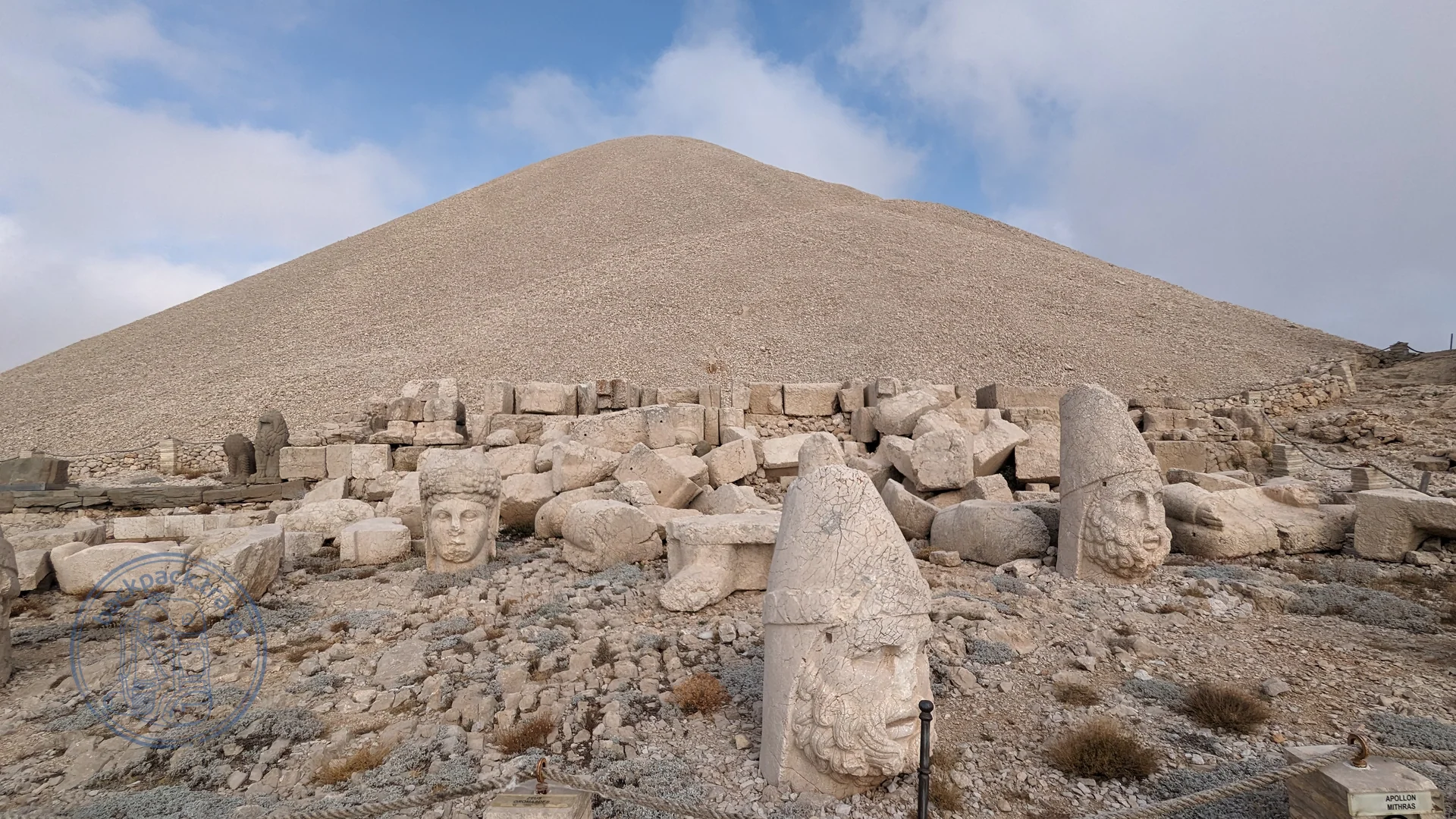
Malatya, with its apricot orchards and the ruins of old Malatya, is 130 km away, about two hours. Adıyaman, for Mount Nemrut, is 200 km, three hours on the road.
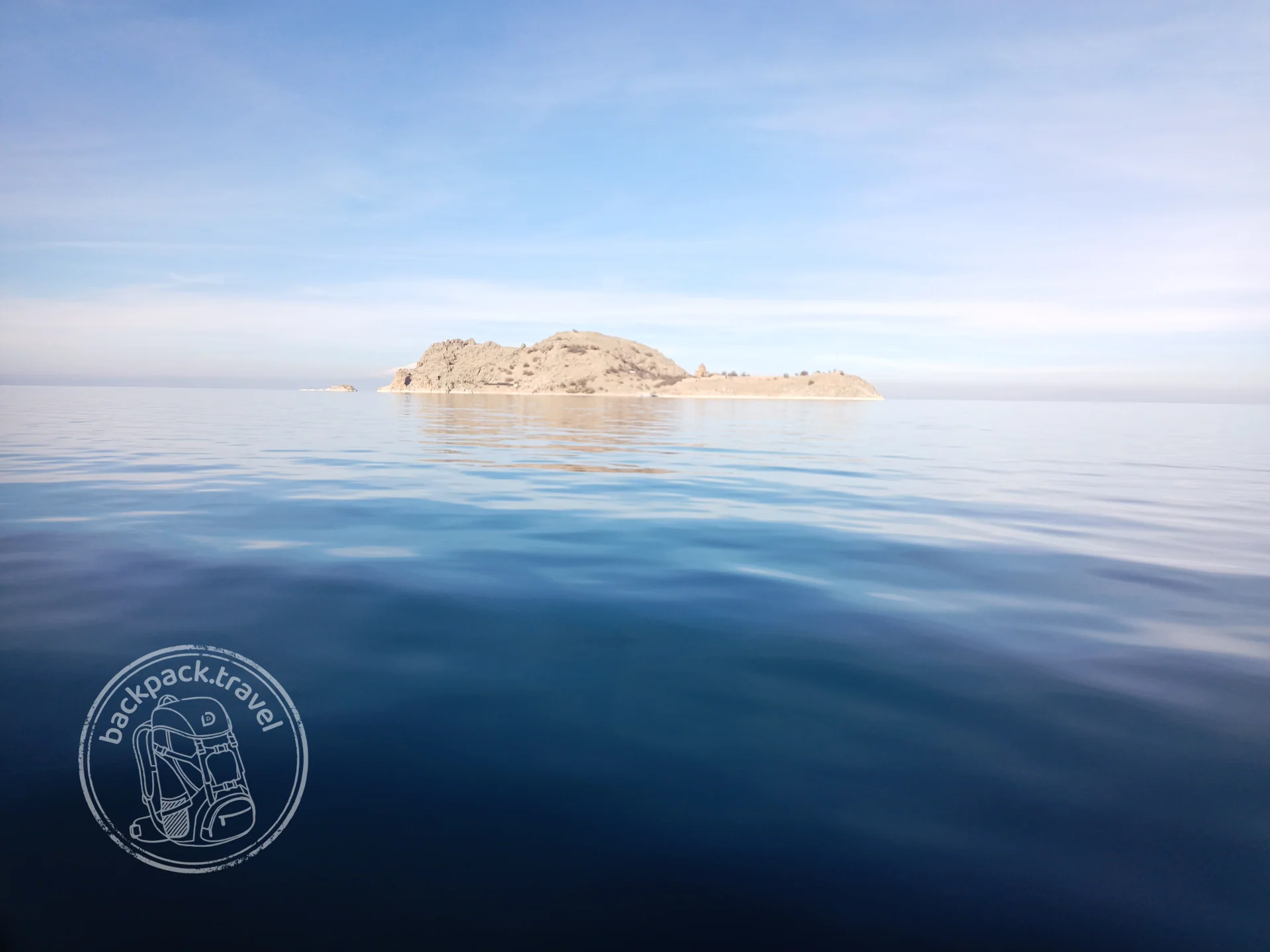
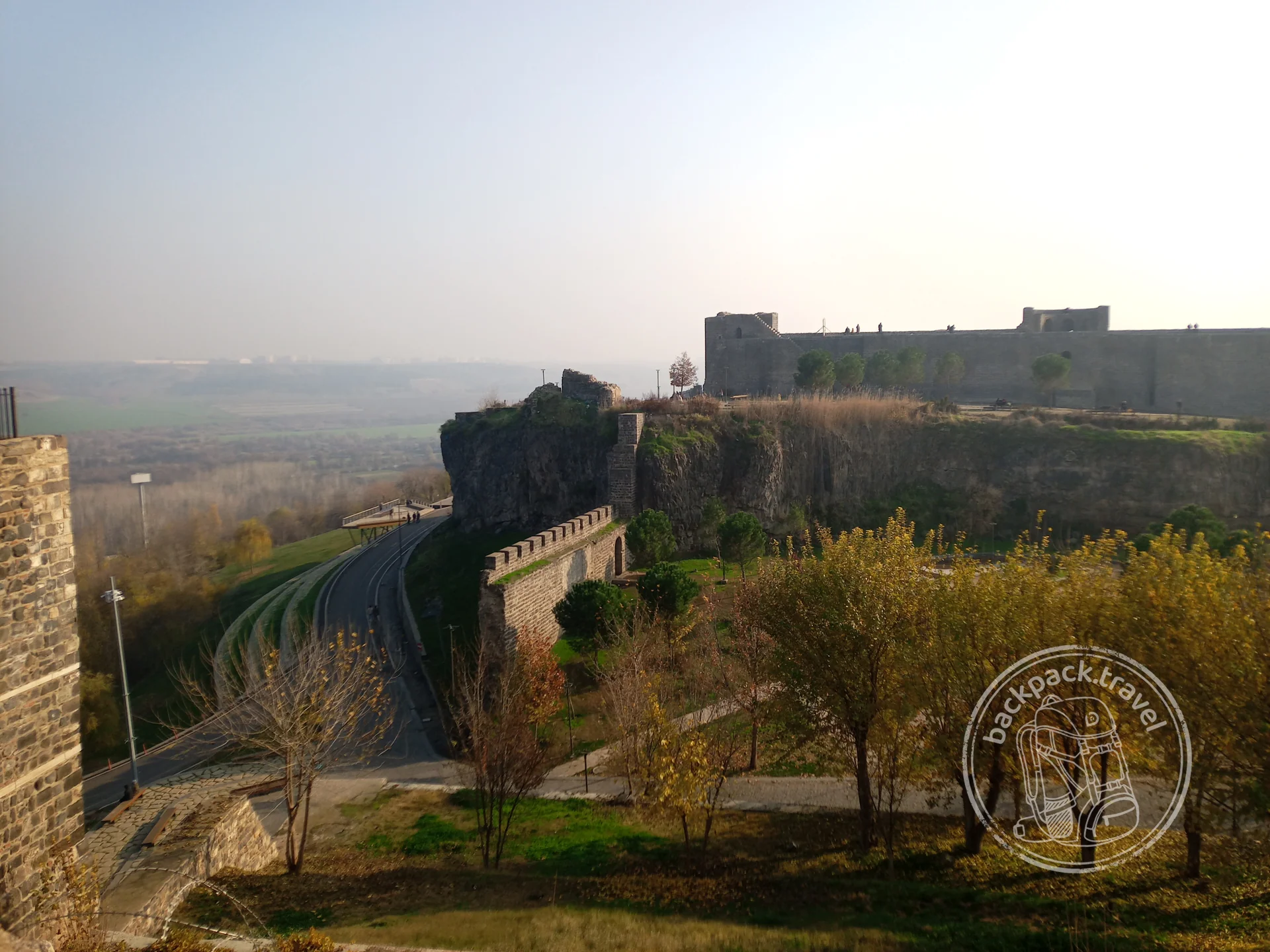
Diyarbakır, with basalt city walls second in length only to the Great Wall of China, is 180 km away. Closer in, within the province, are the Keban canyon, the Cip gorge and Lake Hazar — a tectonic lake with a submerged Armenian church on an island, which comes out of the water in low-water years.
When to come
April–June and September–October. Daytime temperatures then run 20–28°C, the slopes are green, and the climb to the castle does not wear you out.
Summer is dry and hot, up to 38°C, and Harput's open rock has no shade whatsoever — sightseeing works only in the morning or the evening. Winter is cold and snowy, down to −15°C; the castle stays open, but the road up is sometimes closed during snowfall. In autumn the grape harvest is on in the surrounding country — the local vineyards gave their name to Buzbağ, one of the oldest Turkish wine brands.
Food and money
The cooking is eastern Anatolian: kebabs, içli köfte, Harput köftesi — meatballs in broth, a local dish named after the town on the hill. For sweets, something close to kadayıf with nuts. Grapes and wine are a regional speciality, though in a conservative city alcohol is not sold everywhere.
Cards are taken in town and at petrol stations, and there are ATMs in the centre and in Harput. Cash comes in useful in small places.
What to know
The region is seismic: the earthquake of January 2020 damaged part of the building stock, including the castle walls, and strengthening work is still going on — individual sections are closed from time to time.
Elazığ is noticeably more conservative than western Turkey: women do well to dress covered, and while a headscarf is not obligatory it is needed in mosques. The road up is narrow, with bends and no barrier on some stretches. There is no café and no shop near the castle at the top, so carry water.
Updated