 Города и дороги
Description
The Seljuk capital on the Anatolian steppe and the city of Rumi: the Mevlana mausoleum under its turquoise dome, the sema of the whirling dervishes, two tiled medreses and Neolithic Çatalhöyük nearby.
Wiki
Konya is the seat of the largest province in Turkey by area: about 2.3 million people in the province and roughly 1.5 million in the city itself. It stands in the middle of the Konya plain at around a thousand metres, surrounded by flat steppe ploughed up for wheat. Ancient Iconium appears in the Acts of the Apostles: the apostle Paul preached here. Its rise came at the end of the eleventh century, when the Seljuks made the city the capital of the Sultanate of Rum; under Sultan Alaeddin Keykubad I, who ruled from 1220 to 1237, Konya was the largest centre in Anatolia. It was then that the family of the theologian Jalal ad-Din Rumi moved here, and the city has been tied to his name ever since.
Why come and what to actually see
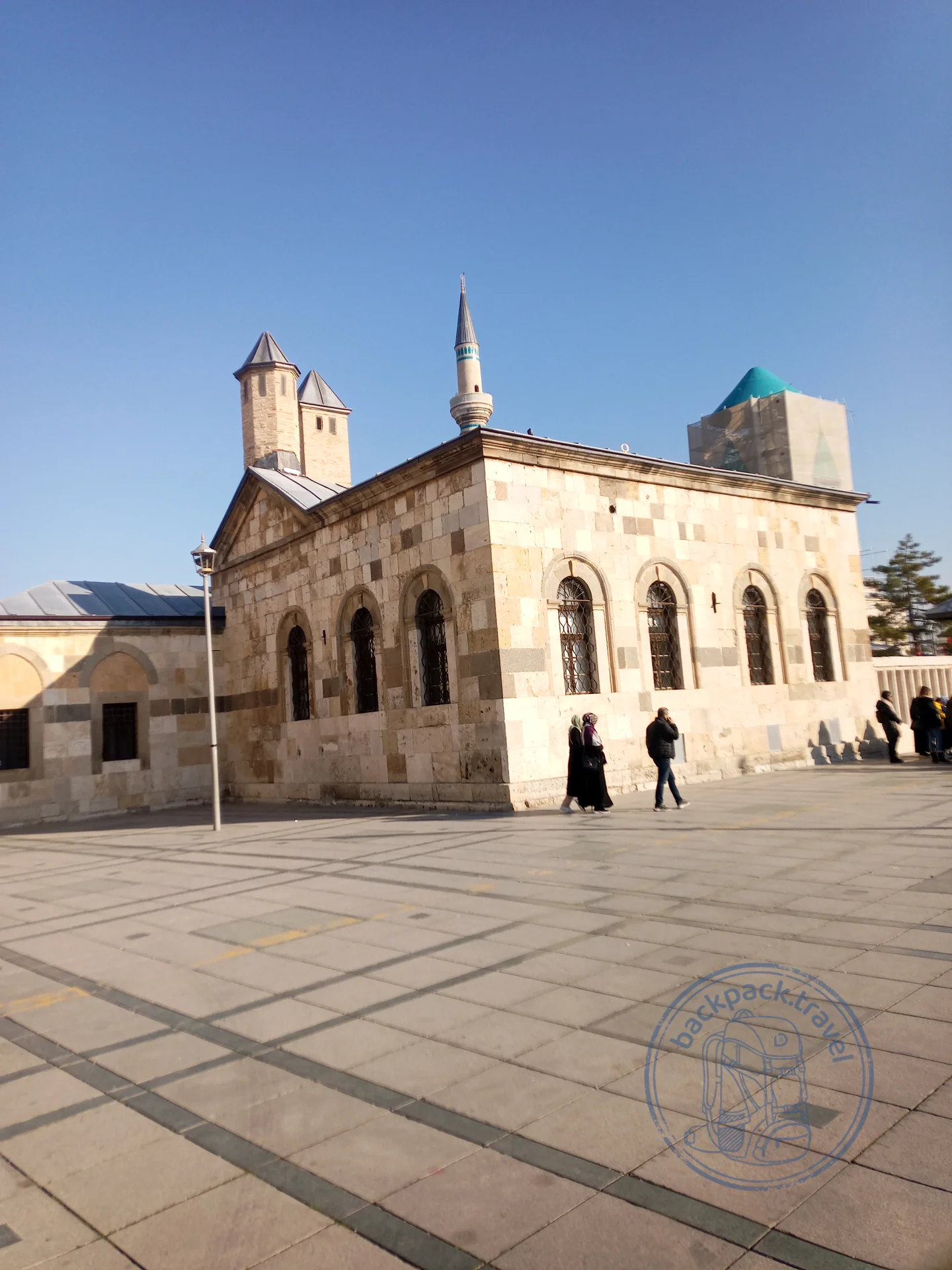
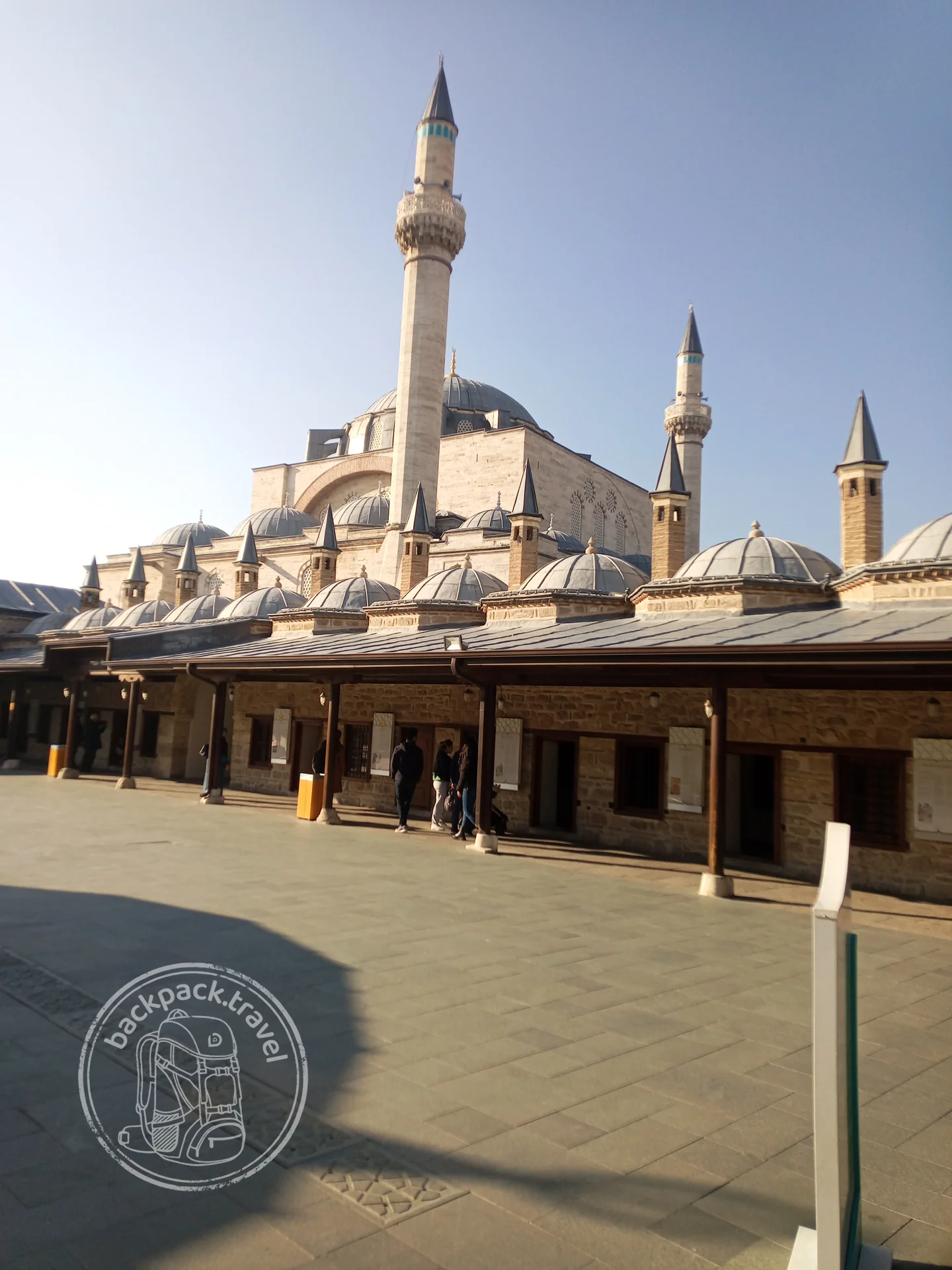
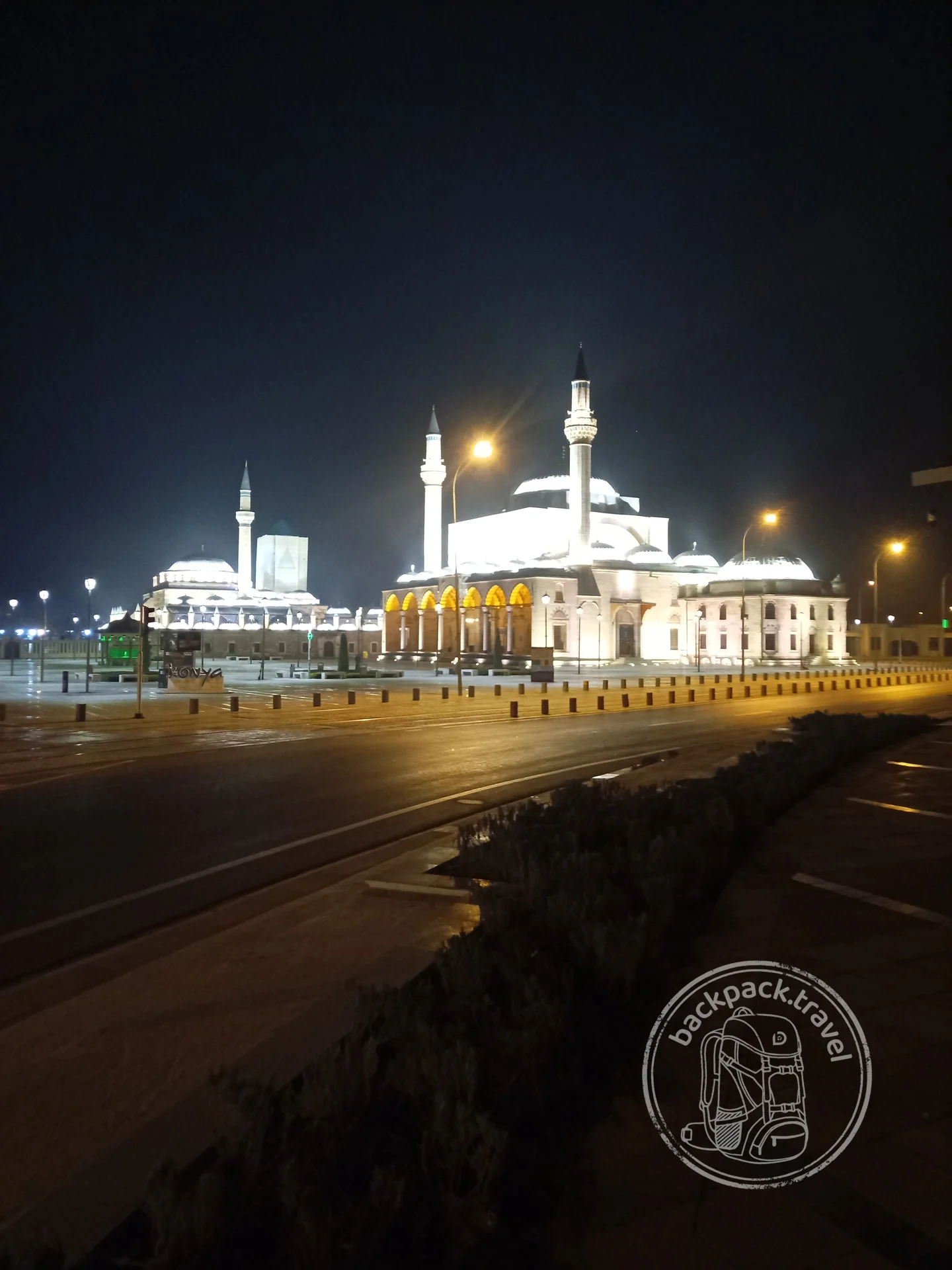
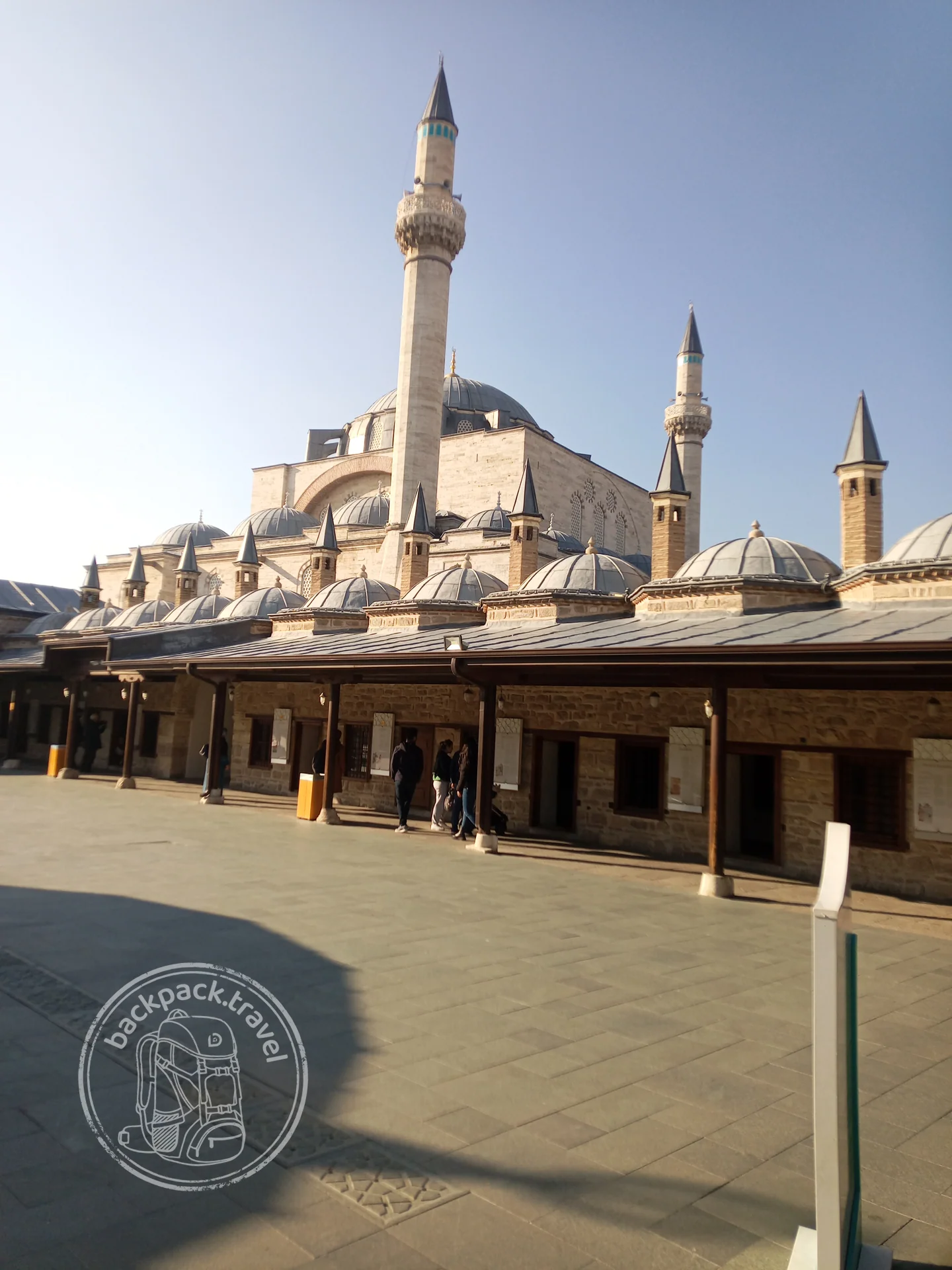
The mausoleum of Mevlana under its fluted turquoise dome is what brings people here. Rumi died on 17 December 1273, a tomb was raised over his grave, and around it grew the tekke of the Mevlevi order, the whirling dervishes. The order was dissolved in 1925, and since 1926 the complex has worked as a museum: the sarcophagi of Rumi and his father, dervish cells with wax figures showing daily life, manuscripts and instruments. Most visitors are pilgrims: shoes come off at the entrance, women are handed a scarf, and the right way to behave is as in a working shrine.
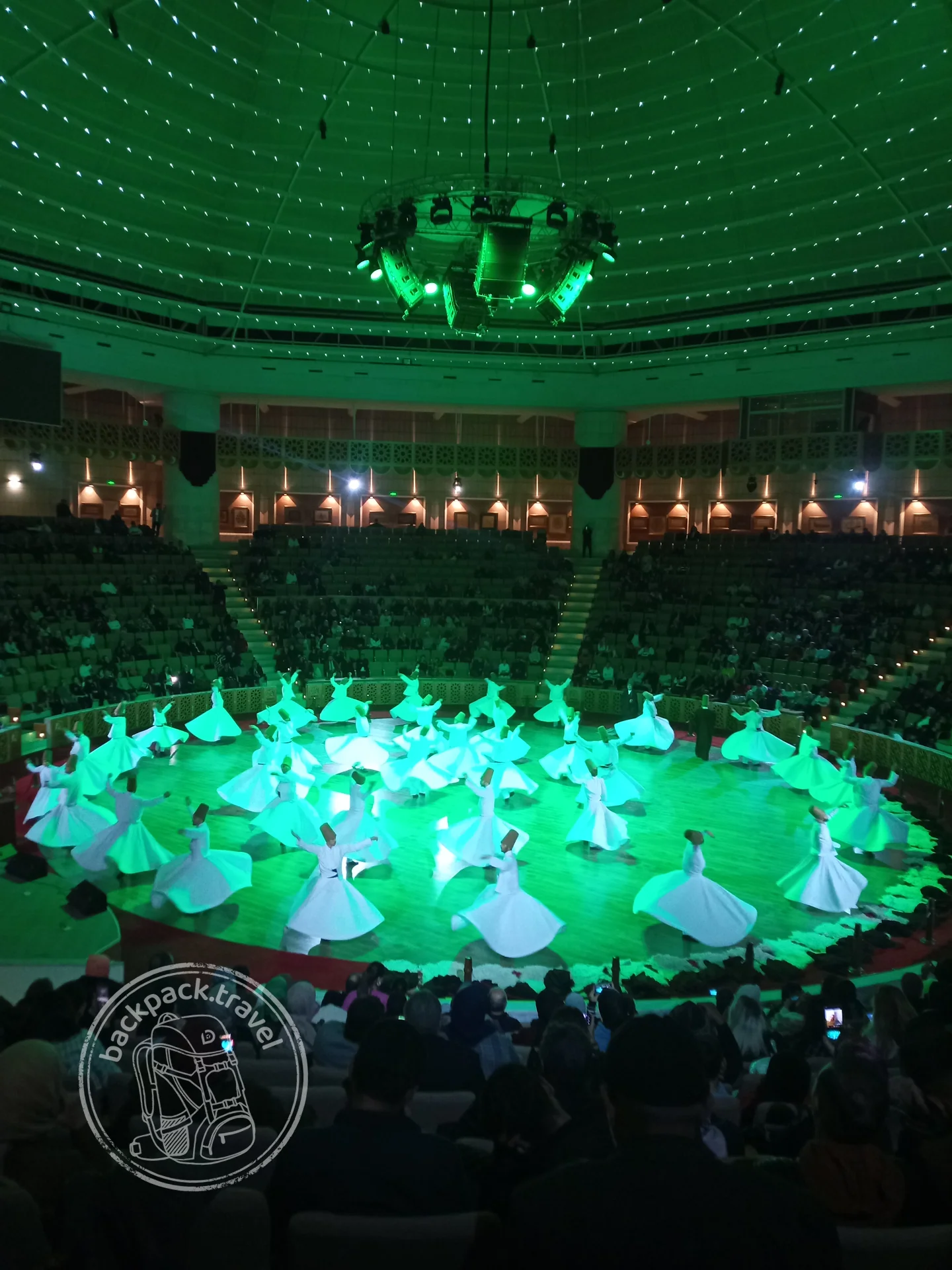
The sema rite itself, the turning to the sound of the reed ney and the drum, is on the UNESCO list of intangible heritage. Ceremonies run year-round on Saturdays at the Mevlana cultural centre, and from 7 to 17 December comes Şeb-i Arus, the night of union: ten days of programmes building up to the evening of the anniversary of Rumi's death.
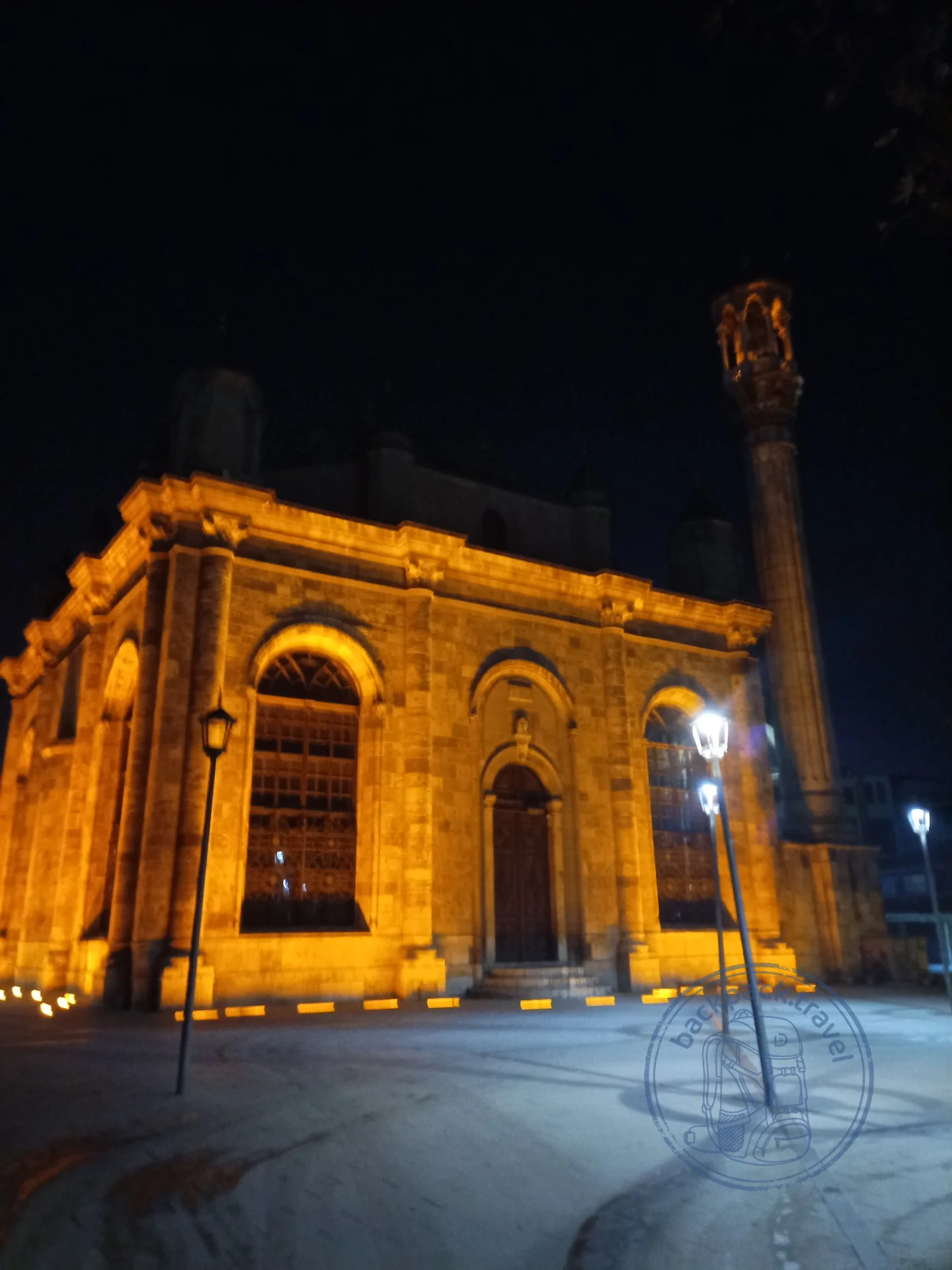
Alaeddin Hill in the middle of the city is in fact an ancient tell, inhabited as far back as the Bronze Age. On top stands the Alaeddin Mosque, finished by 1221: inside is a forest of mismatched ancient columns carted in from ruins around the district, and in the courtyard are octagonal türbe holding the burials of Seljuk sultans.
Two steps from the hill are the two finest Seljuk medreses. Karatay, of 1251, is given over to a museum of tilework, and the main thing here is the dome itself, laid out in turquoise and black tiles as a night sky. İnce Minareli, of 1265, is a museum of carving in stone and wood; its portal is covered with Quranic script twisted into knots and ribbons, while the minaret that gave the building its name, the slender minaret, lost its top to a lightning strike in the early twentieth century.
Getting there and getting around
High-speed trains reach Ankara in an hour forty-five, Istanbul in about four hours and Karaman in forty minutes; the station is in the Selçuklu district, a tram ride from the centre. The airport takes flights from Istanbul and Europe, but the train is more convenient. Buses connect Konya with Cappadocia, Antalya and the coast.
The city has two tram lines, about twenty-seven kilometres and some forty stops. The centre is compact and everything important can be walked in a day.
Where to stay
Hotels form a ring around Mevlana Square: from there it is ten minutes to any of the museums. The second cluster is Selçuklu, closer to the high-speed rail station, newer and pricier but dependent on the tram. A category of its own is green Meram on the western edge, with gardens and family restaurants.
Prices are lower than in the coastal cities, but in December, during Şeb-i Arus, rooms cost several times more.
Day trips
Çatalhöyük, fifty-two kilometres to the south-east, is a Neolithic settlement occupied from the middle of the eighth millennium BC and added to the UNESCO list in 2012. Houses here stood wall to wall with no streets between them, and people entered through the roof. The excavations are covered by pavilions; go knowing that there are no spectacular ruins, only one of the first cities in history.
Sille, eight kilometres from the centre, is a former Greek village in a rocky gorge, emptied after the population exchange of 1924. The church of Aya Elena and the stone houses along the stream make half a day.
Beyşehir, ninety kilometres away: the third-largest lake in Turkey and the Eşrefoğlu Mosque of the late thirteenth century. Its flat roof rests on forty-two wooden posts seven and a half metres tall; in 2023 the mosque entered the UNESCO list.
When to come
April, May, September and October work best: a little over twenty degrees by day, dry, with the steppe either still green or already gone gold. Summer is hot and very dry, above thirty, but bearable, and the evenings are cool because of the altitude.
Winter is cold, with snow and sub-zero temperatures, and it is the one season when people come to Konya on purpose: the Şeb-i Arus ceremonies run in December and the city fills up. The Konya plain is one of the driest places in the country, with little rain in any month, so an umbrella is needed less often than sunscreen and water.
Food and money
The cooking here is built on meat and the oven. Etli ekmek is a thin flatbread with minced meat, sometimes a metre long, baked in a wood-fired oven and cut with scissors. Fırın kebabı is lamb left in the oven for several hours until the fat has run off, served with onion and bread. Among soups, try bamya çorbası made with dried okra; among pastries, saç arası, thin sheets of dough with walnut.
Cards are accepted everywhere and there are enough ATMs. Cash comes in useful at the bazaar and in the villages on the road to Çatalhöyük.
What to know
Konya is markedly more conservative than Istanbul and the coast. Alcohol is rarely sold, restaurants almost never have it, and there is no point looking for wine with dinner. Clothing should be covering, and women will want a scarf at all times. During Ramadan daytime life slows down more here than in other cities. Visitors are treated evenly all the same, and the city is calm and safe.
A day and a half is enough for the city, plus another day for Çatalhöyük or Beyşehir. Konya fits well into a route between Cappadocia and the Mediterranean rather than as a destination in its own right.
Updated