 Города и дороги
Description
Ancient Edessa on the edge of the Harran plain: the carp pools of Balıklıgöl, a rock-top fortress, the country's largest archaeological museum, and Göbekli Tepe eighteen kilometres away.
Wiki
Şanlıurfa stands at the foot of a rocky ridge on the edge of the Harran plain, some fifty kilometres from the Syrian border. More than a million people live in its three central districts and about two and a quarter million in the province. Ancient Edessa was refounded by Seleucus I around 303 BC and later became the capital of the kingdom of Osroene, whose rulers were among the first in the world to adopt Christianity. From 1098 to 1144 the County of Edessa held out here, the first crusader state in the East. Muslim tradition ties the city to Abraham, and Urfa gained the prefix Şanlı, meaning glorious, in 1984 for its resistance in 1920.
Why come and what to actually see
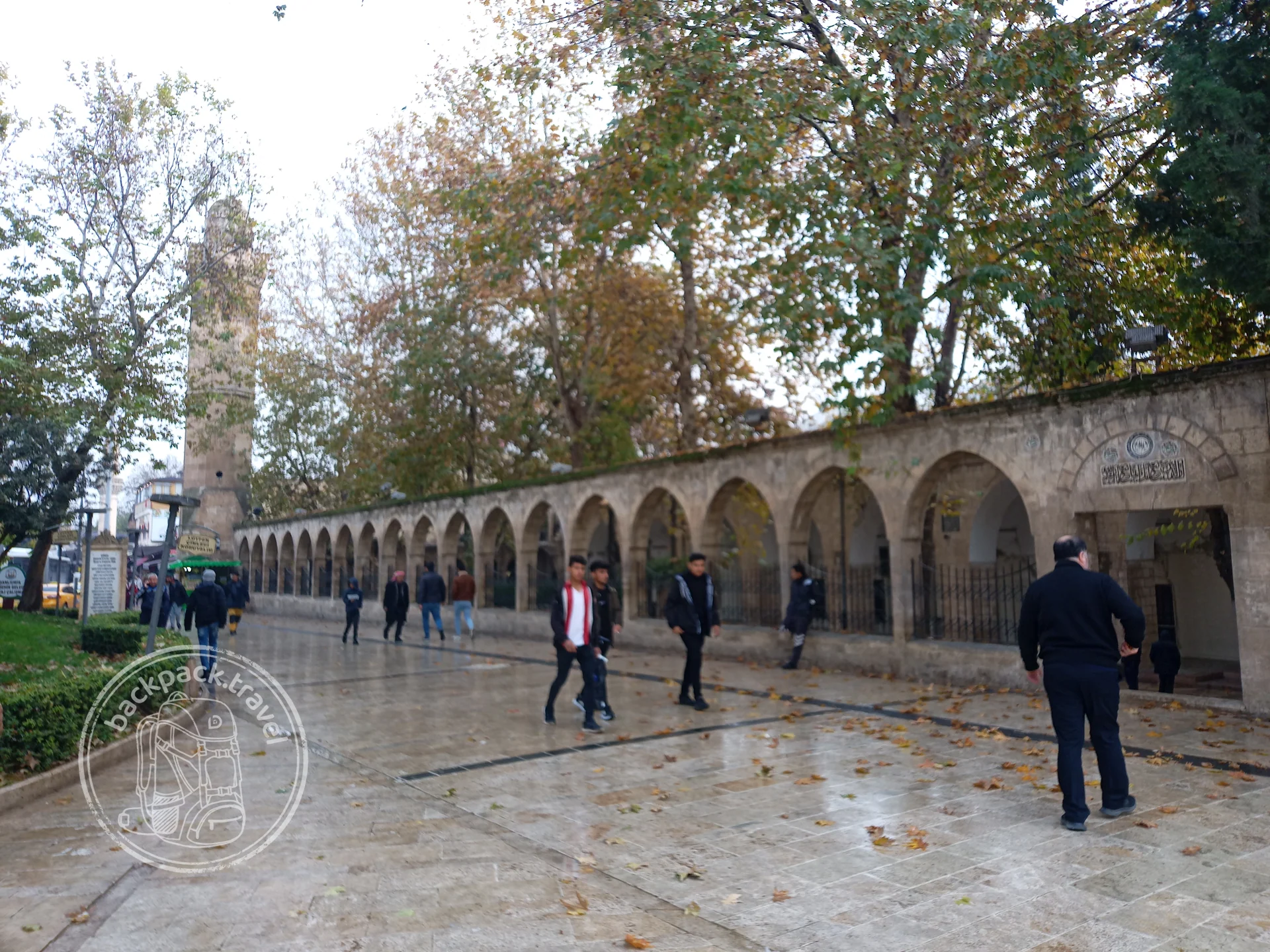
Balıklıgöl is a pair of pools with carp that are neither caught nor eaten: by tradition the fish appeared when Nimrod threw Abraham into the fire and the fire turned to water. Mosques frame the pools: Halil-ur-Rahman was built by the Ayyubids in 1211, Rızvaniye by the Ottomans in 1736. Nearby, at the Mevlid-i Halil mosque, a cave is shown as the birthplace of Abraham, with separate entrances for men and women. The whole complex takes about an hour and a half.
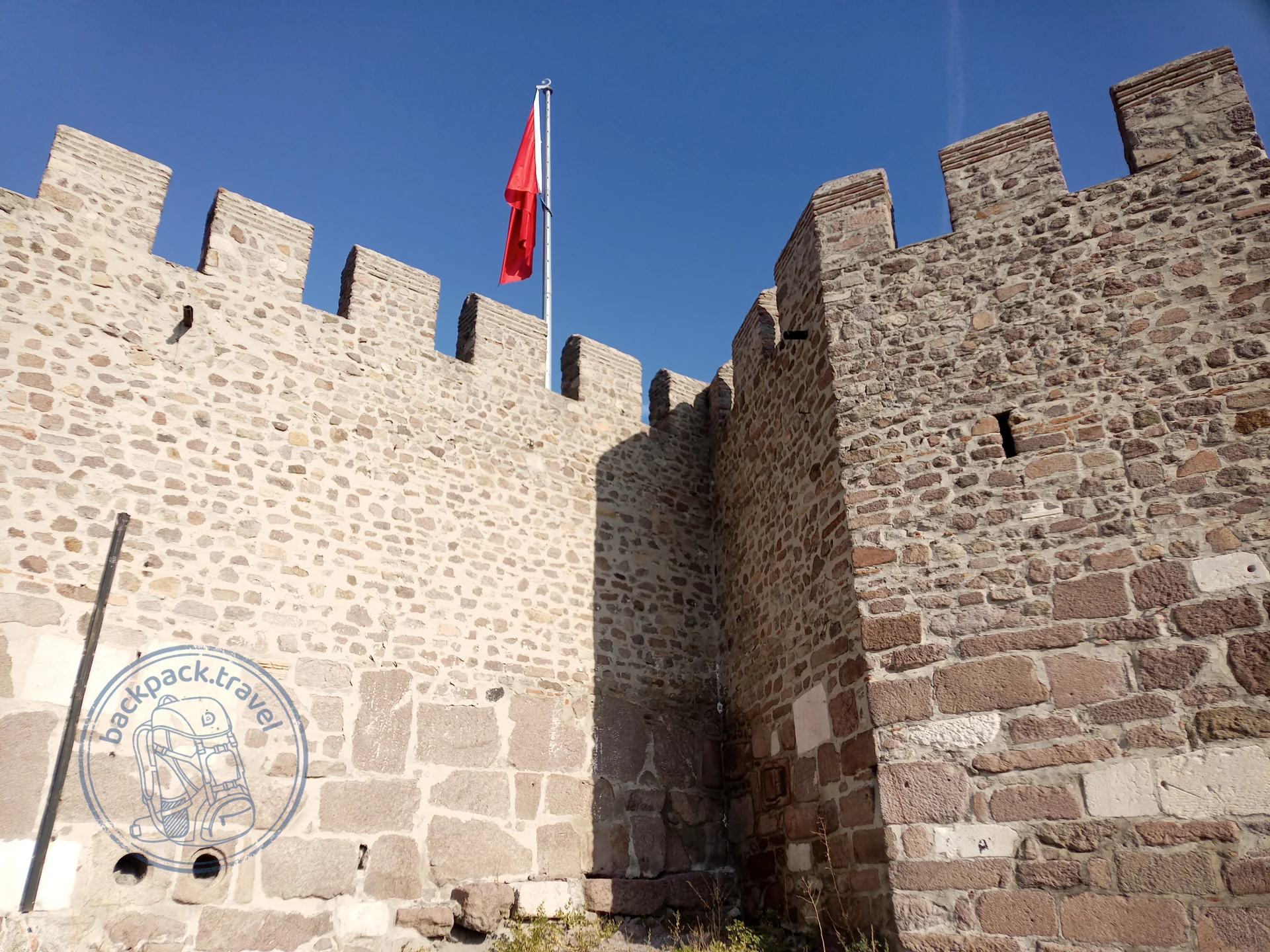
Above the pools a fortress stands on the rock. Two columns with Corinthian capitals about seventeen metres high were raised in 240–242 and are known as the throne of Nimrod; chambers are cut into the rock, along with the ditch that separates the fortress from the ridge.
The archaeological museum opened in 2015 and is still the largest in the country by floor area. It alone justifies the journey: a full-scale reconstruction of a Göbekli Tepe enclosure, original T-shaped pillars, and Urfa Man, a life-size statue about eleven thousand years old, the oldest known. In the adjoining building is the Haleplibahçe mosaic museum with its scene of Amazons hunting.
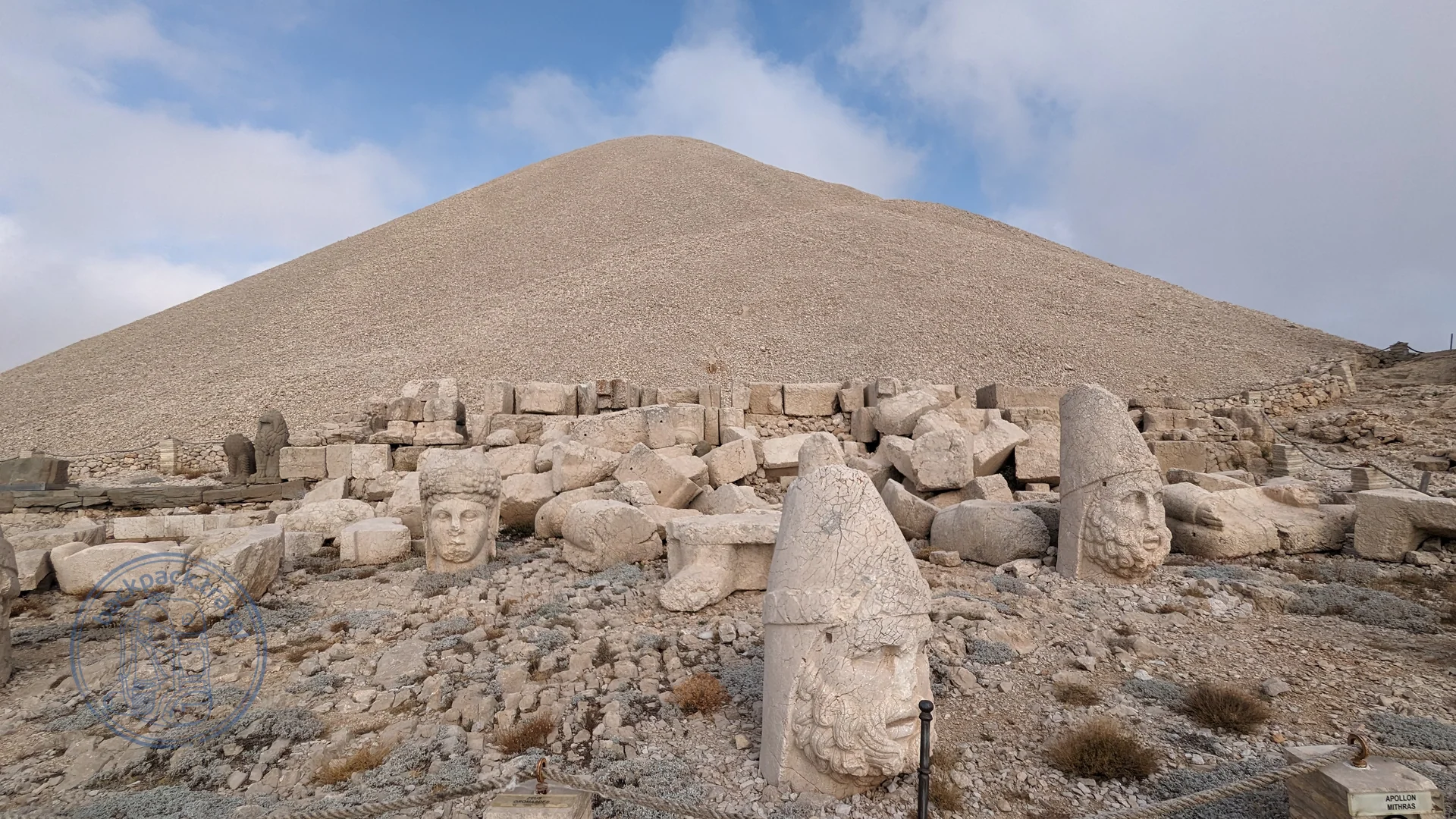
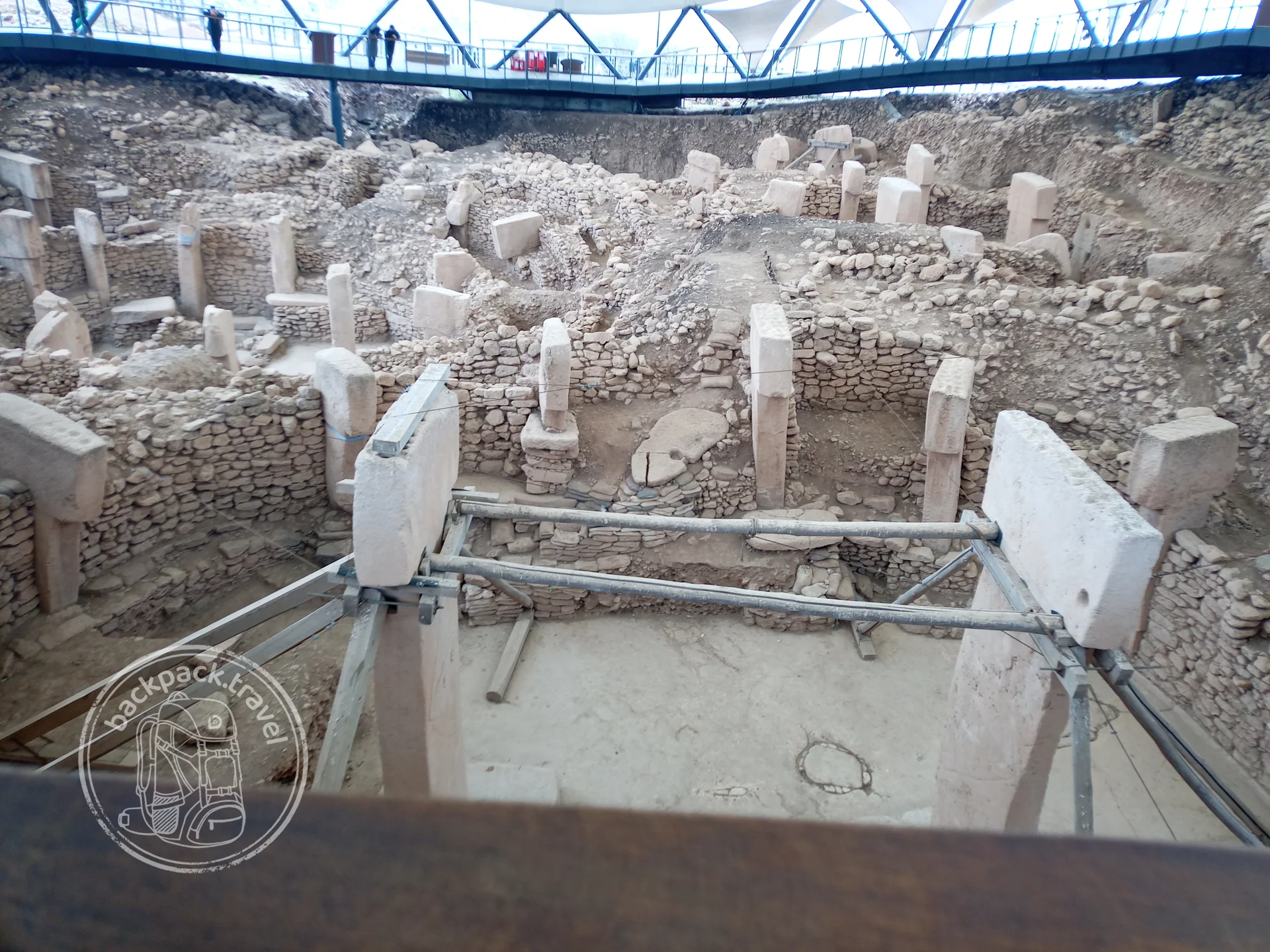
Göbekli Tepe itself lies eighteen kilometres to the north-east. The excavation is under a canopy and visitors walk on suspended walkways; it takes about an hour. The oldest enclosures were built around nine and a half thousand years BC, before pottery, metal and farming; the site has been on the UNESCO list since 2018.
Getting there and getting around
GAP airport is thirty-five kilometres to the north-east, with flights from Istanbul, Ankara and İzmir and a forty-minute run to the centre by shuttle or taxi. Bus services are dense: Gaziantep is a hundred and fifty-five kilometres and two hours away, Diyarbakır a hundred and eighty-two and two and a half, Mardin about a hundred and ninety.
Within the city there are buses and dolmuş minibuses. Balıklıgöl, the fortress and the bazaar form a single walkable cluster, with the museum quarter about two kilometres from it. A shuttle runs to Göbekli Tepe from the museum; everything else is easier by car or with a tour.
Where to stay
Closest to the sights is the old town around Balıklıgöl, where stone mansions with inner courtyards have been converted into hotels. Modern hotels line Atatürk Boulevard and fill the Karaköprü district: quieter and more spacious, but everything then involves transport. Prices are noticeably lower than in the west of the country. Alcohol is served almost nowhere in the city.
Day trips
Harran, forty-eight kilometres to the south-east, has its mudbrick beehive houses with conical domes, the ruins of one of the oldest Islamic universities, and the Ulu Camii built by Marwan II, the last Umayyad caliph, in 744–750; its minaret, thirty-three metres tall, is visible from far off.
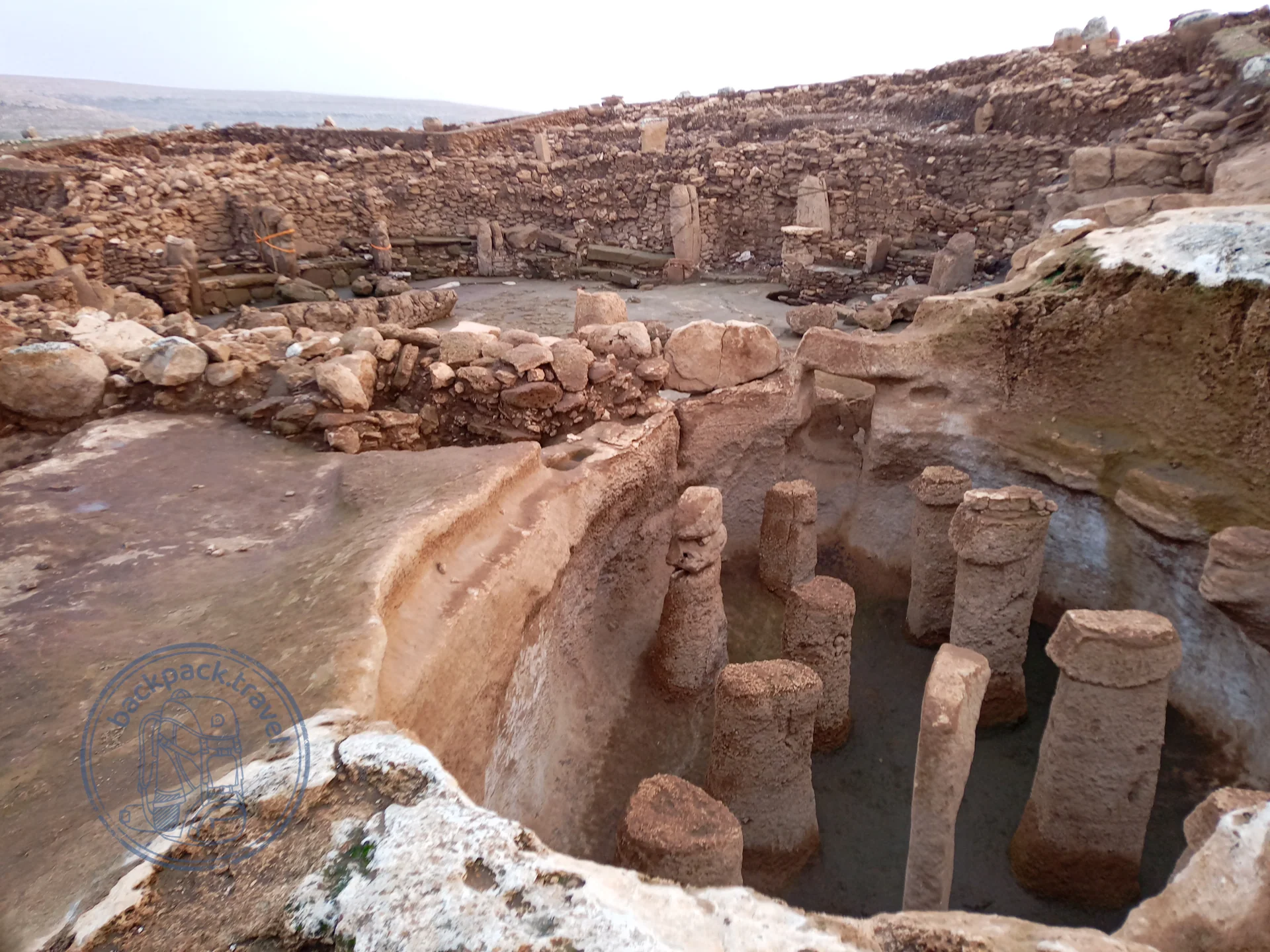
Karahan Tepe, forty-six kilometres to the east, belongs to the same circle of sites as Göbekli Tepe and has a chamber with eleven pillars hewn out of the bedrock; it opened to visitors in 2025.
Halfeti, a hundred and twenty kilometres to the north-west: part of the town went under water when the Birecik reservoir was filled, and the minaret of the drowned mosque sticks up out of the Euphrates. Boats run to the village of Savaşan and to the fortress of Rumkale.
When to come
Come in spring or autumn. March, April and May give the plain its green and twenty to twenty-eight degrees by day; October and November bring dry warmth without crowds. In these months Göbekli Tepe and Harran do not turn into an ordeal.
Summer here is among the most brutal in Turkey: from June to September the daytime figure holds steadily above forty and records approach forty-seven, with almost no shade at the excavations. You will have to be out before nine in the morning and after six in the evening, and spend the middle of the day in the museum. Winter is mild, around ten to twelve degrees, but wet.
Food and money
Urfa is considered the home of çiğ köfte: since 2009 the version sold in shops contains no raw meat and is made with bulgur and isot, the local dark pepper dried in the sun. Urfa kebab is milder than Adana's precisely because the pepper here is aromatic rather than fiery. People eat içli köfte and lahmacun, and for something sweet şıllık, thin pancakes with walnut in syrup. Mırra coffee, thick and bitter, is drunk in one swallow from a small cup.
Sıra gecesi, an evening of saz music and food, is now also staged for visitors in the restaurants of the old town. Cards are accepted everywhere except the small stalls in the bazaar.
What to know
The earthquake of 6 February 2023 took about a hundred and eighty lives in the province and brought down buildings in the city itself; a month later a destructive flood swept through Urfa. The tourist sites were barely affected: Göbekli Tepe and the museums were undamaged and Balıklıgöl works as before. Harran suffered most, where arches of the Ulu Camii collapsed and the minaret was damaged; after restoration the mosque is open again.
Şanlıurfa is one of the most conservative cities in the country. Women need covering clothes and a scarf when entering mosques, and during Ramadan cafés and restaurants are largely shut by day. There are many Syrians in the city who moved here after 2011, and Arabic is heard in the bazaar as much as Turkish.
Updated