 Города и дороги
Description
The main city of Turkey's Black Sea coast and once the capital of the Empire of Trebizond: a frescoed thirteenth-century Hagia Sophia, basalt walls, tea slopes and Sumela monastery on its cliff.
Wiki
Trabzon is the largest city on Turkey's Black Sea coast, with about 800,000 people including the suburbs. The Greek Trebizond was founded by settlers from Miletus in the eighth century BC, and for close to two millennia it lived on sea trade: the Silk Road came in here, and cargo went on westwards. After the fall of Constantinople in 1204 the Komnenoi founded a separate Empire of Trebizond here, which outlasted Byzantium itself and held until 1461. The city is also known for the wars of the nineteenth century and for the tea trade: the whole of Turkey drinks tea grown on these slopes.
Why come and what to actually see
The main thing here is Hagia Sophia, the thirteenth-century church of the Holy Wisdom on the shore three kilometres west of the centre. From outside it is a compact cross-in-square church in pale stone, with a carved frieze on the south porch that is unusual for Byzantium: scenes from the Book of Genesis, cut with a Seljuk feeling for ornament. Inside are frescoes of the same century — the Pantocrator in the dome, gospel scenes across the vaults. The building has been a mosque, a warehouse and a museum; since 2013 it has functioned as a mosque again, and the frescoes are partly covered.
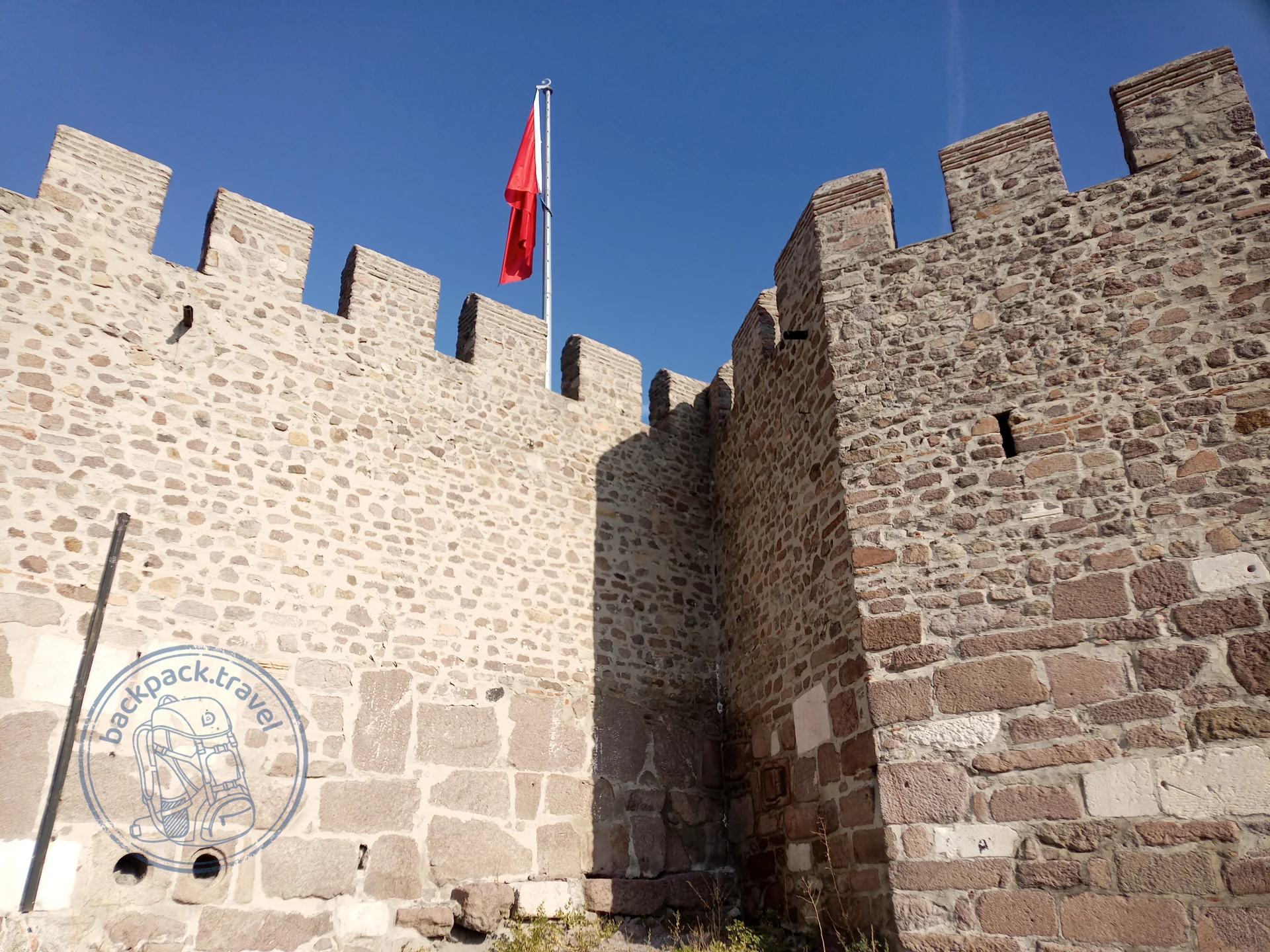
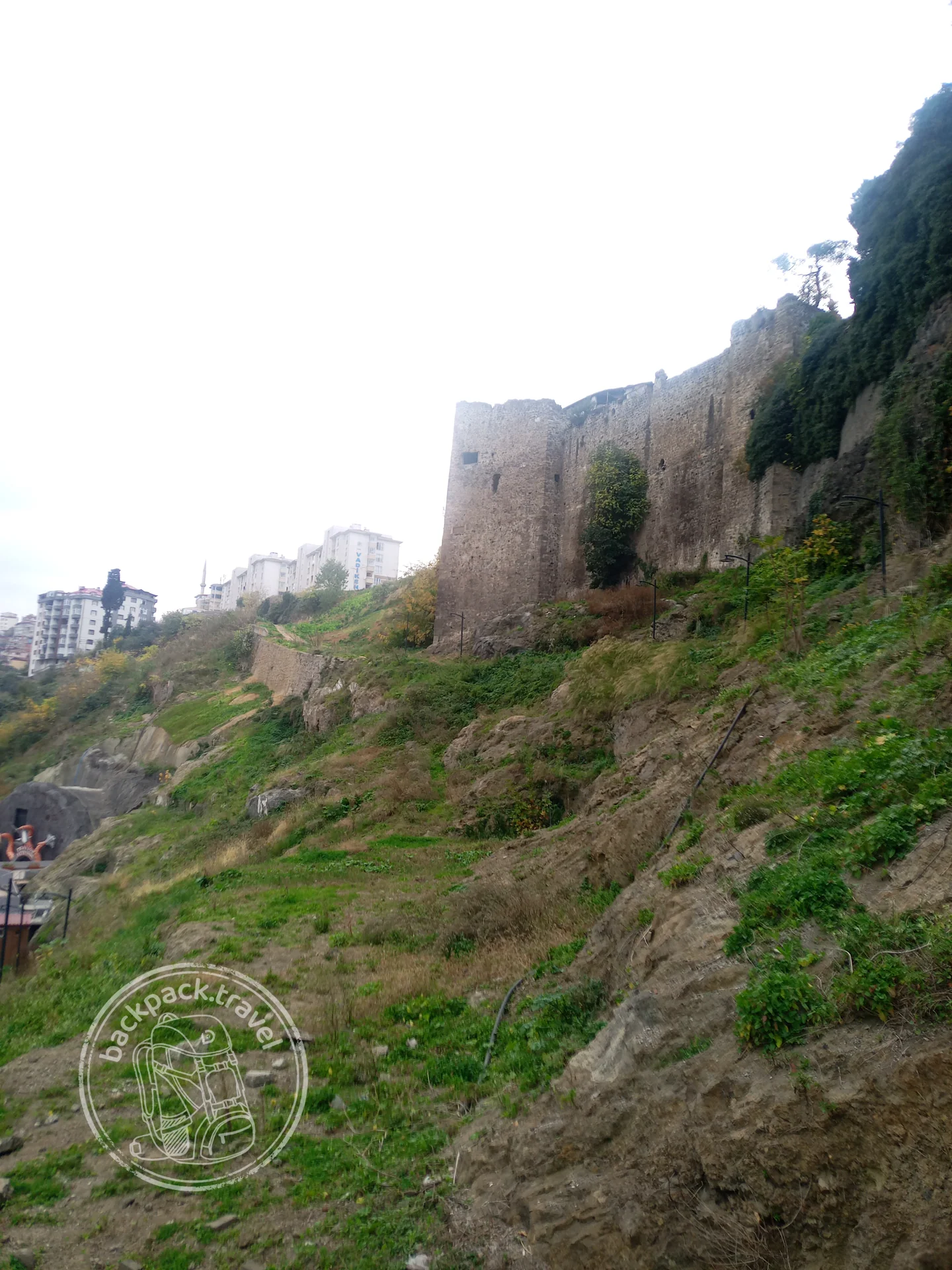
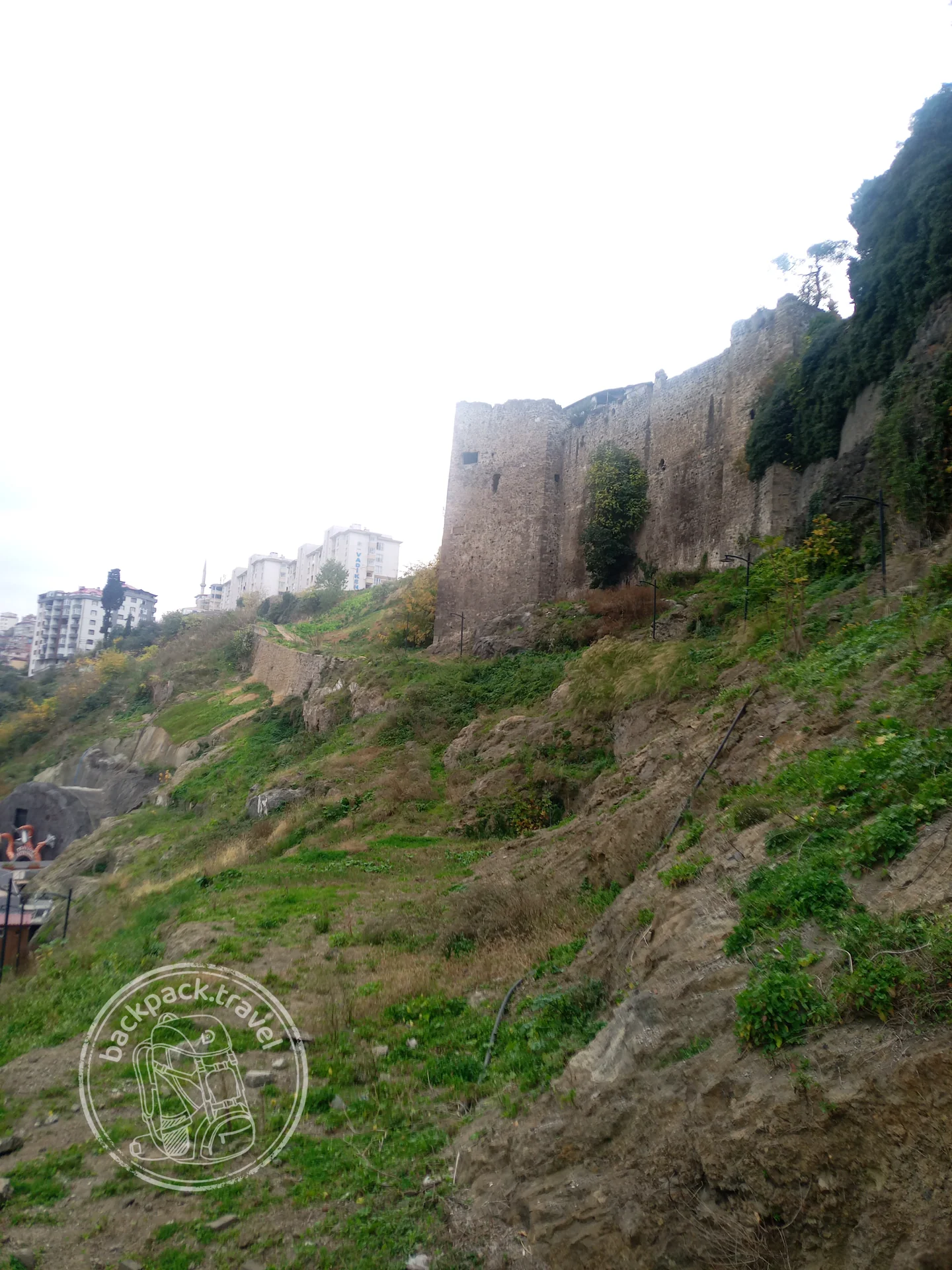
The fortress walls run along a rock ridge between two ravines and divide the old city into three tiers. The masonry is dark basalt and in places grows straight out of the bedrock. The former moat below the walls has been laid out as Zağnos valley park, with ponds — from there the walls are visible at full height.
Sumela monastery hangs on a sheer cliff 45 kilometres to the south, at 1,200 metres. It was founded in the fourth century, though most of the present buildings are thirteenth- to nineteenth-century; the centrepiece is the rock church, with frescoes covering both the inner and the outer walls. After a long restoration the monastery is open again.
In the city itself, two things repay a visit: the Atatürk Pavilion, a white villa of the late nineteenth century in the Greek art nouveau manner, and Meydan square, around which the evening revolves.
Getting there and getting around
The airport, five kilometres from the centre, takes flights from Istanbul, Ankara and the Gulf states. Buses run from Istanbul in about 17 hours, from Ankara in 12, from Batumi in three and a half — the border at Sarp is crossed quickly, and a good many people reach Trabzon from Georgia.
Dolmuşes cover the city, and the compact centre is walkable, though the terrain is steep: the city sits on slopes and the climbs are felt. There is not much public transport to Sumela or Uzungöl, so a tour or a car is easier.
Where to stay
Hotels stand in the centre around Meydan square and along the seafront; the choice is wide and inexpensive by Turkish standards. A category apart are the pensions in the mountain valleys of Maçka and Çaykara, on the road to Sumela and Uzungöl: cooler and quieter, but awkward without a car.
In summer the city fills with visitors from the Arab countries, prices rise, and the mountain villages can have no beds at all. Out of season accommodation costs half as much.
Day trips
Sumela and the Maçka valley are the commonest outing, half a day including the drive. Uzungöl is 90 kilometres away: a long lake in a spruce valley, with a mosque reflected in the water and tea houses and pensions around it.
The Ayder plateau and the hot springs at Rize are three hours to the east, with the road running past tea plantations. The Çal and Karaca caves are karst chambers with stalactites, both a couple of hours from the city. To the west lies Giresun, with its island, the only one on the Turkish Black Sea.
When to come
The best window is May to September, with June and September preferable: July and August are humid and the mountain villages are packed. Summer days run 25 to 28 degrees, and the sea warms up by July.
The Black Sea coast is the wettest part of Turkey, rain is possible in any month, and an umbrella is always needed. Winter on the coast is mild, around 10 degrees, but the passes up to the plateaux close with snow and Sumela is not always reachable. In autumn the slopes turn rust-coloured and there are few visitors — for the city this is arguably the best season of all.
Food and money
The cooking here is built on fish and dairy: hamsi anchovies in every form, fried, in pilaf, even baked into bread; kara lahana, a soup of black cabbage; kaygana; and above all künefe and mıhlama, the cornmeal-and-cheese dish also known as kuymak. A separate point of pride is Akçaabat köfte, the meat patties from the neighbouring town. Tea is served everywhere and always, grown a couple of dozen kilometres away.
Cards are accepted everywhere and there are ATMs at every turn. Cash comes in useful in the mountain villages and at markets.
What to know
The city is built on slopes and distances on the map are deceptive: a climb of 200 metres can take 20 minutes. Stable footwear is needed, particularly in the rain.
Trabzon is more conservative than the resort coast but easier-going than many cities in the east; for women, ordinary covering clothes are enough. The mountain roads are narrow and winding and call for care in winter. The flow of visitors from the Gulf has changed the service trade a great deal: the mountain valleys carry plenty of Arabic signage and halal hotels.
Updated