Города и дороги
Description
A port town on a closed Aegean bay in southwestern Turkey: Lycian rock tombs above the centre, the Ölüdeniz lagoon and paragliders off Babadağ, and the abandoned village of Kayaköy on the hillside.
Wiki
Fethiye sits in southwestern Turkey at the head of a closed Aegean bay, and about a hundred and seventy thousand people live here. Ancient Telmessos was a Lycian city famous for its soothsayers, and what remains of it are the tombs cut into the cliffs above the centre — visible from anywhere along the waterfront. The modern name dates from 1934 and honours Fethi Bey, a pilot killed in a crash. There is almost no old town: the earthquake of 1957 destroyed the earlier buildings and Fethiye was rebuilt from scratch. Today it is at once a working port, a base for yacht cruises along the Lycian coast, and the nearest town to the Ölüdeniz lagoon.
Why come and what to actually see
The Tomb of Amyntas was cut into a sheer cliff above the town around 350 BC: the facade copies an Ionic temple, with two columns and a pediment, and inside there is an empty chamber. The stairs take a quarter of an hour to climb, and the whole bay opens up from the top. Simpler tombs are scattered down the slope below, and Lycian sarcophagi stand along the streets, right between the houses, wherever time left them.
The fortress above town is attributed to the Knights Hospitaller, though its foundations are older. There is little to see inside; people go up for the view.
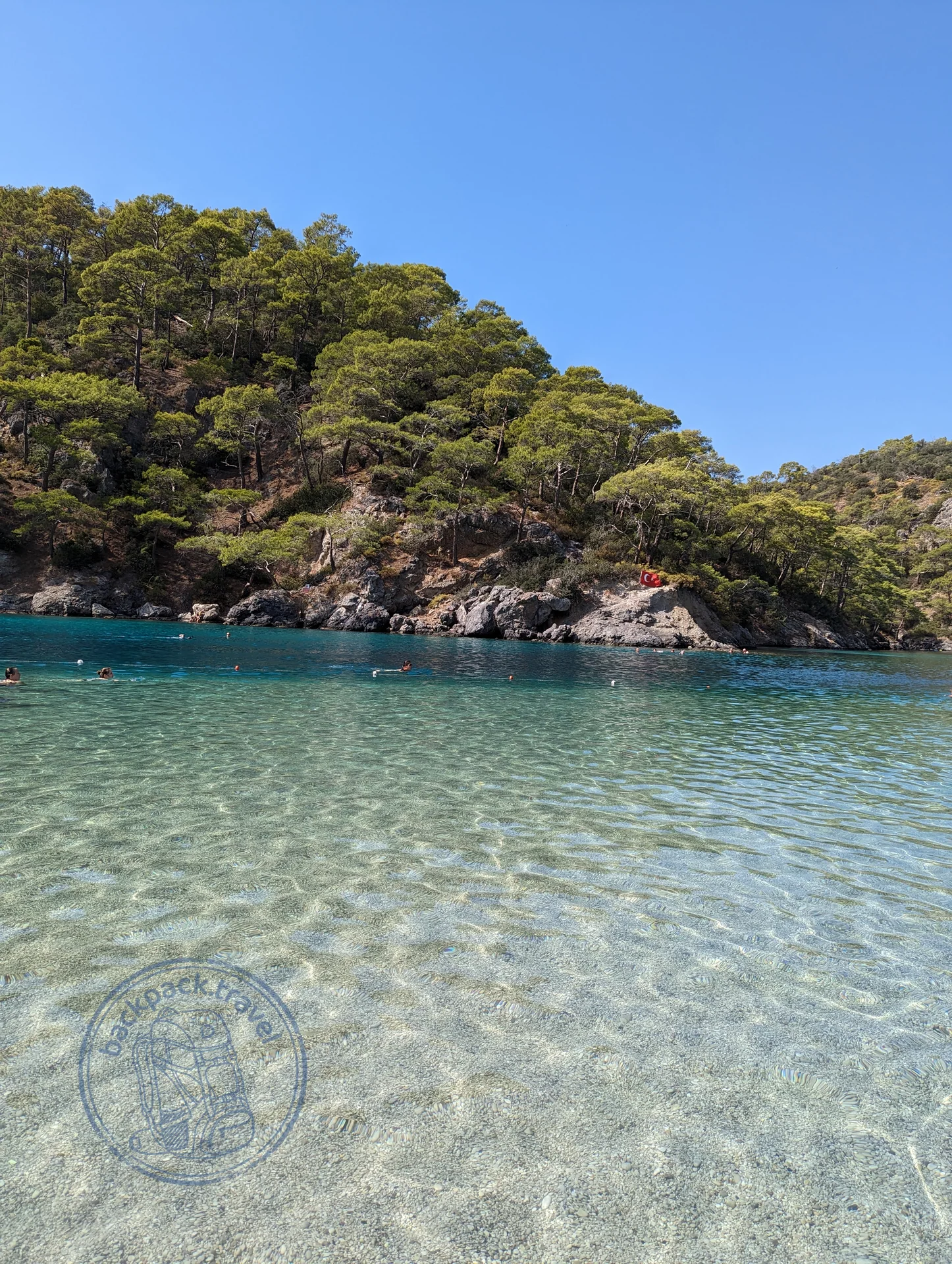
Ölüdeniz, 15 kilometres to the south, is the turquoise lagoon that ends up on the covers. It is a protected area with its own entrance fee; the beach is shingle, and the water in the lagoon is still and warm. Above it rises Babadağ, nearly two thousand metres high, and paragliders jump from the summit: the descent takes about twenty minutes, and it is the main local attraction.
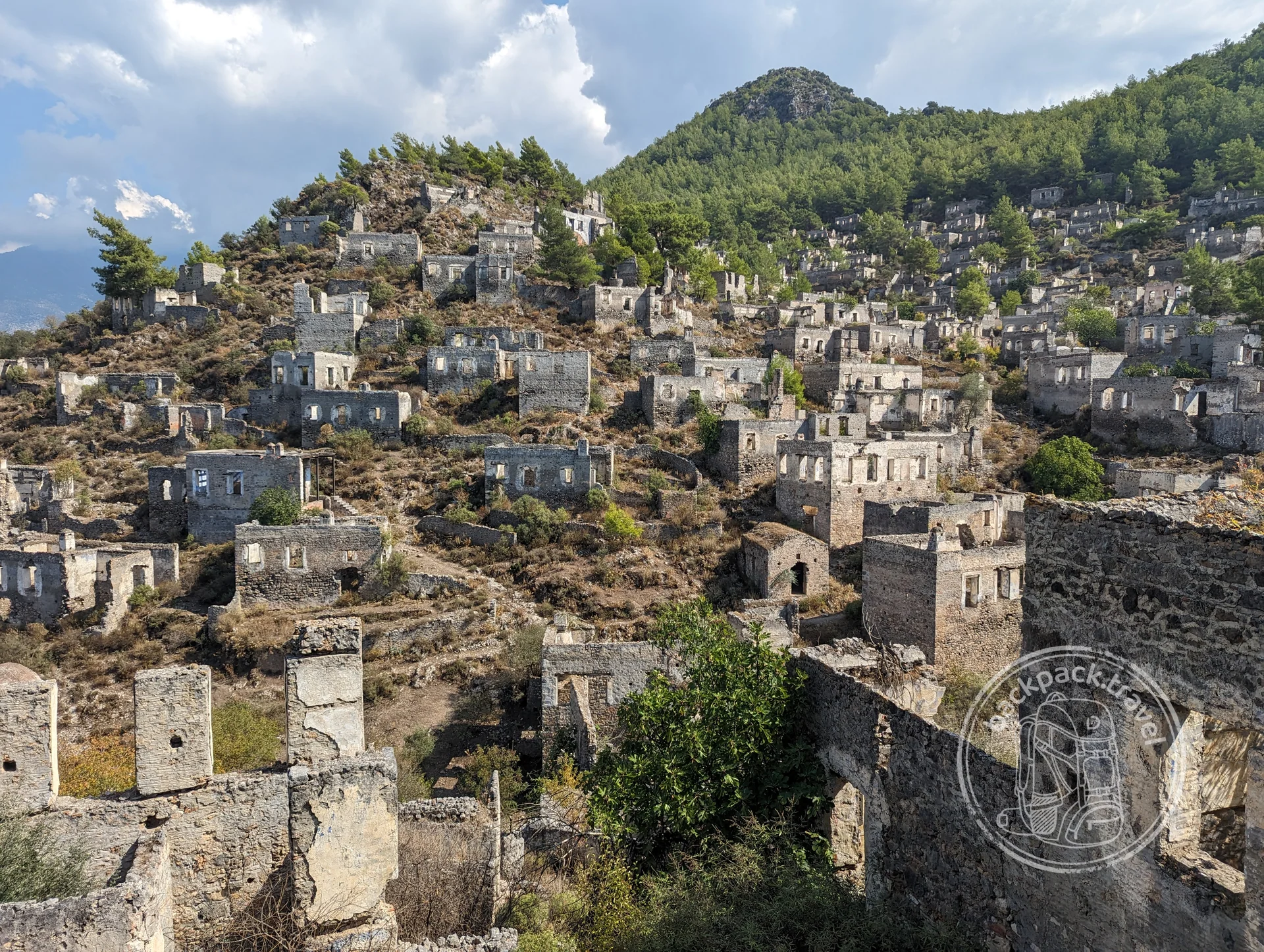
Kayaköy, eight kilometres away, is an abandoned village — Greek Levissi until 1923. After the population exchange between Greece and Turkey the inhabitants left, no one replaced them, and several hundred empty stone houses and two churches were left on the hillside. It is a powerful place, and not remotely a resort.
Getting there and getting around
The nearest airport is Dalaman, 50 kilometres away, which takes charter flights from across Europe in summer. Buses from the airport reach the Fethiye coach station in about an hour.
There is no railway. Buses connect the town with Antalya in four hours over the mountain road, and with Izmir in seven. From Istanbul it is an overnight service.
Dolmuşes run along the coast: to Ölüdeniz, Çalış and Kayaköy they leave every few minutes in season and much less often in winter. You need your own car for Saklıkent and the Lycian cities inland, while the town itself is easy on foot.
Where to stay
Fethiye proper suits anyone who wants a town: the waterfront, the fish market, the coach station close by. The beach, though, is not in the centre but at Çalış, five kilometres away, a long strip of sand and shingle with sunsets towards the islands.
Ölüdeniz and Hisarönü above it are resort territory in the pure sense, full of hotels and bars and loud in summer. They are the closest bases to the lagoon.
Kayaköy and the villages around it are the quiet option, with views over the valley, but they require a car. Prices swing hard with the season: August runs at double the May rate.
Day trips
Saklıkent Gorge, 45 kilometres out, is a cleft in the rock three hundred metres deep with an ice-cold river running along the bottom. The first stretch is walked on a suspended boardwalk, after which you wade.
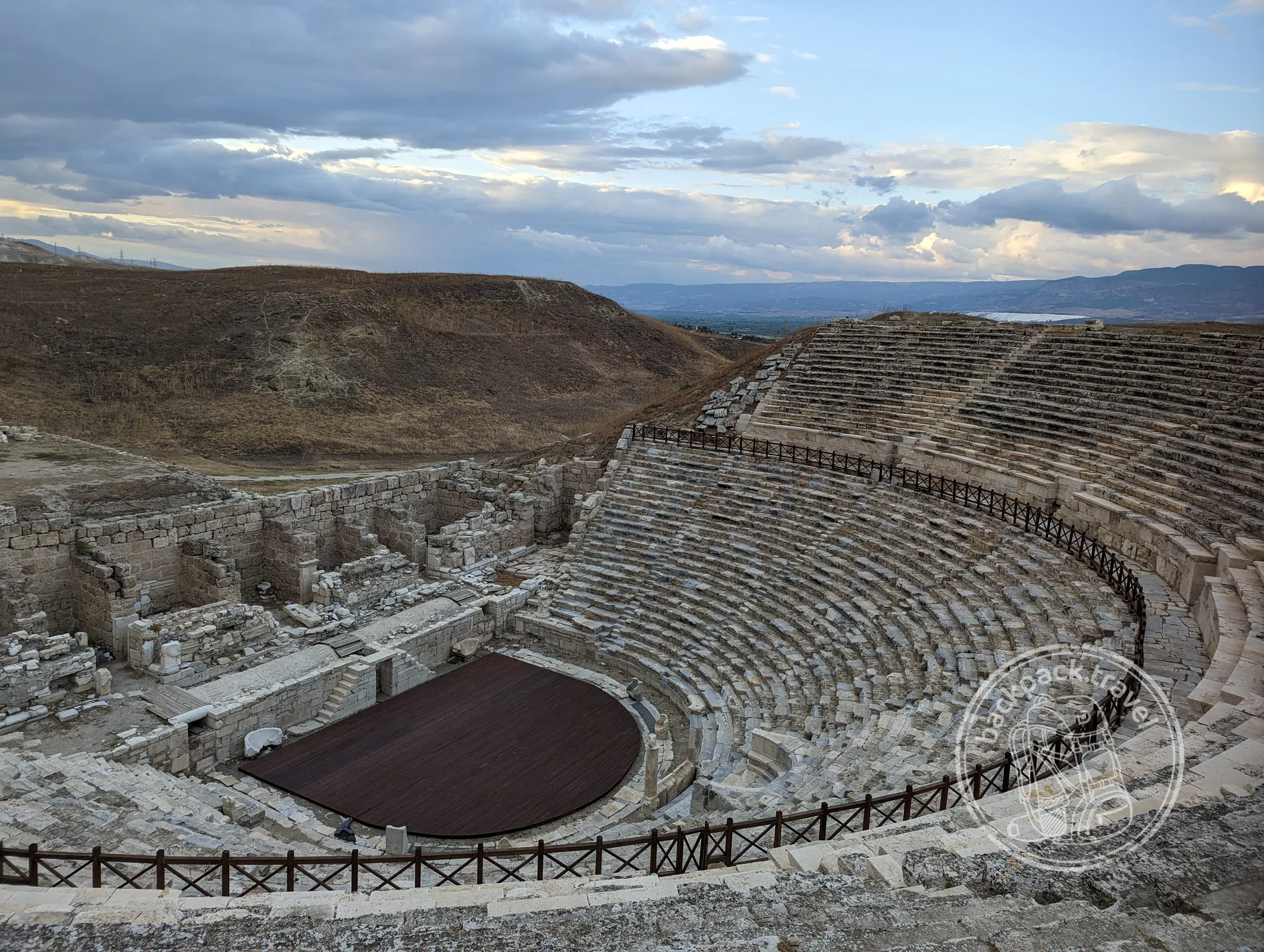
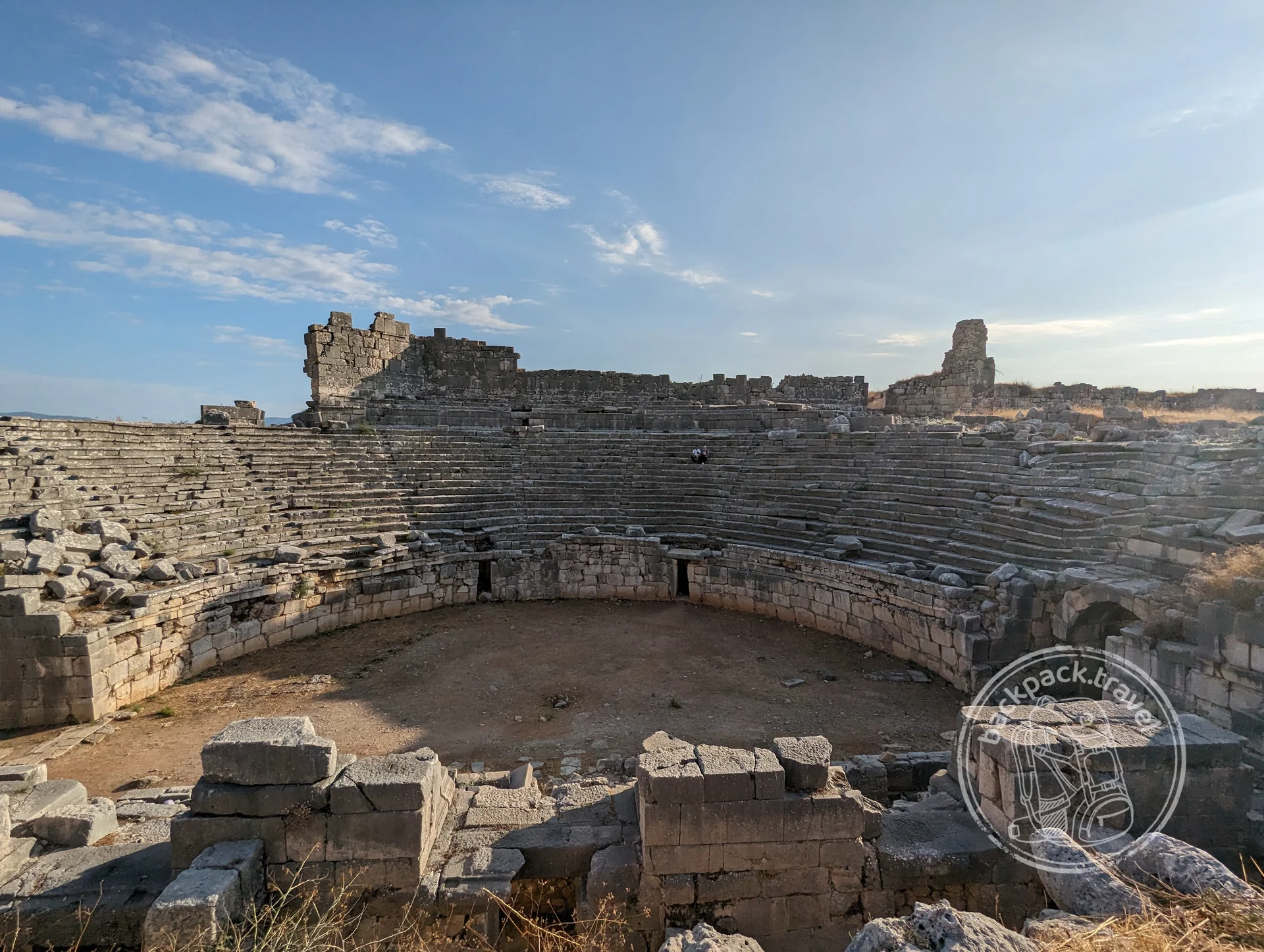
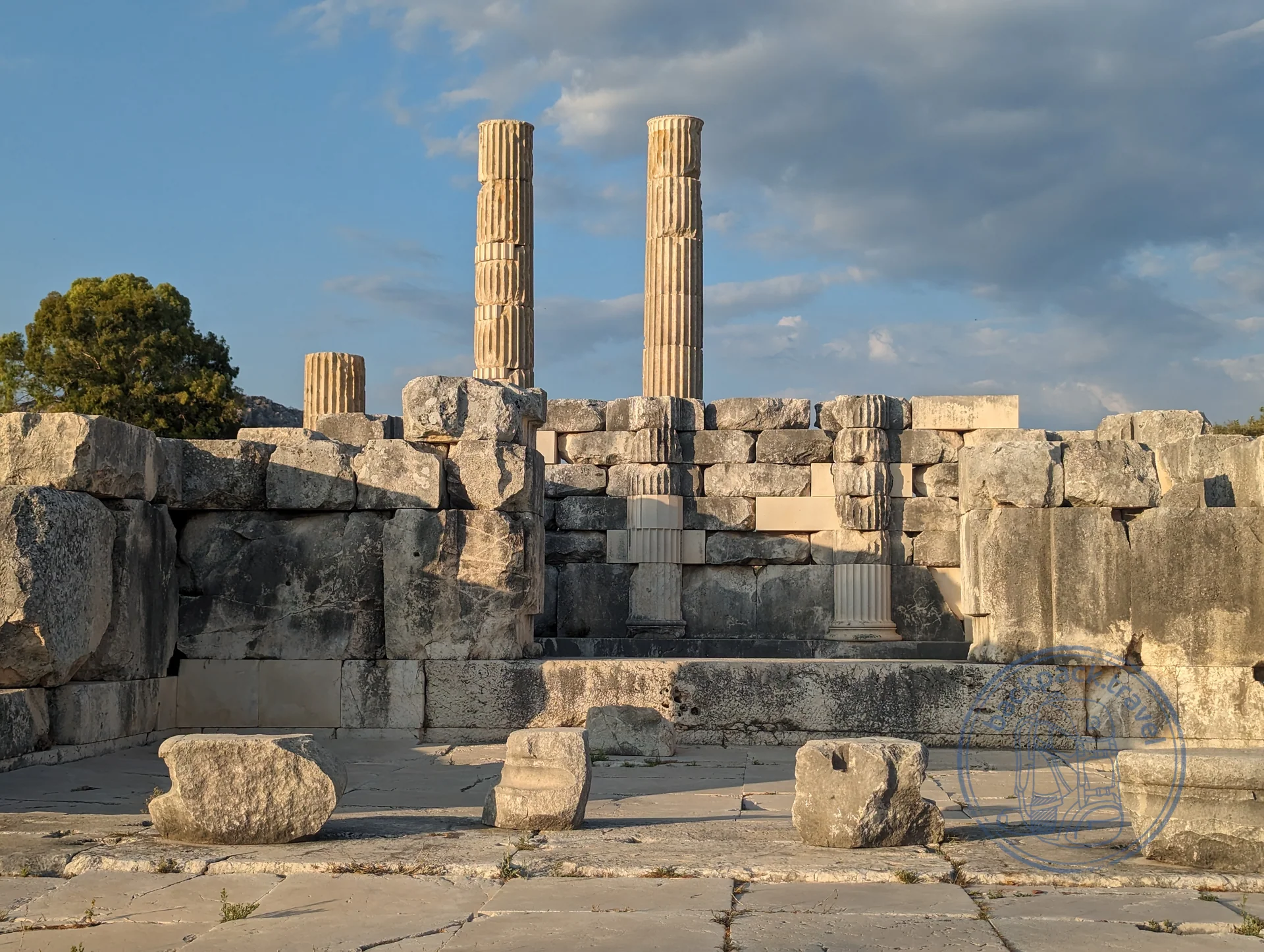
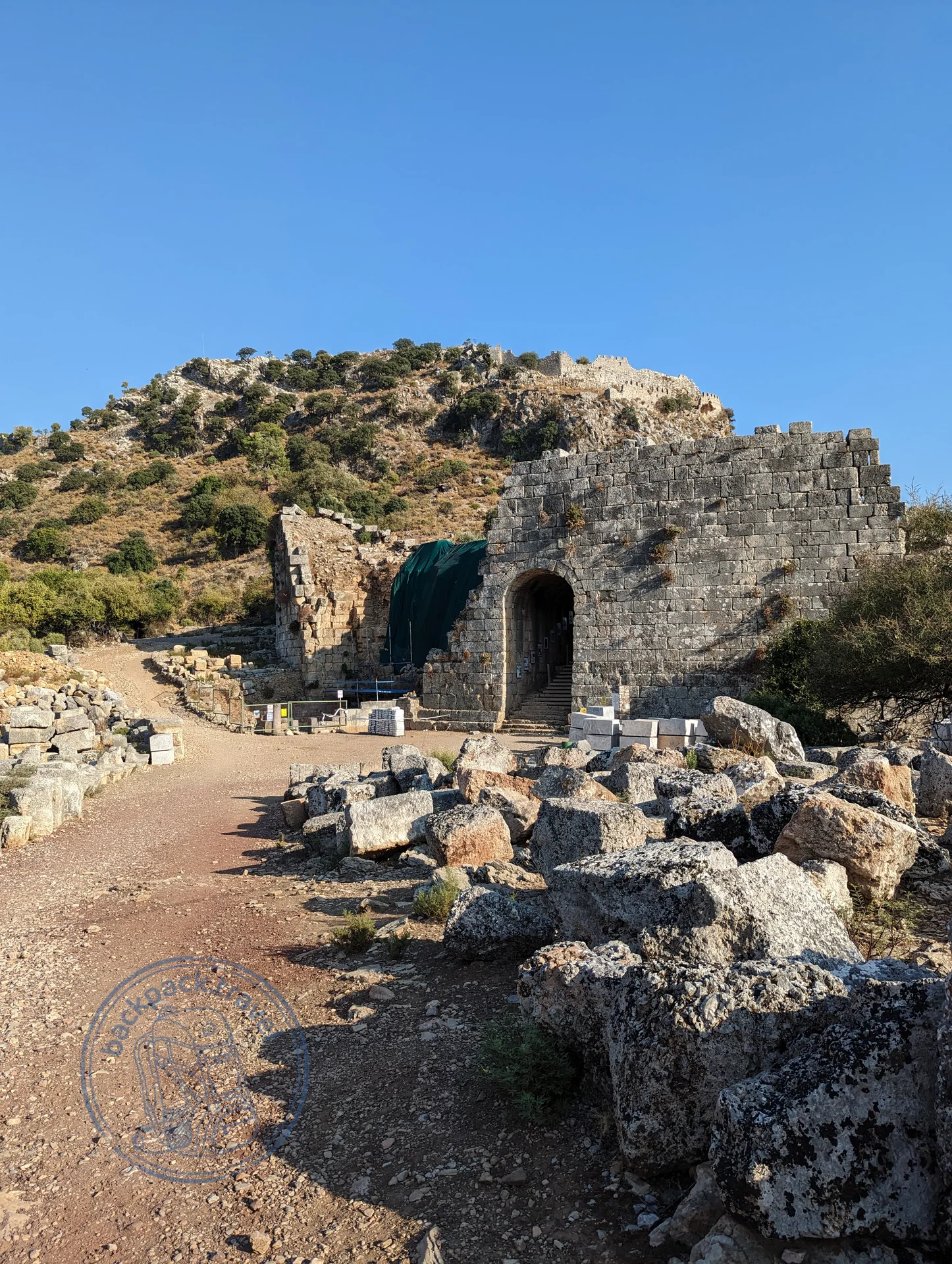
Tlos lies on the same road: a Lycian city on a crag with tombs, a theatre and an Ottoman fortress on top. Further south are Xanthos and Letoon, both on the UNESCO list, and Patara with its long empty beach and the excavated assembly hall.
The boat trip around the twelve islands takes a full day and remains the simplest way to see the bay. Butterfly Valley can only be reached by water or by a steep path from above.
When to come
May, June, September and October are the sweet spot: the sea is warm, the air is around twenty-eight degrees, and you can walk the ruins and the gorges without cooking. The swimming season stretches from May to November.
July and August are hot, above thirty-five, and crowded; in that season sightseeing goes in the morning and the afternoon belongs to the sea. Paragliding in the heat is also limited by the thermals and the flight schedule.
Winter is mild, around fifteen degrees, but wet: southwestern Turkey gets most of its rainfall then. Some hotels and dolmuş routes shut down for the winter, but the Lycian Way is walkable without the punishing heat.
Food and money
The local custom worth knowing is the fish market in the centre: you pick your fish from a trader, and the restaurants around the square cook it for a small extra charge and serve it with salad. It is cheaper than an ordinary restaurant and a good deal more transparent.
Otherwise people order köfte, gözleme in the villages along the road, and pine honey, which is gathered in these mountains. The vegetables and citrus are local, and the market runs on Tuesdays.
Cards are accepted everywhere; cash is needed on the dolmuşes, at the market and in the villages.
What to know
There is essentially no old town left in Fethiye: the 1957 earthquake destroyed almost all of it, and anything that looks old is either an ancient tomb or a reconstruction. This is not the place to come for Ottoman architecture.
Flights from Babadağ depend on the weather and the wind, and cancellations happen, so allow a couple of days' margin if that is why you came. Entry to the Ölüdeniz lagoon is charged, and swimming outside the marked zone is restricted.
Mountain roads are narrow and winding, and distances on the map are deceptive: the 45 kilometres to Saklıkent take an hour. The Lycian Way starts at Ovacık above Ölüdeniz and calls for proper shoes and water — the route is waymarked, but there is almost no water along it.
Updated